Managed to put up the photo in the profile bit but if you asked me right now how I did it, I wouldn't be able to tell you.
Also added a few more links to screenwriting blogs which are always good to waste time & procrastinate over, so do check them out...
Rabu, 31 Agustus 2005

Rewriting
“Writing is rewriting”. Another quote about screenwriting, don’t know who said it, but applies to professional writing in general. It took me a while to accept this short mantra but now I realise that the one consistent aspect of becoming a professional scriptwriter is that you’ll always be asked to change your work. Even when you do a really good draft or come up with a different scene or change something for the better, you can always rely on a script editor or exec to go against the grain of your sensitivities and ask you, shock horror, to do some more work on your script. Quite often, the natural reaction to this is to take offence or sulk or call all script editors morons but usually, after a bit of perspective, you can see that (murmur it now) they’re right.
While it is easy to bristle at a script editor’s seemingly ill-informed advice or misconstrued criticism, they’re not actually trying to upset you or just offering a suggestion willy nilly because they’ve got nothing else to say. (I have heard of some horror stories involving inept script editors, and I’m sure they’re out there, but to date my experience has only been of intelligent, astute and hard working folk). They’re only thinking what’s right for the story. For the moment, they’re the audience sitting in the cinema seats and what they’re giving back to you is their instinctive reaction to how your story is making them feel. It’s all very well to be defensive and pout “that’s not what I meant, this script editor knows nothing” but this should be a warning that you’re not getting across what you thought was so clear on the page. (“But Julie loves her! The seething glance on page 59 is as clear as day!”)
This is not a post about script editors and their contribution but as a final aside, I worked with a script editor recently who made me so mad I was very tempted to make a voodoo doll in his guise and stick forks in it repeatedly and harshly. But I bit my lip and listened to what he had to say. And as it transpired, what he had to say was actually very good; it was just the way he said it (very patronising) that made me so defensive and angry to his suggestions. The upshot was I had to rewrite my script. The first time I had to rewrite one of my scripts, I barely changed anything but proudly submitted it as the ‘second draft’. And I think this can be a problem both in the spec market and in the development process.
I think writers are generally loathe to tinker with their work because they know every nuance and emotion involved in the story, and think it works just fine. Even when they know something’s not working, the tendency is to maybe touch up a bit of dialogue in the troubled scene but keep it there because the prospect of editing it out (and replacing it with something new) is unattractive, especially when you consider the consequences for the story’s remaining structure. But when preparing your spec to be sent out around town, it’s essential that it’s at its best, that there is no nagging sense of ‘that sequence could be better’ or whatever. Do not send your first draft. Make sure you rewrite it (they'll get you to change it later anyway).
It’s a tough discipline, proper rewriting, but to help myself learn this essential technique, I managed to option my very first screenplay by telling the producer how bad it was but laid out what changes I would write to make it better. He gave me a bit of cash and with that incentive, I was forced to chuck out the 90 pages of guff I had written and do a complete makeover on the script. This is often referred to as a “page one rewrite” where you literally start at page one and change everything bar the essential concept and characters. The second draft was wholly different but still had the idea and the characters so it was still familiar and very much ‘the same’. But more importantly, when I handed it in, I had given the producer ‘something new’ to read. This is significant. When a rewrite comes in, producers, readers, execs like to be presented with what they paid for, not a minor tinkering of some dialogue and scenes (these are typically ‘revisions’ when the basic structure has been approved so the rewrites become ‘polishes’ rather than a major overhaul of the story).
It was an extremely valuable experience for me as I learned that whatever I thought was essential to the story, or could not be changed, could actually be chucked out or revised or improved. In another script, I long held on to the opening scene thinking that there was no better way to begin the film but I was encouraged and cajoled to change it, so I did (with a grump), and they were right, goddammit. So I think it’s important to listen to what people have to say about your script, consider its implications, put the ego aside and think: ‘ok, let’s see what happens if I change things around’. Another quote, again the name escapes me, but a famous one: "You have to be prepared to kill your darlings".
A couple of years ago, I was given the horror script, Creep, to read. Written and directed by Christopher Smith. It was a good script with real potential and I recommended it but I also noted my reservations about some key elements of the story. A few months later, I was given the script again, a rewrite. I looked forward to reading it but I was disappointed because, in my opinion, there wasn’t enough significant change and it hadn’t suitably improved. That draft went into production and the final product was okay, but in my view, it could have been so much better (but well done Chris Smith for getting it made, and good luck to you).
While it is easy to bristle at a script editor’s seemingly ill-informed advice or misconstrued criticism, they’re not actually trying to upset you or just offering a suggestion willy nilly because they’ve got nothing else to say. (I have heard of some horror stories involving inept script editors, and I’m sure they’re out there, but to date my experience has only been of intelligent, astute and hard working folk). They’re only thinking what’s right for the story. For the moment, they’re the audience sitting in the cinema seats and what they’re giving back to you is their instinctive reaction to how your story is making them feel. It’s all very well to be defensive and pout “that’s not what I meant, this script editor knows nothing” but this should be a warning that you’re not getting across what you thought was so clear on the page. (“But Julie loves her! The seething glance on page 59 is as clear as day!”)
This is not a post about script editors and their contribution but as a final aside, I worked with a script editor recently who made me so mad I was very tempted to make a voodoo doll in his guise and stick forks in it repeatedly and harshly. But I bit my lip and listened to what he had to say. And as it transpired, what he had to say was actually very good; it was just the way he said it (very patronising) that made me so defensive and angry to his suggestions. The upshot was I had to rewrite my script. The first time I had to rewrite one of my scripts, I barely changed anything but proudly submitted it as the ‘second draft’. And I think this can be a problem both in the spec market and in the development process.
I think writers are generally loathe to tinker with their work because they know every nuance and emotion involved in the story, and think it works just fine. Even when they know something’s not working, the tendency is to maybe touch up a bit of dialogue in the troubled scene but keep it there because the prospect of editing it out (and replacing it with something new) is unattractive, especially when you consider the consequences for the story’s remaining structure. But when preparing your spec to be sent out around town, it’s essential that it’s at its best, that there is no nagging sense of ‘that sequence could be better’ or whatever. Do not send your first draft. Make sure you rewrite it (they'll get you to change it later anyway).
It’s a tough discipline, proper rewriting, but to help myself learn this essential technique, I managed to option my very first screenplay by telling the producer how bad it was but laid out what changes I would write to make it better. He gave me a bit of cash and with that incentive, I was forced to chuck out the 90 pages of guff I had written and do a complete makeover on the script. This is often referred to as a “page one rewrite” where you literally start at page one and change everything bar the essential concept and characters. The second draft was wholly different but still had the idea and the characters so it was still familiar and very much ‘the same’. But more importantly, when I handed it in, I had given the producer ‘something new’ to read. This is significant. When a rewrite comes in, producers, readers, execs like to be presented with what they paid for, not a minor tinkering of some dialogue and scenes (these are typically ‘revisions’ when the basic structure has been approved so the rewrites become ‘polishes’ rather than a major overhaul of the story).
It was an extremely valuable experience for me as I learned that whatever I thought was essential to the story, or could not be changed, could actually be chucked out or revised or improved. In another script, I long held on to the opening scene thinking that there was no better way to begin the film but I was encouraged and cajoled to change it, so I did (with a grump), and they were right, goddammit. So I think it’s important to listen to what people have to say about your script, consider its implications, put the ego aside and think: ‘ok, let’s see what happens if I change things around’. Another quote, again the name escapes me, but a famous one: "You have to be prepared to kill your darlings".
A couple of years ago, I was given the horror script, Creep, to read. Written and directed by Christopher Smith. It was a good script with real potential and I recommended it but I also noted my reservations about some key elements of the story. A few months later, I was given the script again, a rewrite. I looked forward to reading it but I was disappointed because, in my opinion, there wasn’t enough significant change and it hadn’t suitably improved. That draft went into production and the final product was okay, but in my view, it could have been so much better (but well done Chris Smith for getting it made, and good luck to you).
Selasa, 30 Agustus 2005
TV or Film?
Not much of a Bank Holiday for me this weekend. Was all set to finish reading the film board's scripts and start doing the reports but was struck with some god-awful virus on Friday, which rendered me mute and useless for the remainder. As a result, I only finished reading the scripts on Monday morning and have since been typing like crazy to finish the reports (deadline today). Am feeling a bit better but I'm absolutely knackered. My Aussie friend left this morning so I drove her to Heathrow (up at 6am this time). She does Antonio Carluccio's PR in Australia so we had dinner with him and his lovely wife Priscilla in his Putney Bridge restaurant. And very nice it was too. A bit of a Bank Holiday treat after a miserable weekend. Just wanted to share this little bit of glitz and glamour with the blog. Get me.
One of the things I noticed from this batch of scripts was how most of them could easily be TV dramas or thrillers. It is rare to read a script and think: "now that's a good movie". But it got me thinking. How do you know if your story is good TV or quality cinema? Obviously, there's a fine line between both, especially given the high quality production values of US TV series these days. Look at 'Lost'. My God. The most expensive pilot ever made. I think one of the producers actually said (in the link below) that Lost is one big feature film divided into a TV series. By the way, those of you who are petrified to click the link and be exposed to the answers of Lost's many mysteries, do not fear. They only mention something in a vague sort of manner which doesn't make much sense if you haven't seen it yet (it hasn't happened yet) but people seem to be extremely sensitive to even the mildest of spoilers, so hence the warning.
I missed The Messiah, BBC's annual cop thriller with Ken Stott, because of illness and living it up with Carluccio but it struck me from the trailers (and the previous Messiahs) how most scripts would kill to have that much style and grit in their spec cop thrillers. And that's the trouble these days. More and more, TV likes it do it bigger and better so that raises the bar even higher for us struggling screenwriters trying to make an impact with our bold and original stories. But how, I hear you ask, do we generate truly cinematic stories? What makes our ideas and characters so special that they cannot be reduced to the gogglebox in the corner, that they have to be expressed on the cinematic canvass? There is no simple answer. Many good cinematic stories come from a basic concept of man, ug, want something but man stopped by many things that get in his way. And working this out into a good logline often helps to clarify if the story is something that needs to run and be resolved over a 90/120min stretch. But that of course, is up to us. We could sit here all day and list the many TV movies that have achieved awards and success at the flicks so essentially, the argument boils down if you've got 'a good story, well told', then any amount of people will be drawn to it, whether it be on the cinema or the small screen.
Better get back to those reports...
One of the things I noticed from this batch of scripts was how most of them could easily be TV dramas or thrillers. It is rare to read a script and think: "now that's a good movie". But it got me thinking. How do you know if your story is good TV or quality cinema? Obviously, there's a fine line between both, especially given the high quality production values of US TV series these days. Look at 'Lost'. My God. The most expensive pilot ever made. I think one of the producers actually said (in the link below) that Lost is one big feature film divided into a TV series. By the way, those of you who are petrified to click the link and be exposed to the answers of Lost's many mysteries, do not fear. They only mention something in a vague sort of manner which doesn't make much sense if you haven't seen it yet (it hasn't happened yet) but people seem to be extremely sensitive to even the mildest of spoilers, so hence the warning.
I missed The Messiah, BBC's annual cop thriller with Ken Stott, because of illness and living it up with Carluccio but it struck me from the trailers (and the previous Messiahs) how most scripts would kill to have that much style and grit in their spec cop thrillers. And that's the trouble these days. More and more, TV likes it do it bigger and better so that raises the bar even higher for us struggling screenwriters trying to make an impact with our bold and original stories. But how, I hear you ask, do we generate truly cinematic stories? What makes our ideas and characters so special that they cannot be reduced to the gogglebox in the corner, that they have to be expressed on the cinematic canvass? There is no simple answer. Many good cinematic stories come from a basic concept of man, ug, want something but man stopped by many things that get in his way. And working this out into a good logline often helps to clarify if the story is something that needs to run and be resolved over a 90/120min stretch. But that of course, is up to us. We could sit here all day and list the many TV movies that have achieved awards and success at the flicks so essentially, the argument boils down if you've got 'a good story, well told', then any amount of people will be drawn to it, whether it be on the cinema or the small screen.
Better get back to those reports...
Minggu, 28 Agustus 2005
Lost
++++++++ SPOILERS BEWARE +++++++++++++++++
The producers of Lost talk about their prep for season two.
The producers of Lost talk about their prep for season two.
Sabtu, 27 Agustus 2005
Jumat, 26 Agustus 2005
Structure, part 1
It was my Australian friend’s birthday yesterday so I downed scripts and headed off for the afternoon to indulge in some tourist traps. We went to London Bridge, walked along the river to the Tate Modern where we giggled at the pretentious art but then found ourselves staring at a 10 foot blue square murmuring: “There’s something to it all right…” Then we took a ‘flight’ on the London Eye before resigning to the comfort of a pub and a good old traditional English curry.
All of this culture and sightseeing was the perfect antidote to my script reading hell this week. My mind was stuck in a rut of lazy words and flicking pages so getting out and about dusted the cobwebs off, and invigorated my brain with some potential ideas. Screenwriting guru Jurgen Wolff has some interesting techniques about brainstorming and avoiding writer’s block which basically comes down to ‘feeding your brain’ with news, culture, images, music, whatever. A stroll along the Thames Path followed by the free galleries in the Tate Modern certainly inspired me to a few thoughts that might lead to something, who knows.
But I digress. William Goldman, legendary writer, is famous for his Hollywood quote: “Nobody knows anything” but he’s got a far more pertinent quote that is not often referred to: “Story is structure”. He’s a big advocate of structure and he claims that it’s much more complex and challenging than just a three-act paradigm. For him, it’s a constant evaluation of figuring out what happens next in your narrative. It’s prioritising and arranging the order of events so that the story is told in its most expressive, communicative and, for the audience, appreciative form. In America, structure is taken very seriously and most aspiring writers have a firm grasp on what is required and demanded of them in their spec screenplays. Here in the UK however, it’s a term that is often treated like a hot potato, just like genre or any other kind of contentious screenplay analysis.
I worked with a writer/director recently who wouldn’t accept any structural terms or advice. He simply just wouldn’t have it. He believed storytelling to be a much more instinctive and elegant affair from which his script didn’t have to hit any pre-appointed ‘act breaks’ or follow any of Hollywood’s accepted formulas. In some ways, he was right - storytelling is not about joining the dots - but he was missing the point. Screenwriting, and any writing really, is both art and craft. It’s the artistic creativity of the writer and his ideas but expressed through craft and structure so that the readers/audience fully understand and appreciate the story. Screenwriting is the only medium where structure is so hotly disputed. It’s perfectly accepted in theatre, radio and literature but for some reason, people who want to write for the screen seem to take it as lofty visual expression that requires no such structural techniques.
And to that I say: phooey. I’m with William Goldman on this one. Structure is everything. No matter what term or language you want to use, you cannot deny that it exists and that it is essential to the expression of basic storytelling. But to be more specific to Rob’s comment (below), the three-act structure is becoming more accepted and understood as the screenwriting training market continues to grow. Which is only a good thing, obviously, but it would help if people looked beyond the paradigm as established by Syd Field, (which by the way is an excellent start to learning about all that structure offers). Script editors and execs usually have a good grasp on structure but I read a lot of development notes where people always say ‘the structure needs to be tighter’ which is as useful as saying ‘the script needs to improve’. It’s too vague and generic and doesn’t say anything about the complex and emotional state of the characters and story that need to be addressed. That’s where the real structural issues usually lurk.
I think Rob what you’re referring to is the Hollywood formula movie of the three-act structure and the predictable and padded way that the stories unfold. Expressions such as ‘the film had no third act’ usually refer to the fact that the story had nowhere to go, nowhere to develop the characters or story to a satisfying resolution, so it just had a car chase or routine murder instead. The ‘bolted on’ bit isn’t to do with structure per se but more to do with ‘one more twist in the tale’ so that the story doesn’t end on a predictable note, but alas, these ‘twists’ have become predictable in themselves. The structure issue is a fascinating one though, or at least it is to me (personally, I think it’s the strongest part of my writing), and it’s sure to come up in more posts and discussions…
All of this culture and sightseeing was the perfect antidote to my script reading hell this week. My mind was stuck in a rut of lazy words and flicking pages so getting out and about dusted the cobwebs off, and invigorated my brain with some potential ideas. Screenwriting guru Jurgen Wolff has some interesting techniques about brainstorming and avoiding writer’s block which basically comes down to ‘feeding your brain’ with news, culture, images, music, whatever. A stroll along the Thames Path followed by the free galleries in the Tate Modern certainly inspired me to a few thoughts that might lead to something, who knows.
But I digress. William Goldman, legendary writer, is famous for his Hollywood quote: “Nobody knows anything” but he’s got a far more pertinent quote that is not often referred to: “Story is structure”. He’s a big advocate of structure and he claims that it’s much more complex and challenging than just a three-act paradigm. For him, it’s a constant evaluation of figuring out what happens next in your narrative. It’s prioritising and arranging the order of events so that the story is told in its most expressive, communicative and, for the audience, appreciative form. In America, structure is taken very seriously and most aspiring writers have a firm grasp on what is required and demanded of them in their spec screenplays. Here in the UK however, it’s a term that is often treated like a hot potato, just like genre or any other kind of contentious screenplay analysis.
I worked with a writer/director recently who wouldn’t accept any structural terms or advice. He simply just wouldn’t have it. He believed storytelling to be a much more instinctive and elegant affair from which his script didn’t have to hit any pre-appointed ‘act breaks’ or follow any of Hollywood’s accepted formulas. In some ways, he was right - storytelling is not about joining the dots - but he was missing the point. Screenwriting, and any writing really, is both art and craft. It’s the artistic creativity of the writer and his ideas but expressed through craft and structure so that the readers/audience fully understand and appreciate the story. Screenwriting is the only medium where structure is so hotly disputed. It’s perfectly accepted in theatre, radio and literature but for some reason, people who want to write for the screen seem to take it as lofty visual expression that requires no such structural techniques.
And to that I say: phooey. I’m with William Goldman on this one. Structure is everything. No matter what term or language you want to use, you cannot deny that it exists and that it is essential to the expression of basic storytelling. But to be more specific to Rob’s comment (below), the three-act structure is becoming more accepted and understood as the screenwriting training market continues to grow. Which is only a good thing, obviously, but it would help if people looked beyond the paradigm as established by Syd Field, (which by the way is an excellent start to learning about all that structure offers). Script editors and execs usually have a good grasp on structure but I read a lot of development notes where people always say ‘the structure needs to be tighter’ which is as useful as saying ‘the script needs to improve’. It’s too vague and generic and doesn’t say anything about the complex and emotional state of the characters and story that need to be addressed. That’s where the real structural issues usually lurk.
I think Rob what you’re referring to is the Hollywood formula movie of the three-act structure and the predictable and padded way that the stories unfold. Expressions such as ‘the film had no third act’ usually refer to the fact that the story had nowhere to go, nowhere to develop the characters or story to a satisfying resolution, so it just had a car chase or routine murder instead. The ‘bolted on’ bit isn’t to do with structure per se but more to do with ‘one more twist in the tale’ so that the story doesn’t end on a predictable note, but alas, these ‘twists’ have become predictable in themselves. The structure issue is a fascinating one though, or at least it is to me (personally, I think it’s the strongest part of my writing), and it’s sure to come up in more posts and discussions…
Kamis, 25 Agustus 2005
Logline
On the first page of a reader’s report (you can download one of my sample reports here), there’s a section called the “logline” where the reader sums up the story in one or two sentences (preferably one). This is an essential part of the report, and indeed, a screenplay’s development. It’s the first thing the exec will look at, along with the report grid where an X marks the strengths of your script (Poor/Fair/Good/Excellent), and then the all-important ‘Brief’ or ‘Recommendation’ section where yours truly gets to elaborate on the Xs in a one or two sentence fashion.
But it’s the logline that’s the kicker. Sometimes writing the logline can take longer than writing the synopsis itself. When this happens, I know the story is in trouble because it’s not conveying its characters or plot in a clear or succinct manner. And, over the years, I’ve noticed that a good logline can really entice someone into the story (like a good 25 words or less pitch) and will usually indicate some basic plotting and structure that you would expect to see in the script. With this mind, it’s a really good idea for a writer to think of his logline before he starts writing his screenplay. It helps crystallise the concept and story so that the writer can remain focused on what needs to be told throughout the writing process.
The accepted template for a good logline goes something like this: “It’s about (a character/characterisation) who (action/desire, goal) but (conflict, the thing that’s getting in their way)”.
Some examples: “The civilian son of a mafia boss tries to protect his family after his father is critically wounded in a mob hit but finds himself dragged into the family business’ corruption and power.”
“A young farmhand on a distant planet joins the battle against the universe’s evil forces but doesn’t realise that his family’s dark secret will have serious repercussions for him and his friends”.
“A highly strung mother won’t allow her children to leave the house but when three disconcerting housekeepers turn up to help her, strange events occur that suggest the house is haunted.”
“A mild mannered Englishman begins to wonder if he’ll ever meet the woman of his dreams when he always attends weddings as a guest, never the groom, but when he meets a sexy American woman, he decides to pursue her as she could be the one to lead him up the aisle.”
“An adventurous secret agent is sent on a mission to stop an evil megalomaniac from doing his evil deeds but his passion for women and gadgets help and hinder him in equal measure in his efforts to save the world.”
These are my own loglines for these particular films but you get the gist. What’s important I think is that if I was pursuing these ideas as original screenplays, the loglines would help me develop what absolutely needs to happen in the story. In other words, it would help shape the structure or give me more ideas on how to expand the plot. ** MINOR SPOILERS, GODFATHER ** Looking at The Godfather logline above (you knew that right?), in the script I would know that an attempted assassination would have to take place, and that this would be quite exciting and dramatic, and be a pivotal moment in the whole story. So there’s my inciting incident (off the top of my head; I tried to analyse The Godfather’s structure once and I marked down five acts). ** NO MORE MINOR SPOILERS, PHEW! **
A good logline is crucial. It’s how your story can be summed up in a neat one or two sentence (I know, sounds prescriptive and annoying but that’s the way it is) and will then be used by everyone who has to pitch your script to their bosses, and their bosses’ bosses etc. Loglines are not to be confused with “taglines” which is the marketing strap below your title on the poster to indicate some intrigue or hook about the film. ** MINOR SPOILERS, ALIEN ** “In space no-one can hear you scream” was Alien’s famous tagline but its logline would be something like “A modest space crew going home with their cargo stop to respond to a distress signal but are forced to confront a deadly alien who stows aboard their ship, leaving only one of the female members of the crew to fend for herself.” ** MINOR SPOILERS AVERTED, GOOD JOB! **
Loglines don’t necessarily have to follow the well-worn template of “it’s about a blank who blah blah” but generally it helps to express your story in its simplest and most effective form as this is what cinemagoers are really after. They don’t want to be confused, they don’t want to be misled, they don’t want to be dazzled by your theme of Spanish paella through the 1800s, they just want to know what’s going on, who’s doing it and why. As an aside, I read a script this morning which stated its genre was ‘General’. I could just see it now: “What should we go to see tonight luv? You know what I really fancy? Something ‘general’. A nice broad story with generic characters and an unspecific story line, that would be great!”
But it’s the logline that’s the kicker. Sometimes writing the logline can take longer than writing the synopsis itself. When this happens, I know the story is in trouble because it’s not conveying its characters or plot in a clear or succinct manner. And, over the years, I’ve noticed that a good logline can really entice someone into the story (like a good 25 words or less pitch) and will usually indicate some basic plotting and structure that you would expect to see in the script. With this mind, it’s a really good idea for a writer to think of his logline before he starts writing his screenplay. It helps crystallise the concept and story so that the writer can remain focused on what needs to be told throughout the writing process.
The accepted template for a good logline goes something like this: “It’s about (a character/characterisation) who (action/desire, goal) but (conflict, the thing that’s getting in their way)”.
Some examples: “The civilian son of a mafia boss tries to protect his family after his father is critically wounded in a mob hit but finds himself dragged into the family business’ corruption and power.”
“A young farmhand on a distant planet joins the battle against the universe’s evil forces but doesn’t realise that his family’s dark secret will have serious repercussions for him and his friends”.
“A highly strung mother won’t allow her children to leave the house but when three disconcerting housekeepers turn up to help her, strange events occur that suggest the house is haunted.”
“A mild mannered Englishman begins to wonder if he’ll ever meet the woman of his dreams when he always attends weddings as a guest, never the groom, but when he meets a sexy American woman, he decides to pursue her as she could be the one to lead him up the aisle.”
“An adventurous secret agent is sent on a mission to stop an evil megalomaniac from doing his evil deeds but his passion for women and gadgets help and hinder him in equal measure in his efforts to save the world.”
These are my own loglines for these particular films but you get the gist. What’s important I think is that if I was pursuing these ideas as original screenplays, the loglines would help me develop what absolutely needs to happen in the story. In other words, it would help shape the structure or give me more ideas on how to expand the plot. ** MINOR SPOILERS, GODFATHER ** Looking at The Godfather logline above (you knew that right?), in the script I would know that an attempted assassination would have to take place, and that this would be quite exciting and dramatic, and be a pivotal moment in the whole story. So there’s my inciting incident (off the top of my head; I tried to analyse The Godfather’s structure once and I marked down five acts). ** NO MORE MINOR SPOILERS, PHEW! **
A good logline is crucial. It’s how your story can be summed up in a neat one or two sentence (I know, sounds prescriptive and annoying but that’s the way it is) and will then be used by everyone who has to pitch your script to their bosses, and their bosses’ bosses etc. Loglines are not to be confused with “taglines” which is the marketing strap below your title on the poster to indicate some intrigue or hook about the film. ** MINOR SPOILERS, ALIEN ** “In space no-one can hear you scream” was Alien’s famous tagline but its logline would be something like “A modest space crew going home with their cargo stop to respond to a distress signal but are forced to confront a deadly alien who stows aboard their ship, leaving only one of the female members of the crew to fend for herself.” ** MINOR SPOILERS AVERTED, GOOD JOB! **
Loglines don’t necessarily have to follow the well-worn template of “it’s about a blank who blah blah” but generally it helps to express your story in its simplest and most effective form as this is what cinemagoers are really after. They don’t want to be confused, they don’t want to be misled, they don’t want to be dazzled by your theme of Spanish paella through the 1800s, they just want to know what’s going on, who’s doing it and why. As an aside, I read a script this morning which stated its genre was ‘General’. I could just see it now: “What should we go to see tonight luv? You know what I really fancy? Something ‘general’. A nice broad story with generic characters and an unspecific story line, that would be great!”
Rabu, 24 Agustus 2005
Genre Schmenre
An easy pasta recipe that I would recommend: some farfalle pasta. smoked salmon. frozen peas. single cream. Make the pasta al dente, then chuck into frying pan with a bit of olive oil. Add torn strips of smoked salmon and a good cup of frozen peas. Pour in a tub of single cream. Salt & pepper. Juice of about half a lemon and serve. Delicious and simple and quick. All because my delusions of grandeur made me think I was Henry Hill for the day.
James raises an interesting point about genre in the UK. It seems it's something that's not talked about with 'proper' UK professionals but is a top topic for production companies and funding bodies (check out the UK Film Council's 25 Words or Less Scheme (look at me with the links, such a dab hand).
Hollywood, naturally, does genre best and perhaps their success and string of McMovies generates the UK’s dismissive habit against the form. But it’s an interesting phenomenon at the box office. Disposable Hollywood fare will make decent money at the cinema (say between £3-5m) while a UK genre flick of superior quality will do respectable but unremarkable business (around £2m). This is a generalisation but recently, The Descent, Neil Marshall’s fine horror, was far better than a lot of recent genre samples from the US (The Forgotten, say) and to date, has earned about £2.5m at the box office. Look at House of Wax (or maybe not): just shy of £3m and over £30m in the US.
So the audience certainly responds to genre movies, especially from L.A. I think UK genre films get it wrong when they try to emulate the tone and aspiration culture of the U.S.; a mood and society that doesn’t quite exist on the same level over here. But I’ve opened up a whole can of worms now. You could argue that Mike Leigh’s films are strong genre material and suitably reflect the tone and culture of British society. Richard Curtis’s affluent romcoms share the bright tone and warm feel of American hits which may explain why his films have international appeal. It’s a tough nut to crack and you’d probably go cross-eyed thinking about it or trying to second guess the whole ‘genre’ issue. Personally, I love genre and I want as many people to go to see my films as possible (if any get made naturally). But I also want to tell the stories that interest and excite me. Commercial awareness is all fine and well but ‘a good story, well told’ will always stand out. However, I am aware that I should keep my Japanese/English period drama about love and revenge in my cupboard until I’ve established a reliable track record in the industry…
James raises an interesting point about genre in the UK. It seems it's something that's not talked about with 'proper' UK professionals but is a top topic for production companies and funding bodies (check out the UK Film Council's 25 Words or Less Scheme (look at me with the links, such a dab hand).
Hollywood, naturally, does genre best and perhaps their success and string of McMovies generates the UK’s dismissive habit against the form. But it’s an interesting phenomenon at the box office. Disposable Hollywood fare will make decent money at the cinema (say between £3-5m) while a UK genre flick of superior quality will do respectable but unremarkable business (around £2m). This is a generalisation but recently, The Descent, Neil Marshall’s fine horror, was far better than a lot of recent genre samples from the US (The Forgotten, say) and to date, has earned about £2.5m at the box office. Look at House of Wax (or maybe not): just shy of £3m and over £30m in the US.
So the audience certainly responds to genre movies, especially from L.A. I think UK genre films get it wrong when they try to emulate the tone and aspiration culture of the U.S.; a mood and society that doesn’t quite exist on the same level over here. But I’ve opened up a whole can of worms now. You could argue that Mike Leigh’s films are strong genre material and suitably reflect the tone and culture of British society. Richard Curtis’s affluent romcoms share the bright tone and warm feel of American hits which may explain why his films have international appeal. It’s a tough nut to crack and you’d probably go cross-eyed thinking about it or trying to second guess the whole ‘genre’ issue. Personally, I love genre and I want as many people to go to see my films as possible (if any get made naturally). But I also want to tell the stories that interest and excite me. Commercial awareness is all fine and well but ‘a good story, well told’ will always stand out. However, I am aware that I should keep my Japanese/English period drama about love and revenge in my cupboard until I’ve established a reliable track record in the industry…
Selasa, 23 Agustus 2005
Tone
I feel like Henry Hill in the final act of Goodfellas today. Get up at 5.30am and drive my sister to Heathrow. Come back, make breakfast for my Australian friend who's staying with me for the week. Read four scripts before lunch. Update blog. Make lunch. Go to post office and send short film to Sundance. Try to read four more scripts before tea; cook tea etc.
Naturally, the main difference between me and Ray Liotta is the copious amounts of cocaine his character was snorting and the paranoid helicopter trailing him all the way. That and the Mafia connections obviously. But it has put me in the mood for pasta which is what I'll cook for tea, probably.
So far the scripts this morning have been okay, nothing great. The thing I like when I settle down into a script is that I have no idea whatsoever what it is or what it's going to be like. The title may give some indication of genre but until I get into the swing of things, it really could be anything. And it's up to the writer of course to ease the reader into their carefully crafted world and introduce the characters & story. This is where TONE is all-important. After FADE-IN, I'm eager and ready to be told a good story. The first page (& first ten pages) should ideally set the tone, pace and structure in order to appease the reader's anticipation and expectation of the story.
I like the tone to kick in pretty quickly so I know what I'm dealing with (tone is a good friend of 'genre', a much maligned term in the UK film industry). I dislike reading 20 or more pages and still being unsure just what the hell is going on or what the film is about. In one of the scripts this morning, it started off quite grim and dark but at about page 25, all manner of quirky things started to happen and the film's true tone was established: "ah, it's a comedy." But I had to reshift my own mood and expectation to accommodate the writer's choice of expression. It turned out okay in the end but the first act set-up was quite misleading and potentially damaging to its ultimate recommendation.
Tone can be generated in a number of areas, the most obvious being the narrative description. However, some scripts read very basic and without any tonal inflection. These scripts (usually by very talented writers indeed) rely on the dialogue and the sparse action to speak for themselves so that the reader is never prompted or told directly what they're supposed to feel or think. When this happens (which is a rare delight) the reader is perfectly in tune with the writer's world and will not even moan if the script is well over 120 pages.
Scripts like these have a lot of 'white space' on the page, i.e. the page isn't crammed with chunky paragraphs and long speeches, and are much sought after in the reader's pile or the exec's inbox. They're easy to read and they usually indicate that the writer is at the peak of his craft. I read a script recently by Paul Haggis (Crash, Million Dollar Baby) and it just zipped by without any real effort at all. The tone, pace and structure came from the characters and the story. It looked easy on the page but it's far more difficult to achieve when you sit staring at the blank screen on your computer waiting for inspiration to descend. Or at least, that's what I find when I try to dig out my own work. But I love it. And I wouldn't dream of doing anything else...
Naturally, the main difference between me and Ray Liotta is the copious amounts of cocaine his character was snorting and the paranoid helicopter trailing him all the way. That and the Mafia connections obviously. But it has put me in the mood for pasta which is what I'll cook for tea, probably.
So far the scripts this morning have been okay, nothing great. The thing I like when I settle down into a script is that I have no idea whatsoever what it is or what it's going to be like. The title may give some indication of genre but until I get into the swing of things, it really could be anything. And it's up to the writer of course to ease the reader into their carefully crafted world and introduce the characters & story. This is where TONE is all-important. After FADE-IN, I'm eager and ready to be told a good story. The first page (& first ten pages) should ideally set the tone, pace and structure in order to appease the reader's anticipation and expectation of the story.
I like the tone to kick in pretty quickly so I know what I'm dealing with (tone is a good friend of 'genre', a much maligned term in the UK film industry). I dislike reading 20 or more pages and still being unsure just what the hell is going on or what the film is about. In one of the scripts this morning, it started off quite grim and dark but at about page 25, all manner of quirky things started to happen and the film's true tone was established: "ah, it's a comedy." But I had to reshift my own mood and expectation to accommodate the writer's choice of expression. It turned out okay in the end but the first act set-up was quite misleading and potentially damaging to its ultimate recommendation.
Tone can be generated in a number of areas, the most obvious being the narrative description. However, some scripts read very basic and without any tonal inflection. These scripts (usually by very talented writers indeed) rely on the dialogue and the sparse action to speak for themselves so that the reader is never prompted or told directly what they're supposed to feel or think. When this happens (which is a rare delight) the reader is perfectly in tune with the writer's world and will not even moan if the script is well over 120 pages.
Scripts like these have a lot of 'white space' on the page, i.e. the page isn't crammed with chunky paragraphs and long speeches, and are much sought after in the reader's pile or the exec's inbox. They're easy to read and they usually indicate that the writer is at the peak of his craft. I read a script recently by Paul Haggis (Crash, Million Dollar Baby) and it just zipped by without any real effort at all. The tone, pace and structure came from the characters and the story. It looked easy on the page but it's far more difficult to achieve when you sit staring at the blank screen on your computer waiting for inspiration to descend. Or at least, that's what I find when I try to dig out my own work. But I love it. And I wouldn't dream of doing anything else...
Senin, 22 Agustus 2005
High Concept
After stating earlier that I don't read that many scripts anymore, I have taken on an obscene number for this week. I've just finished my latest episode of Doctors (not for broadcast until Feb 2006 mind) and completed the rewrite of my Irish drama for Parallel. So, I realised I could either (a) sit back and relax for a bit or (b) do some script reading anyway as cash from writing is always slow to come in, even when it's approved & signed off.
Coincidentally, the Irish Film Board phoned me up and asked if I was free to read a batch of scripts. Normally, a production company/studio would give you two or three scripts to read for the week (as they like to spread the scripts evenly with their group of readers) but the IFB give you a large bunch (usually between 15-20) and let you get on with it. I'm expecting a box of 18 to arrive any minute now. And I've got three others to do for another production company I recently started reading for, so it's difficult to say 'no'.
So the picture of me and the mountain of scripts will be an accurate representation of my work this week. While I was away this week-end, I was thinking of what I could write for today's post and 'high concept' is always an area that needs a good once-over. But I've got to get stuck into those scripts so for now, here's an excellent article by Steve Kaire at the Writers' Store. His photo's a bit 'nyah!' but he knows what he's talking about. Check it outHigh Concept - what the hell?
Coincidentally, the Irish Film Board phoned me up and asked if I was free to read a batch of scripts. Normally, a production company/studio would give you two or three scripts to read for the week (as they like to spread the scripts evenly with their group of readers) but the IFB give you a large bunch (usually between 15-20) and let you get on with it. I'm expecting a box of 18 to arrive any minute now. And I've got three others to do for another production company I recently started reading for, so it's difficult to say 'no'.
So the picture of me and the mountain of scripts will be an accurate representation of my work this week. While I was away this week-end, I was thinking of what I could write for today's post and 'high concept' is always an area that needs a good once-over. But I've got to get stuck into those scripts so for now, here's an excellent article by Steve Kaire at the Writers' Store. His photo's a bit 'nyah!' but he knows what he's talking about. Check it out
Kamis, 18 Agustus 2005
Original Voice?
People in the industry are constantly asked what they look for in a script; what makes a special script stand out? Quite often, they express preference for a script that has an ‘original voice’ or a story ‘that has something to say’. To some, this might sound frustratingly vague and a safe excuse for the industry’s latest rejection of your script but it’s an important consideration before you set out to write FADE IN for the very first time. So, what does it mean exactly?
Screenplays are an unnatural form of writing. While they are similar to stage plays in their depiction, their stories are not as accessible (to the casual reader) because of the format’s particular demands. On the plus side, screenplays are written in the present tense and use simple language to express the visual and audio action that is meant to be taking place on screen. Screenwriting training has become big business and people are far more familiar with the screenplay format and the basics in structure. Armed with an ‘I can do better than that’ attitude after a Friday night at the flicks and a ‘How To’ book under their arm, they endeavour to write their first script. However, most fall into an immediate trap of familiarity and cliché, or worse, bad writing. They won’t realise it of course because they think that the scripts they’ve read in research (usually about two) share the same qualities as their own, so it must be good right? Or at least industry standard. Right?
Not really. The problem with the speculative screenplay market is that all scripts read the ‘same’. ‘Same’ in the way that they are described, in the way the characters are presented and in the way the story is developed. There is no ‘original voice’. The writer has ‘nothing to say’. The writer will blind himself into thinking that his story is different and special but will unfortunately offer the reader/exec the same characterisation or visual description he’s read a million times before. So when you next hear someone important talking about ‘original voice’, they’re talking about how a script is written, how you decide to tell your story. How it was different from the others, how it grabbed their interest with its visual and literary touch, and how it compelled them to the very last page with its three-dimensional characters and unpredictable story.
Off the top of my head, here are two examples of an ‘original voice’. Christopher & Jonathan Nolan’s script for Memento, and Andrew Kevin Walker’s script for Se7en. Christopher McQuarrie’s Usual Suspects also comes to mind. More from the UK would include Richard Curtis (that’s right) and Frank Cottrell Boyce. They tell special stories (please no debates about Curtis’s work; like him or loathe him, no-one does it quite like him and with such international success), and they’ve got a particular point-of-view that they want to express in their tales. They’ve got ‘something to say’.
New writers make a lot of common mistakes that could easily be avoided. To elevate your script from ‘samey’ to ‘interesting’ takes just a little bit more effort in how you express your words and story. A lot of scripts in the spec slush pile are awful, just awful. And a lot are mediocre. A little more attention to basic narrative description can make your script stand out like a literary bomb amongst the reader’s pile. And if you can follow this through with well rounded characters and a thematic or satisfying resolution, then you’re going to earn high praise in the script report.
Most scripts are littered with lazy description, or phrases that have become accepted screenplay shorthand. “John walks down the street, clearly drunk” is plain lazy but commonly used. This is where the advice of fewer words and making your description short is misunderstood. What the script should describe about John being drunk is him stumbling down the street, singing a song, bumping into a police officer and grinning impishly. With this kind of action, there would be no need to mention the word ‘drunk’ in your description because it would be evident from John’s behaviour. Readers, and the audience, love to figure things out for themselves, even if it’s a very basic part of the story.
I suppose what I’m getting at is making every word of your screenplay count. Not enough writers take the time to be visually arresting about the most basic parts of their narrative description. Which would you prefer to read: “It’s cold and wet” or “The roads glisten from a recent downpour. Women huddle themselves into their coats as they stride down the street; their breaths forming a trail of clouds down the footpath.” What you want to do is SHOW YOU CAN WRITE and alert the reader to your ‘original voice’ on EVERY PAGE. It takes a bit more effort, and of course talent, but is instantly recognised and appreciated by the people who have to wade through a sea of poor scripts every day.
It’s not just how you tell your story that makes your ‘original voice’, it’s also how original your story’s subject is (concept) and how you present new and interesting characters to express the ideas behind your story. Scripts with originality and something to say usually win screenwriting contests and/or get you on the first rung of your career ladder. It’s worth the time and effort to give your all-action cop thriller a little bit more thought and creativity before you start sending it around town...
DS
PS: Am away for a few days, back on Monday.
Screenplays are an unnatural form of writing. While they are similar to stage plays in their depiction, their stories are not as accessible (to the casual reader) because of the format’s particular demands. On the plus side, screenplays are written in the present tense and use simple language to express the visual and audio action that is meant to be taking place on screen. Screenwriting training has become big business and people are far more familiar with the screenplay format and the basics in structure. Armed with an ‘I can do better than that’ attitude after a Friday night at the flicks and a ‘How To’ book under their arm, they endeavour to write their first script. However, most fall into an immediate trap of familiarity and cliché, or worse, bad writing. They won’t realise it of course because they think that the scripts they’ve read in research (usually about two) share the same qualities as their own, so it must be good right? Or at least industry standard. Right?
Not really. The problem with the speculative screenplay market is that all scripts read the ‘same’. ‘Same’ in the way that they are described, in the way the characters are presented and in the way the story is developed. There is no ‘original voice’. The writer has ‘nothing to say’. The writer will blind himself into thinking that his story is different and special but will unfortunately offer the reader/exec the same characterisation or visual description he’s read a million times before. So when you next hear someone important talking about ‘original voice’, they’re talking about how a script is written, how you decide to tell your story. How it was different from the others, how it grabbed their interest with its visual and literary touch, and how it compelled them to the very last page with its three-dimensional characters and unpredictable story.
Off the top of my head, here are two examples of an ‘original voice’. Christopher & Jonathan Nolan’s script for Memento, and Andrew Kevin Walker’s script for Se7en. Christopher McQuarrie’s Usual Suspects also comes to mind. More from the UK would include Richard Curtis (that’s right) and Frank Cottrell Boyce. They tell special stories (please no debates about Curtis’s work; like him or loathe him, no-one does it quite like him and with such international success), and they’ve got a particular point-of-view that they want to express in their tales. They’ve got ‘something to say’.
New writers make a lot of common mistakes that could easily be avoided. To elevate your script from ‘samey’ to ‘interesting’ takes just a little bit more effort in how you express your words and story. A lot of scripts in the spec slush pile are awful, just awful. And a lot are mediocre. A little more attention to basic narrative description can make your script stand out like a literary bomb amongst the reader’s pile. And if you can follow this through with well rounded characters and a thematic or satisfying resolution, then you’re going to earn high praise in the script report.
Most scripts are littered with lazy description, or phrases that have become accepted screenplay shorthand. “John walks down the street, clearly drunk” is plain lazy but commonly used. This is where the advice of fewer words and making your description short is misunderstood. What the script should describe about John being drunk is him stumbling down the street, singing a song, bumping into a police officer and grinning impishly. With this kind of action, there would be no need to mention the word ‘drunk’ in your description because it would be evident from John’s behaviour. Readers, and the audience, love to figure things out for themselves, even if it’s a very basic part of the story.
I suppose what I’m getting at is making every word of your screenplay count. Not enough writers take the time to be visually arresting about the most basic parts of their narrative description. Which would you prefer to read: “It’s cold and wet” or “The roads glisten from a recent downpour. Women huddle themselves into their coats as they stride down the street; their breaths forming a trail of clouds down the footpath.” What you want to do is SHOW YOU CAN WRITE and alert the reader to your ‘original voice’ on EVERY PAGE. It takes a bit more effort, and of course talent, but is instantly recognised and appreciated by the people who have to wade through a sea of poor scripts every day.
It’s not just how you tell your story that makes your ‘original voice’, it’s also how original your story’s subject is (concept) and how you present new and interesting characters to express the ideas behind your story. Scripts with originality and something to say usually win screenwriting contests and/or get you on the first rung of your career ladder. It’s worth the time and effort to give your all-action cop thriller a little bit more thought and creativity before you start sending it around town...
DS
PS: Am away for a few days, back on Monday.
Selasa, 16 Agustus 2005
Top 10 Clichéd Opening Scripts
As requested by James.
And in no particular order:
1. Dream Sequence: Commonly found in horrors or thrillers. Usually followed by the protagonist snapping out of sleep and then going about his/her business. Best avoided. It’s meant to establish style and intrigue but more often than not generates confusion and irritation.
2. Drifting through clouds: A lot of coming of age/rites of passage flicks use this gimmick where the camera glides through the clouds to find the protagonist’s humble abode while he introduces us, via voice-over, to the fascinating minutiae of his life: “It was a summer I’d never forget.” If it’s not a voice-over, it’s usually singing or music from the story’s era.
3. The Prologue: A tried and tested way to begin any movie but a cliché nonetheless. The Exorcist has a good one - the best ones are where they establish something interesting but we cut to separate events entirely to begin the real story. Not easy to achieve. Recommended for skilled scribes only.
4. The Embarrassing Moment: Hero undergoes a humiliating experience, usually with the opposite sex (especially if it’s a rom com) or as a child which defines his present-day character as a psycho/nerd/stalker/chief executive/script reader.
5. The Chase: A person being chased through the woods by an unseen and ghastly assailant. Probably a monster of some kind. Bo-ring (see ‘Dream Sequence’). Also any car chase or foot chase through the city streets to establish our ‘never-say-die’ and gutsy hero.
6. The Quick Murder: A really stupid person gets quickly slaughtered as he/she goes around an empty house saying ‘hello?’. However, when the hero comes into play, the murderer takes the full 120 mins running time to make a committed attack only to be thwarted at the last minute. Ok, that’s the end of the script but it only makes the beginning more annoying…
7. Talk to Camera: The protagonist, heck sometimes a whole bunch of characters, ‘break the fourth wall’ and talk directly to the audience. A more polished version of this is when the narrative includes vox-pop style cuts of the characters being interviewed. It was clever once. Now it’s annoying.
8. The Chummy Writer: The writer wants to ingratiate himself on the reader so will try to chat him up while he reads, as in: “FADE IN: It’s dark but not too dark that we can’t find our seats in the cinema and as the credits roll...” Some of this chummy style can be okay if the script is a comedy but stuff like: “I’d write the sex scene but my mother reads my scripts” is best left avoided.
9. The Break In: A cool heist or burglary is done. The thief retires but is called back into duty to do ‘one last job’. Another similarity to this is the ‘false beginning’ where we might see a heist or something criminal taking place which is then revealed to be a training exercise or summink like that. Monsters Inc and James Bond did this well. Spec scripts do not but they do it often.
10. Fall From Grace: The lead character is sacked, demoted or chucked especially if it’s a personal drama, cop thriller or rom com, causing him to start from scratch and reinvent his life, go against orders or find the love of his life.
PS: When’s a cliché not a cliché? When it works.
---
Want me to read your script? Check out my consultancy page.
And in no particular order:
1. Dream Sequence: Commonly found in horrors or thrillers. Usually followed by the protagonist snapping out of sleep and then going about his/her business. Best avoided. It’s meant to establish style and intrigue but more often than not generates confusion and irritation.
2. Drifting through clouds: A lot of coming of age/rites of passage flicks use this gimmick where the camera glides through the clouds to find the protagonist’s humble abode while he introduces us, via voice-over, to the fascinating minutiae of his life: “It was a summer I’d never forget.” If it’s not a voice-over, it’s usually singing or music from the story’s era.
3. The Prologue: A tried and tested way to begin any movie but a cliché nonetheless. The Exorcist has a good one - the best ones are where they establish something interesting but we cut to separate events entirely to begin the real story. Not easy to achieve. Recommended for skilled scribes only.
4. The Embarrassing Moment: Hero undergoes a humiliating experience, usually with the opposite sex (especially if it’s a rom com) or as a child which defines his present-day character as a psycho/nerd/stalker/chief executive/script reader.
5. The Chase: A person being chased through the woods by an unseen and ghastly assailant. Probably a monster of some kind. Bo-ring (see ‘Dream Sequence’). Also any car chase or foot chase through the city streets to establish our ‘never-say-die’ and gutsy hero.
6. The Quick Murder: A really stupid person gets quickly slaughtered as he/she goes around an empty house saying ‘hello?’. However, when the hero comes into play, the murderer takes the full 120 mins running time to make a committed attack only to be thwarted at the last minute. Ok, that’s the end of the script but it only makes the beginning more annoying…
7. Talk to Camera: The protagonist, heck sometimes a whole bunch of characters, ‘break the fourth wall’ and talk directly to the audience. A more polished version of this is when the narrative includes vox-pop style cuts of the characters being interviewed. It was clever once. Now it’s annoying.
8. The Chummy Writer: The writer wants to ingratiate himself on the reader so will try to chat him up while he reads, as in: “FADE IN: It’s dark but not too dark that we can’t find our seats in the cinema and as the credits roll...” Some of this chummy style can be okay if the script is a comedy but stuff like: “I’d write the sex scene but my mother reads my scripts” is best left avoided.
9. The Break In: A cool heist or burglary is done. The thief retires but is called back into duty to do ‘one last job’. Another similarity to this is the ‘false beginning’ where we might see a heist or something criminal taking place which is then revealed to be a training exercise or summink like that. Monsters Inc and James Bond did this well. Spec scripts do not but they do it often.
10. Fall From Grace: The lead character is sacked, demoted or chucked especially if it’s a personal drama, cop thriller or rom com, causing him to start from scratch and reinvent his life, go against orders or find the love of his life.
PS: When’s a cliché not a cliché? When it works.
---
Want me to read your script? Check out my consultancy page.
First 10 Pages
Following up on yesterday’s post about a script’s opening sequence, it makes sense to chase it up with a few words on the first ten pages. Those familiar with screenwriting gurus & the books & tired readers/execs will know that they proclaim ‘make sure something happens in the first ten pages of your script’. This is true but I think it is a much misunderstood notion. Most take it to mean that you should put in a car crash, an explosion, a scary chase or whatever. You may hear phrases mentioned like the ‘inciting incident’ or the ‘obligatory scene’. But I don’t necessarily follow these guidelines.
As a script reader, what I’m looking for, first and foremost, is evidence that the writer can write and that he (or she) is in full command of his story. It will come as no surprise to learn that most scripts are poorly written. A reader/exec will automatically know from the script’s first 10 pages if it’s good or bad, regardless of what happens. But this will be evident from the first page, never mind trawling through ten of them. Again, most are tempted to start with a bang to show that they can dazzle with their visual flair and visceral action but generally, their basic command of English is poor and they will offer a general lack of basic storytelling techniques.
Let’s say, for example, that the first ten pages of your script contain three scenes. A man and wife at breakfast. The man driving to work. And the man at his office desk. Not exactly scintillating, inviting or dramatic right? But it’s how the writer dramatically conveys these scenes in the first ten pages that snags the reader’s interest, or emotionally attaches himself to the characters, or knows from the writing that the author is building up to something that I’ll want to stick around for. The tone may be gloomy as hell or comically light but if the writer displays a discerning touch to his description and dramatic exposition, then I know I’m going to be still interested by page 110.
The three scene scenario above doesn’t sound very appealing but it could fall into any genre depending on the writer’s talent and intentions. It could be a domestic drama where a marriage is falling apart. Or a thriller where the wife is going to be kidnapped and the husband will go to great lengths to save her. Or a comedy where the husband falls in love with his cleaner, or whatever.
Now I’m not dismissing a riveting first 10 pages for any second. One of the best opening sequences that I can remember off the top of my head is the original Scream where Drew Barrymore is tormented and murdered on the phone. Terrific. But it was a horror. It set the tone, made you scared as hell and grabbed your attention. Some horrors are slow burners (or supernatural thrillers) so they will labour on mood and intent for a good half hour before anything really startling happens.
So it all depends on the genre of your script and the style of your story. I think, at the very least, the first ten pages should set the tone so the reader recognises what territory he’s in (again, this will usually be evident in the very first page). It should not contain any typos or spelling mistakes of any description. And all possessive apostrophes should be used correctly. That’s being anal I know but I swear, in every excellent script I read, there’s not a spelling blemish amongst them. Clean, polished, professional.
I’ll stop now as I don’t want the rant to go on and on so I’ll probably come back to the subject in subsequent posts or in responding to any questions that may pop up.
DS
As a script reader, what I’m looking for, first and foremost, is evidence that the writer can write and that he (or she) is in full command of his story. It will come as no surprise to learn that most scripts are poorly written. A reader/exec will automatically know from the script’s first 10 pages if it’s good or bad, regardless of what happens. But this will be evident from the first page, never mind trawling through ten of them. Again, most are tempted to start with a bang to show that they can dazzle with their visual flair and visceral action but generally, their basic command of English is poor and they will offer a general lack of basic storytelling techniques.
Let’s say, for example, that the first ten pages of your script contain three scenes. A man and wife at breakfast. The man driving to work. And the man at his office desk. Not exactly scintillating, inviting or dramatic right? But it’s how the writer dramatically conveys these scenes in the first ten pages that snags the reader’s interest, or emotionally attaches himself to the characters, or knows from the writing that the author is building up to something that I’ll want to stick around for. The tone may be gloomy as hell or comically light but if the writer displays a discerning touch to his description and dramatic exposition, then I know I’m going to be still interested by page 110.
The three scene scenario above doesn’t sound very appealing but it could fall into any genre depending on the writer’s talent and intentions. It could be a domestic drama where a marriage is falling apart. Or a thriller where the wife is going to be kidnapped and the husband will go to great lengths to save her. Or a comedy where the husband falls in love with his cleaner, or whatever.
Now I’m not dismissing a riveting first 10 pages for any second. One of the best opening sequences that I can remember off the top of my head is the original Scream where Drew Barrymore is tormented and murdered on the phone. Terrific. But it was a horror. It set the tone, made you scared as hell and grabbed your attention. Some horrors are slow burners (or supernatural thrillers) so they will labour on mood and intent for a good half hour before anything really startling happens.
So it all depends on the genre of your script and the style of your story. I think, at the very least, the first ten pages should set the tone so the reader recognises what territory he’s in (again, this will usually be evident in the very first page). It should not contain any typos or spelling mistakes of any description. And all possessive apostrophes should be used correctly. That’s being anal I know but I swear, in every excellent script I read, there’s not a spelling blemish amongst them. Clean, polished, professional.
I’ll stop now as I don’t want the rant to go on and on so I’ll probably come back to the subject in subsequent posts or in responding to any questions that may pop up.
DS
Senin, 15 Agustus 2005
The Guardian on film's fascination with dentistry
Just came across this article on Film Guardian. Now I can start talking about eerie similarities...
http://film.guardian.co.uk/features/featurepages/0,4120,1548669,00.html
http://film.guardian.co.uk/features/featurepages/0,4120,1548669,00.html
Dentistry & Scriptwriting
Now I'm not suggesting that there are eerie similarities between dentistry and scriptwriting but I've just been to my dentist, which got me thinking (as I stared just off-centre to avoid eye-contact with the dentist) about how a freelancer's daily routine can be thrown into turmoil just by one innocuous meeting. My teeth are okay by the way. I hadn't been in about 3/4 years (unless you're teeth are falling out, I think it's all a con). My front tooth is a bit sensitive but a glob of Sensodyne every night before I go to bed seems to do the trick. You probably didn't need to know that but it's out there now, so there you go.
Anyway, back to my tenuous link between dentistry & scriptwriting. The whole morning has been wasted by this half hour trip to the dentist. It was at 11am so it didn't give me much time to do some work beforehand and now it's too near lunch to be thinking about doing anything constructive. Last year, I had a meeting with the Head of Development at Working Title. A big meeting, for me at least. It was at 11am. So the morning is spent preparing for the meeting and travelling into London. I'm prepped, I'm psyched, I'm ready to rock. The meeting lasts all of ten minutes. A kind of polite nice-to-put-a-name-to-the-face meeting (I'm one of their readers) and a friendly "we'll gladly take a look at your script" before I'm shown the door. By the time I get home, it's lunch, but my mind is fantasising about the obscene amount of cash she's going to offer for my uber-script, and I surf the net looking at Done Deal (www.scriptsales.com). My whole working day is gone because of a ten minute mid-morning meeting. Six months later, they reject my script.
To give this blog some sort of structure and appeal, I'm going to post a few of my observations about script reading in general. What I perceive to be the dos and don'ts, which differ a bit from the usual stuff you read about 'how to get past the script reader'. I'll also share how my own work is progressing, the ups and downs of what it's like to get a script optioned and then languish in development purgatory.
The first bit of advice that comes to mind is about your script's opening sequence. In a large batch of scripts I had to read once (quite possibly from the photo below), I read three scripts in a row that had the same opening sequence of: drifting through clouds, a voice-over kicks in or singing begins, and the camera glides towards the earth where the script reveals either the source of the singing or the beginning of the narrator's tale. Now I'm not standing on my Moses bush and saying 'you must not open your script in this way' but in the spec script market, you may want to consider something more original to catch the reader's eye. I think American Beauty opened with this kind of sequence ("Hello my name is Lester Burnham" as the camera glides over his neighbourhood) but at least that had the intriguing voice-over hook of "In a week, I'll be dead". Also, to avoid my own advice, I opened one of my scripts in this exact manner - or more precisely, Earth seen from space before we hurtle towards it to meet our hero and begin the story - but while it was perfectly acceptable for the tone and genre of the script, it was immediately rewritten for the next draft.
If anyone has any insider tips or questions, feel free to leave a comment or get in touch.
DS
Anyway, back to my tenuous link between dentistry & scriptwriting. The whole morning has been wasted by this half hour trip to the dentist. It was at 11am so it didn't give me much time to do some work beforehand and now it's too near lunch to be thinking about doing anything constructive. Last year, I had a meeting with the Head of Development at Working Title. A big meeting, for me at least. It was at 11am. So the morning is spent preparing for the meeting and travelling into London. I'm prepped, I'm psyched, I'm ready to rock. The meeting lasts all of ten minutes. A kind of polite nice-to-put-a-name-to-the-face meeting (I'm one of their readers) and a friendly "we'll gladly take a look at your script" before I'm shown the door. By the time I get home, it's lunch, but my mind is fantasising about the obscene amount of cash she's going to offer for my uber-script, and I surf the net looking at Done Deal (www.scriptsales.com). My whole working day is gone because of a ten minute mid-morning meeting. Six months later, they reject my script.
To give this blog some sort of structure and appeal, I'm going to post a few of my observations about script reading in general. What I perceive to be the dos and don'ts, which differ a bit from the usual stuff you read about 'how to get past the script reader'. I'll also share how my own work is progressing, the ups and downs of what it's like to get a script optioned and then languish in development purgatory.
The first bit of advice that comes to mind is about your script's opening sequence. In a large batch of scripts I had to read once (quite possibly from the photo below), I read three scripts in a row that had the same opening sequence of: drifting through clouds, a voice-over kicks in or singing begins, and the camera glides towards the earth where the script reveals either the source of the singing or the beginning of the narrator's tale. Now I'm not standing on my Moses bush and saying 'you must not open your script in this way' but in the spec script market, you may want to consider something more original to catch the reader's eye. I think American Beauty opened with this kind of sequence ("Hello my name is Lester Burnham" as the camera glides over his neighbourhood) but at least that had the intriguing voice-over hook of "In a week, I'll be dead". Also, to avoid my own advice, I opened one of my scripts in this exact manner - or more precisely, Earth seen from space before we hurtle towards it to meet our hero and begin the story - but while it was perfectly acceptable for the tone and genre of the script, it was immediately rewritten for the next draft.
If anyone has any insider tips or questions, feel free to leave a comment or get in touch.
DS
Sabtu, 13 Agustus 2005
Photo success
Successfully uploaded a photo, so am quite pleased although I realise I may be conning myself that I've a natural gift with computers because the easy step-by-step quide to publishing the photo was quite useful I suppose...
Also, I don't read this amount of scripts anymore. I used to on a weekly basis, plus books, but it's too time consuming now and I've managed to get a few of my own scripts off the ground, which means I can focus more time on writing and less on reading. Hurrah. But script reading is invaluable to know what's out there, why it's selling, what's good about it, what's rubbish etc. I read about two a week now, which is perfectly manageable, and I'm always learning new stuff about the craft with the wide variety of scripts that are out there.
It's great reading scripts & getting paid to do so but if not, Drew's Script-O-Rama is a must. I'll figure out to put up a link soon but for now, it can be found at http://www.script-o-rama.com/.
Also, I don't read this amount of scripts anymore. I used to on a weekly basis, plus books, but it's too time consuming now and I've managed to get a few of my own scripts off the ground, which means I can focus more time on writing and less on reading. Hurrah. But script reading is invaluable to know what's out there, why it's selling, what's good about it, what's rubbish etc. I read about two a week now, which is perfectly manageable, and I'm always learning new stuff about the craft with the wide variety of scripts that are out there.
It's great reading scripts & getting paid to do so but if not, Drew's Script-O-Rama is a must. I'll figure out to put up a link soon but for now, it can be found at http://www.script-o-rama.com/.
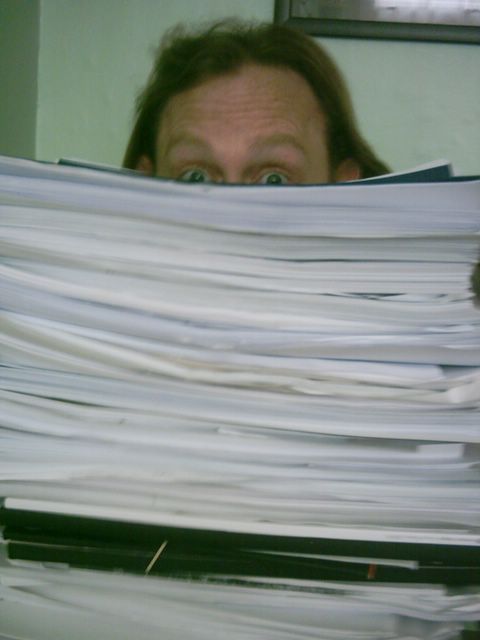
Freelance
The thing about being freelance is that you can dictate your own hours of work, which is great obviously (when you've got work to do). But being freelance and working from home means that you're pretty much tuned into work at all times. The computer's always there, tempting you to switch on; check emails, surf the net, fiddle with ideas, do some writing, or all of the above. (ok, maybe not the writing bit as the others are all cool tools of procrastination, a default position I'm trying to rid).
So it's Saturday afternoon and I'm fiddling with ideas and updating this blog. Bear with me with the blog by the way. I'm not that technically gifted so I'm building the site slowly with links and what nots. Hopefully, this will be a blog where fellow scriptwriters, readers, execs (who knows), heck just about anyone, can share their wit and wisdom about how to sustain a career in the UK film industry. Which, let's face it, is difficult.
I think screenwriting opportunities in the UK is like trying to squeeze 50,000 people into a gap where only 50 can fit. Most of us are stuck in the queue, and it's frustrating and full of rejection, but if you hang on in there with determination, luck and talent (and perhaps meet a few people who can help you jump the queue), a place should open up in that special gap of opportunity. Not sure how good that simile is but I like the image.
Okay, I'm going to try to upload a photo now. My first step into learning how the blog trimmings actually work.
DS
So it's Saturday afternoon and I'm fiddling with ideas and updating this blog. Bear with me with the blog by the way. I'm not that technically gifted so I'm building the site slowly with links and what nots. Hopefully, this will be a blog where fellow scriptwriters, readers, execs (who knows), heck just about anyone, can share their wit and wisdom about how to sustain a career in the UK film industry. Which, let's face it, is difficult.
I think screenwriting opportunities in the UK is like trying to squeeze 50,000 people into a gap where only 50 can fit. Most of us are stuck in the queue, and it's frustrating and full of rejection, but if you hang on in there with determination, luck and talent (and perhaps meet a few people who can help you jump the queue), a place should open up in that special gap of opportunity. Not sure how good that simile is but I like the image.
Okay, I'm going to try to upload a photo now. My first step into learning how the blog trimmings actually work.
DS
Jumat, 12 Agustus 2005
Hello!
Just started this blog today. The thing to do nowadays it seems.
Anyway, this is all about my work as a scriptwriter/scriptreader and what it's like and how I feel about it on a day to day basis.
On my way into town right now to pick up a couple of scripts to read as well as collect my three minute short film - On the Death of His Wife - which has undergone a sound synch & revamp. And for free! I am blessed. The film cost nothing to make as I borrowed the camera, got two amateur actors (who did a great job), and came up with an idea to accommodate a no-budget scenario. Editing has been the most crucial part of the process but luckily I've been able to blag & ask favours of people I know and people who've never heard of me. The latter doing the sound synch, amazing.
So there you go. First post. I need to lie down.
DS
Anyway, this is all about my work as a scriptwriter/scriptreader and what it's like and how I feel about it on a day to day basis.
On my way into town right now to pick up a couple of scripts to read as well as collect my three minute short film - On the Death of His Wife - which has undergone a sound synch & revamp. And for free! I am blessed. The film cost nothing to make as I borrowed the camera, got two amateur actors (who did a great job), and came up with an idea to accommodate a no-budget scenario. Editing has been the most crucial part of the process but luckily I've been able to blag & ask favours of people I know and people who've never heard of me. The latter doing the sound synch, amazing.
So there you go. First post. I need to lie down.
DS
Langganan:
Postingan (Atom)