In this month’s issue of UK Writer (the Writers’ Guild magazine), there are a number of cracking articles. OK, I’m biased because one of them is from me but it really is a top issue.
Julian Friedmann talks about a freelancer’s charter to minimise the pitfalls of the vulnerable writer while Darren Rapier shares a relationship he had with an agent that didn’t go quite as well as they both had hoped.
Andy Walsh reports from a Games writers’ conference in Texas. There’s an in-depth feature on Harold Pinter’s career and recent Nobel award. Edel Brosnan interviews Deborah Moggach on adapting Pride & Prejudice and her other work. And French screenwriter Anne-Louise Trividic is interviewed by Claire Dixault.
Julian Oddy describes his motivation and intention for his website Doollee , which is an on-line database of playwrights and theatre plays.
Prolific TV producer Catherine Bailey gets the once over thanks to Richard Bevan, and Andrea Sanders-Reece talks abut the digital world and how the Creators’ Rights Alliance (CRA) works hard to ensure that ‘creators are represented and heard by the people who are influencing change’.
And on page 33, alongside my photo-shot mug, is my article on how I got involved in scriptwriting and what it means to me. Tom Green, the editor of the mag, and of the Writers’ Guild blog (see sidebar), found me via the blog and asked me to contribute.
Check out the Writers’ Guild website for full details of what they do and how you can join (there’s Full membership, Candidate membership, Student membership and Affiliate membership).
But for the benefit of those who haven’t joined yet, and our overseas readers, here’s my article about my influences. Here’s to a storming 2006. Happy New Year.
“The moment that fed my obsession with screenwriting came when I was twelve years old. And funnily enough, this moment was inspired by William Goldman, but not in the way you’d expect.
One day, browsing through books at home, I stumbled across a novel called Magic by one William Goldman. It tells the story of a ventriloquist who becomes controlled by his own dummy to perform acts of murder.
At my impressionist age, I loved every minute of it and (call it fate) when I finished the book, the film adaptation was going to be on telly that night. Naturally, I felt that the TV broadcast was directly linked to me having just completed the book.
Full of excitement, I sat down eagerly to watch the film with the book on my lap, ready for the story to unfold exactly as it transpired on the literary page.
Confusion. I was on page one of the book but the film was starting somewhere else entirely and I was scrambling to find where. After a couple of minutes elapsed in the same manner, I surrendered myself to the narrative of the film and gave up on the book being my personal guide.
But I was still confused. William Goldman had written the script from his own book, so why was it so different? This is when I consciously became aware of a ‘script’ and what a ‘screenwriter’ did.
Mr Goldman would make a further impression with his book Adventures in the Screen Trade, my first glimpse into the actual nuts and bolts of the scriptwriting process.
My TV education started with Dennis Potter’s Singing Detective - a revelation - and Ted Whitehead’s adaptation of The Life and Loves of a She-Devil is always strong in my mind (mainly because they were adult shows that I was being allowed to watch).
At the cinema, I was growing up with John Hughes (Ferris Bueller’s Day Off, Weird Science) and Lawrence Kasdan (Star Wars, Raiders of the Lost Ark) but Coppola’s version of The Godfather opened my eyes to morally complex characters and Waldo Salt’s adaptation of Midnight Cowboy breaks my heart every time I see it.
When I came to England in 1994, I got a job at Channel 4 and worked my way into the comedy department. Simon Pegg & Jessica Stevenson’s scripts for Spaced were terrific and were brilliantly brought to life by director Edgar Wright.
Graham Linehan & Arthur Mathews’s wonderfully absurd creation of Father Ted keeps me in stitches, and watching Graham and Dylan Moran write (and rewrite) the first series of Black Books (I was production assistant) was an inspiration and a joy. Chris Morris, Steven Moffat, Kevin Cecil & Andy Riley all came within my reading radar, and I was hooked.
Jimmy McGovern, Paul Abbott and Russell T Davies may seem like obvious choices but their riveting, compelling and entertaining dramas are truly inspirational. Cracker is sorely missed. Queer as Folk is a masterpiece and Abbott’s Shameless is unmissable.
As an avid script reader for the last six years, I’ve been studying the great and the darn right horrible scripts that are out there but writers such as M Night Shymalan, Paul Haggis, Zach Helm, Purvis & Wade, Mellis & Scinto and Andrew Davies have greatly entertained and educated me in terms of style and craft.
On a more personal level, Sam Morrison and Chris Shepherd are two brilliant UK animators who have their own specific and distinctive voice which makes their scripts a cut above the rest.
Sam’s subtlety with character and his natural comic touch is a treat while Chris’s energetic edge gives his projects a unique tone. Staying with animation, Hollywood writers Ted Elliot & Terry Rossio know what it takes to write a good script and they share all their knowledge at their website WordPlay which is a regular internet pitstop that is forever illuminating and indispensable.
In terms of craft and structure, the Americans take their screenwriting very seriously and have provided me with endless inspiration and insight into how to make your own work stand apart, which of course is the intention with every new script that I begin.”
Rabu, 28 Desember 2005

Jumat, 23 Desember 2005
It's a Grudge Christmas
After a busy month of moving house and finishing a new spec script, I have finally realised that it's Christmas. My brain simply refused to acknowledge all notions of 'presents' or 'organisation' or anything else. But then we put up the tree and everything started to sink in.
I've just completed a horror script (this morning) so my mind is still wandering around in that sort of territory so imagine my surprise when I see this chocolate angel hanging off one of the tree branches.

Oh my god, they're making Grudge chocolates!! And if you think that's creepy (even the photo's a bit blurred), check out the back:

But it's her contorted face on the front and the dark hair that really gets me. Don't worry though, I've eaten her now. All is safe.
Seeing as everyone's already gone to the pub or sorting out their Christmas, this is my aloha for the holiday break. Although my next post will be the 100th so that might be a better way to finish off the year.
Until then, have a cool yule everyone. It's been great meeting you all or if it's your first visit, I hope you'll drop by again.
Danny
* By the way, if this post appears all out of synch and unformatted, let me know as I'm re-acquainting myself with putting up photos.
I've just completed a horror script (this morning) so my mind is still wandering around in that sort of territory so imagine my surprise when I see this chocolate angel hanging off one of the tree branches.

Oh my god, they're making Grudge chocolates!! And if you think that's creepy (even the photo's a bit blurred), check out the back:
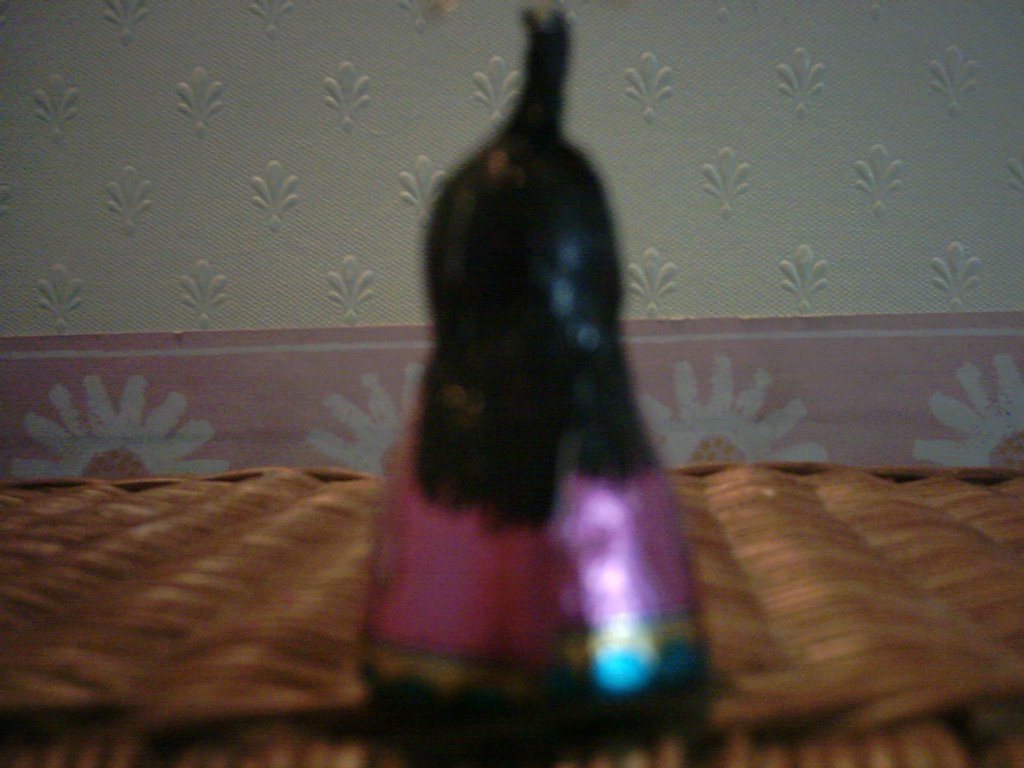
But it's her contorted face on the front and the dark hair that really gets me. Don't worry though, I've eaten her now. All is safe.
Seeing as everyone's already gone to the pub or sorting out their Christmas, this is my aloha for the holiday break. Although my next post will be the 100th so that might be a better way to finish off the year.
Until then, have a cool yule everyone. It's been great meeting you all or if it's your first visit, I hope you'll drop by again.
Danny
* By the way, if this post appears all out of synch and unformatted, let me know as I'm re-acquainting myself with putting up photos.
Post a Page
A whole range of screenwriter bloggers have been posting a page of their scripts in response to another blog's call to share your wares.
So, seeing as I've mentioned it lately, here's the first page of Aliens FC, written by me and Sam Morrison. Sorry, don't know how to format on Blogger or take a 'snapshot' of the script but here it is anyway.
FADE IN
Outer space.
The stars pock-mark the dark void.
PULL BACK slowly.
Off screen, a child's voice runs a football commentary.
VOICE (O/S)
And Griff Harding gets the ball. The Liverpool striker's got them on the ropes.
PULL BACK further from the stars, glide by the planet Jupiter.
The sound of a ball bouncing joins the off screen commentary.
VOICE (O/S)
And look at Harding go, he's around one, around two. Ooh, he nutmegs Bob Slate, the dweeb. The Everton midfielder was left stranded.
Past the planet Jupiter now and get a good look at our solar system, all the planets lined up right through to the sun.
VOICE (O/S)
And Harding is through, surely he must score. He shoots...
Incongruously, a football bounces off the solar system and thuds off screen.
VOICE (O/S)
...and scores! Griff Harding has scored a goal that is simply out of this world!
REVEAL
The solar system is a poster in a child's bedroom. Next to the poster is a pin up of Griff Harding, a square jawed, poncey looking footballer.
A child of about 12 runs around the room with his red Liverpool football shirt over his head (a typical goal celebration). HARDING, No 16, marks the back of the shirt.
VOICE
The crowd go wild. Raaah. Raaah.
So, seeing as I've mentioned it lately, here's the first page of Aliens FC, written by me and Sam Morrison. Sorry, don't know how to format on Blogger or take a 'snapshot' of the script but here it is anyway.
FADE IN
Outer space.
The stars pock-mark the dark void.
PULL BACK slowly.
Off screen, a child's voice runs a football commentary.
VOICE (O/S)
And Griff Harding gets the ball. The Liverpool striker's got them on the ropes.
PULL BACK further from the stars, glide by the planet Jupiter.
The sound of a ball bouncing joins the off screen commentary.
VOICE (O/S)
And look at Harding go, he's around one, around two. Ooh, he nutmegs Bob Slate, the dweeb. The Everton midfielder was left stranded.
Past the planet Jupiter now and get a good look at our solar system, all the planets lined up right through to the sun.
VOICE (O/S)
And Harding is through, surely he must score. He shoots...
Incongruously, a football bounces off the solar system and thuds off screen.
VOICE (O/S)
...and scores! Griff Harding has scored a goal that is simply out of this world!
REVEAL
The solar system is a poster in a child's bedroom. Next to the poster is a pin up of Griff Harding, a square jawed, poncey looking footballer.
A child of about 12 runs around the room with his red Liverpool football shirt over his head (a typical goal celebration). HARDING, No 16, marks the back of the shirt.
VOICE
The crowd go wild. Raaah. Raaah.
Rabu, 21 Desember 2005
Some Skillset Stuff
RELAUNCH OF SKILLSET FILM FUTURES BURSARY SCHEME - NEW PRIORITIES
NOW EASIER TO APPLY - MORE TYPES OF TRAINING WILL BE COVERED
Film Futures makes grants of up to £800 to individuals with 2+ years experience in the film industry to attend training in the following priority areas:
· Business Skills
· Technical and Craft Skills
· Health and Safety
There is no deadline for applications, however your course must not start earlier than five days after we receive your application. It is also advised that applications can take up to four weeks to process.
Please see bursaries for more detailed information including the Guidelines and an application form.
Skillset Industry Induction Award
Everything a new entrant needs to know about the industry
Skillset is giving new entrants the essential skills and knowledge they need to survive in the industry, at a fraction of the full cost! This ground-breaking scheme is open to freelancers and employees of SMEs with less than 12 months experience currently living and working in London.
Visit induction for full details.
NOW EASIER TO APPLY - MORE TYPES OF TRAINING WILL BE COVERED
Film Futures makes grants of up to £800 to individuals with 2+ years experience in the film industry to attend training in the following priority areas:
· Business Skills
· Technical and Craft Skills
· Health and Safety
There is no deadline for applications, however your course must not start earlier than five days after we receive your application. It is also advised that applications can take up to four weeks to process.
Please see bursaries for more detailed information including the Guidelines and an application form.
Skillset Industry Induction Award
Everything a new entrant needs to know about the industry
Skillset is giving new entrants the essential skills and knowledge they need to survive in the industry, at a fraction of the full cost! This ground-breaking scheme is open to freelancers and employees of SMEs with less than 12 months experience currently living and working in London.
Visit induction for full details.
The World According to Garp Jnr
Have you seen this over at Ben Yeoh's blog (or the original Guardian link, Ben has it).
A bunch of under 10s were asked about the best and worst things in the world and unsurprisingly, or perhaps surprisingly, their answers say a lot.
I've been recently musing, or perhaps procrastinating, about how interesting and unique we think we are as individuals but really, when it comes down to it, we're as predictable and reliable as a marketing demographer's wet dream.
But I find heart and reassurance from the kids' list, not only because I wholly agree with their 'worst things in the world' (although I'm a very good drunk, honest) but also because it reflects well for our animation spec which is currently jumping through various negotitiation hoops.
If kids think Wayne Rooney is more famous than Jesus, and Football is one of the best things in the world, along with Being Famous, then Aliens FC, written by moi and Sam Morrison has huge marketable clout and potential that we always envisaged, right when Sam told me the idea when we were pitching back and forth looking for our first project together. We're a bit closer to the deal but it's been a tough pitch, sheesh. 'Love the script, football hard to sell'. We disagree. Big time.
What does depress me though is that the marketing men out there will examine the list, and ongoing consumer trends, and will continue to target us and the kids for all our disposable cash until we all die of things we don't need. 'Disposable cash'. Oxymoron of the year 2005.
A bunch of under 10s were asked about the best and worst things in the world and unsurprisingly, or perhaps surprisingly, their answers say a lot.
I've been recently musing, or perhaps procrastinating, about how interesting and unique we think we are as individuals but really, when it comes down to it, we're as predictable and reliable as a marketing demographer's wet dream.
But I find heart and reassurance from the kids' list, not only because I wholly agree with their 'worst things in the world' (although I'm a very good drunk, honest) but also because it reflects well for our animation spec which is currently jumping through various negotitiation hoops.
If kids think Wayne Rooney is more famous than Jesus, and Football is one of the best things in the world, along with Being Famous, then Aliens FC, written by moi and Sam Morrison has huge marketable clout and potential that we always envisaged, right when Sam told me the idea when we were pitching back and forth looking for our first project together. We're a bit closer to the deal but it's been a tough pitch, sheesh. 'Love the script, football hard to sell'. We disagree. Big time.
What does depress me though is that the marketing men out there will examine the list, and ongoing consumer trends, and will continue to target us and the kids for all our disposable cash until we all die of things we don't need. 'Disposable cash'. Oxymoron of the year 2005.
Selasa, 20 Desember 2005
This Year I Have...
Got a good option/development deal for my Tony Doyle winning script and rewrote it according to producer and lead actor’s notes (which they didn’t like but that’s another post).
Made a three minute short film that didn’t cost a penny but turned out really well.
Wrote an ep of Doctors which won’t be shown until Feb 2006 when it’ll go out in the same week as my first ep (that I wrote in 2004).
Made the final shortlist for BBC Writers’ Academy but didn’t get selected.
Reduced my script reading by half.
Tried to agree a deal on an option for one of our (me and Sam’s) animation specs but is yet to be signed.
Made six pitches for existing or new shows. Two rejected. Two favourably received but still awaiting to hear, and two still not heard.
Started a blog in August about scriptwriting and script reading in the UK.
Had two back operations (one in January, the other in October). No more now thank you.
Wrote a new horror feature.
Moved house.
Stopped teaching in Leeds due to move (too far and expensive to travel).
Earned more for my writing than my reading/teaching for the first time since going freelance.
And I plan to write a new animation feature (spec, natch) over Christmas, which brings the year to an end.
Made a three minute short film that didn’t cost a penny but turned out really well.
Wrote an ep of Doctors which won’t be shown until Feb 2006 when it’ll go out in the same week as my first ep (that I wrote in 2004).
Made the final shortlist for BBC Writers’ Academy but didn’t get selected.
Reduced my script reading by half.
Tried to agree a deal on an option for one of our (me and Sam’s) animation specs but is yet to be signed.
Made six pitches for existing or new shows. Two rejected. Two favourably received but still awaiting to hear, and two still not heard.
Started a blog in August about scriptwriting and script reading in the UK.
Had two back operations (one in January, the other in October). No more now thank you.
Wrote a new horror feature.
Moved house.
Stopped teaching in Leeds due to move (too far and expensive to travel).
Earned more for my writing than my reading/teaching for the first time since going freelance.
And I plan to write a new animation feature (spec, natch) over Christmas, which brings the year to an end.
Senin, 19 Desember 2005
Dublin
Monday morning. 10.30am. Just about to go in to a meeting to talk about the rewrite of my Tony Doyle script that's in development with Parallel Films but I thought I'd do a quick post to say 'hello'.
Weekend has been mental. Living out of a suitcase, catching up with friends and family. Every time I visit, I say I'll book myself into a hotel or B&B only to touchdown in Dublin airport and realise: "Oh, I forgot to... Mam will you pick me up?"
Sister's 30th on Friday (well, the whole weekend really). Happy Birthday Berns! Woo-hoo! She works for Setanta Sports, bless her.
Have another meeting this afternoon with a production company I haven't met before. Don't know if it's an offer of work or just a general 'meet and greet' but they've been very friendly and efficient pre-meeting, even phoning me up yesterday (Sunday!) while I was having a pint post-lunch (ahem) to check that we were all set.
I'll be back in my (new!) home tomorrow and back to the familiarity of my desk. I'll probably post up one of those personal end of year review thingies, but I'll keep it short, promise.
Weekend has been mental. Living out of a suitcase, catching up with friends and family. Every time I visit, I say I'll book myself into a hotel or B&B only to touchdown in Dublin airport and realise: "Oh, I forgot to... Mam will you pick me up?"
Sister's 30th on Friday (well, the whole weekend really). Happy Birthday Berns! Woo-hoo! She works for Setanta Sports, bless her.
Have another meeting this afternoon with a production company I haven't met before. Don't know if it's an offer of work or just a general 'meet and greet' but they've been very friendly and efficient pre-meeting, even phoning me up yesterday (Sunday!) while I was having a pint post-lunch (ahem) to check that we were all set.
I'll be back in my (new!) home tomorrow and back to the familiarity of my desk. I'll probably post up one of those personal end of year review thingies, but I'll keep it short, promise.
Rabu, 14 Desember 2005
External Influences
James H has a new entry up for his completely addictive and hilarious Toy-Fu series.
I heard Russell T Davies yesterday on 5 Live talking about the Dr Who Christmas special and that he put in some political satire about Bush/Blair's Iraq tango. He said that when you're on a roll, whatever effects you as a writer usually ends up in your work.
Which brings me back to James H's Toy-Fu strip as it laments the recent passing of James's iPod in comical fashion. Of course, if you were following James's rant about his iPod going defunct, it makes it even funnier, but I reckon it's delicious as it is because of the way it's played on the 'toon. Check it out, you'll see what I mean.
I'm off for a five hour train trip to Leeds (finish my script on the way, oh yes), a day of teaching tomorrow, and then to Dublin for my sister's 30th that happily coincides with a couple of meetings. What an international jet-setter, man of mystery I am. Seamus Bond, if you will. Double-o-seacht (for those who speak Irish).
I heard Russell T Davies yesterday on 5 Live talking about the Dr Who Christmas special and that he put in some political satire about Bush/Blair's Iraq tango. He said that when you're on a roll, whatever effects you as a writer usually ends up in your work.
Which brings me back to James H's Toy-Fu strip as it laments the recent passing of James's iPod in comical fashion. Of course, if you were following James's rant about his iPod going defunct, it makes it even funnier, but I reckon it's delicious as it is because of the way it's played on the 'toon. Check it out, you'll see what I mean.
I'm off for a five hour train trip to Leeds (finish my script on the way, oh yes), a day of teaching tomorrow, and then to Dublin for my sister's 30th that happily coincides with a couple of meetings. What an international jet-setter, man of mystery I am. Seamus Bond, if you will. Double-o-seacht (for those who speak Irish).
Selasa, 13 Desember 2005
Script Opportunities UK
It’s sometimes surprising (and disappointing) to read the posts on Shooting People where people moan and gripe about how crap the system is here in the UK and that there are no opportunities or not enough support (or script competitions) to help identify new talent.
Here’s a list to counter that claim. It’s not a definitive list by any means (if anyone knows of someone, somewhere or some other opportunity, then let us know) but it’s a useful directory of reputable industry support and essential knowledge of where to go with your script. Some of these will already be linked in the sidebar but repetition is the base of all knowledge.
Competitions:
The deadline for Screen International’s annual Oscar Moore prize has just elapsed (9th December) but sometimes the closing date can be extended, so it’s worth checking it out if you’ve got a script you think has a chance of being better than the rest.
It’s the UK’s top screenwriting competition with a tasty £10 grand prize, widespread industry exposure and a performed reading of your script all included in the glory. You don’t see it publicised very much so sometimes it can slip under the radar but every spec screenwriter worth their salt has the page bookmarked on their browser. Every year, they choose a different genre, this year being ‘Comedy’. Contact Sade Sharp for any niggling queries: sade.sharp@emap.com
No prize winner has gone on to get their film made, yet, but I know two previous winners who were able to get work and get an agent all because they bothered to enter. There’s not even an entry fee (!) so you have no excuse (although a donation of your choice is recommended as the prize is a charitable foundation in memory of Screen International’s editor-in-chief Oscar Moore who died of an AIDS-related illness in 1996.)
Another current contest is Golcanda Films’ Horror Competition. The deadline is January 28th 2006 and the prize is £1,000 advance on an option and two runners-up will be placed through a Draft to Draft Development Programme at the Script Factory.
For Irish writers in the UK, there’s the Tony Doyle bursary, set up by the BBC in memory of Irish actor Tony Doyle (Ballykissangel, Between the Lines etc). I won this last year (hurrah) but it’s now a biannual event so keep checking for details of the next deadline.
Advantages of winning the prize include meeting the important BBC bods who are keen to promote you as a new writer (recommend you to an agent if you haven’t got one for example) and I’ve been lucky to see my winning script go into development with Parallel Films (Breakfast on Pluto) thanks to hunky Irish actor Liam Cunningham who was part of the jury and who absolutely flipped for my story (coincidentally, I wrote it with him in mind).
Development Funding:
The UK Film Council. I can hear some of you take a sharp intake of breath in disgust already. Come on, don’t be like that. They’ve got a pot full of money and they’ve got to give it to someone. I know submitting for their various schemes and funds can be frustrating, especially if you keep getting rejected (hello!), but they’re genuinely after decent projects so even if you’re a lone writer, they’re willing to consider your script for a bit of their development cash.
They’ve got a good scheme for short films and the 25 Words or Less is always worth a pitch or two.
And if you’re daunted by the Film Council’s main office in London, don’t forget to contact your local region to see if they’ve got any funds or schemes that are relevant to your project.
Development Support:
The Script Factory has become one of Europe’s leading development organisations working to support screenwriters by finding and developing new screenwriting talent; supporting the people who work with screenwriters; and by presenting unique and unmissable live screenwriting events with some of cinema’s top creative talent.
They offer courses on how to be a script reader and diplomas in script development, and you can get your script read & assessed by their own readers, and after your polish, you can get your script performed by professional actors to see what’s working and what’s not. It’s got widespread industry support. Essential contacts and knowledge.
Skillset is the Sector Skills Council for the Audio Visual Industries, which comprise broadcast, film, video, interactive media and photo imaging. Jointly funded by those industries and the Government, their job is to make sure that the UK audio visual industries have the right people, with the right skills, in the right place, at the right time, so that the industries remain competitive.
Raindance is dedicated to fostering and promoting independent film in the UK and around the world. Raindance combines Raindance Film Festival, Training Courses, Raindance Kids Film Festival and Raindance Film Productions. Never heard of them? Where have you been?
Shooting People is an on-line community of writers and filmmakers. It’s a subscription service (about £20 for the year) but it’s not a lot for widespread access to a range of production crew and experience. The post boards can become negative diatribes about the industry but if you’re stuck for crew on your short or low-budget feature, then there’s no better resource. You can even pitch your scripts every Wednesday. Essential pitstop for all new writers, and an enjoyable hang out for those with a bit more street cred.
There’s also Talent Circle and UK Screen. Similar organisations and set-ups to Shooting People, also for a small fee (I think Talent Circle might be free).
----------
So there you have it. A few places for competitions, funding and support. I’m sure our American friends would say we’re spoilt for choice but all I ever hear is moans and groans about how the UK industry is rubbish. Of course there are flaws and frustrations in every set-up but the opportunities do exist so it’s down to us to put up or shut up with our own work rather than complain about the system.
Crikey. That’s more links in one post than I ever thought possible (that I’d do) so let me know if a few don’t work or whatever, and if you know of other funding/competitions/places worth a visit, feel free to share.
Here’s a list to counter that claim. It’s not a definitive list by any means (if anyone knows of someone, somewhere or some other opportunity, then let us know) but it’s a useful directory of reputable industry support and essential knowledge of where to go with your script. Some of these will already be linked in the sidebar but repetition is the base of all knowledge.
Competitions:
The deadline for Screen International’s annual Oscar Moore prize has just elapsed (9th December) but sometimes the closing date can be extended, so it’s worth checking it out if you’ve got a script you think has a chance of being better than the rest.
It’s the UK’s top screenwriting competition with a tasty £10 grand prize, widespread industry exposure and a performed reading of your script all included in the glory. You don’t see it publicised very much so sometimes it can slip under the radar but every spec screenwriter worth their salt has the page bookmarked on their browser. Every year, they choose a different genre, this year being ‘Comedy’. Contact Sade Sharp for any niggling queries: sade.sharp@emap.com
No prize winner has gone on to get their film made, yet, but I know two previous winners who were able to get work and get an agent all because they bothered to enter. There’s not even an entry fee (!) so you have no excuse (although a donation of your choice is recommended as the prize is a charitable foundation in memory of Screen International’s editor-in-chief Oscar Moore who died of an AIDS-related illness in 1996.)
Another current contest is Golcanda Films’ Horror Competition. The deadline is January 28th 2006 and the prize is £1,000 advance on an option and two runners-up will be placed through a Draft to Draft Development Programme at the Script Factory.
For Irish writers in the UK, there’s the Tony Doyle bursary, set up by the BBC in memory of Irish actor Tony Doyle (Ballykissangel, Between the Lines etc). I won this last year (hurrah) but it’s now a biannual event so keep checking for details of the next deadline.
Advantages of winning the prize include meeting the important BBC bods who are keen to promote you as a new writer (recommend you to an agent if you haven’t got one for example) and I’ve been lucky to see my winning script go into development with Parallel Films (Breakfast on Pluto) thanks to hunky Irish actor Liam Cunningham who was part of the jury and who absolutely flipped for my story (coincidentally, I wrote it with him in mind).
Development Funding:
The UK Film Council. I can hear some of you take a sharp intake of breath in disgust already. Come on, don’t be like that. They’ve got a pot full of money and they’ve got to give it to someone. I know submitting for their various schemes and funds can be frustrating, especially if you keep getting rejected (hello!), but they’re genuinely after decent projects so even if you’re a lone writer, they’re willing to consider your script for a bit of their development cash.
They’ve got a good scheme for short films and the 25 Words or Less is always worth a pitch or two.
And if you’re daunted by the Film Council’s main office in London, don’t forget to contact your local region to see if they’ve got any funds or schemes that are relevant to your project.
Development Support:
The Script Factory has become one of Europe’s leading development organisations working to support screenwriters by finding and developing new screenwriting talent; supporting the people who work with screenwriters; and by presenting unique and unmissable live screenwriting events with some of cinema’s top creative talent.
They offer courses on how to be a script reader and diplomas in script development, and you can get your script read & assessed by their own readers, and after your polish, you can get your script performed by professional actors to see what’s working and what’s not. It’s got widespread industry support. Essential contacts and knowledge.
Skillset is the Sector Skills Council for the Audio Visual Industries, which comprise broadcast, film, video, interactive media and photo imaging. Jointly funded by those industries and the Government, their job is to make sure that the UK audio visual industries have the right people, with the right skills, in the right place, at the right time, so that the industries remain competitive.
Raindance is dedicated to fostering and promoting independent film in the UK and around the world. Raindance combines Raindance Film Festival, Training Courses, Raindance Kids Film Festival and Raindance Film Productions. Never heard of them? Where have you been?
Shooting People is an on-line community of writers and filmmakers. It’s a subscription service (about £20 for the year) but it’s not a lot for widespread access to a range of production crew and experience. The post boards can become negative diatribes about the industry but if you’re stuck for crew on your short or low-budget feature, then there’s no better resource. You can even pitch your scripts every Wednesday. Essential pitstop for all new writers, and an enjoyable hang out for those with a bit more street cred.
There’s also Talent Circle and UK Screen. Similar organisations and set-ups to Shooting People, also for a small fee (I think Talent Circle might be free).
----------
So there you have it. A few places for competitions, funding and support. I’m sure our American friends would say we’re spoilt for choice but all I ever hear is moans and groans about how the UK industry is rubbish. Of course there are flaws and frustrations in every set-up but the opportunities do exist so it’s down to us to put up or shut up with our own work rather than complain about the system.
Crikey. That’s more links in one post than I ever thought possible (that I’d do) so let me know if a few don’t work or whatever, and if you know of other funding/competitions/places worth a visit, feel free to share.
Minggu, 11 Desember 2005
The Computer Says 'No'
For those unfamiliar with the BBC’s wildly successful comedy sketch show, Little Britain, David Walliams plays a character where he’s a disinterested and rude travel agent (actually, he’s playing it as a woman) who perfunctorily checks out her customers’ queries only to frustrate them as she gives them the maddeningly reply of: ‘the computer says no’.
It’s a one trick kind of sketch because it relies on that particular catchphrase but it’s consistently amusing (to me anyway) because it highlights the blasé attitude so prevalent in people who are supposedly in some sort of customer service capacity.
Having spent most of last week moving house, it was a deeply stressful and anxious time that was mostly reliant on other people doing various tasks that they had been paid to do and they had promised to undertake.
Inevitably, the disappointment and frustrations of these promises not being fulfilled took their toll to the state where I was overcome with emotion and relief when someone actually did their job. Note: not going to that extra effort or deserving of praise - just doing what they were supposed to do.
And in my present mind-set of (un)packing boxes, misplaced items and disconnected broadband, my aggravated thoughts about people’s slack attitudes took a tenuous turn to screenwriting and filmmaking.
It occurred to me that today’s society is deluged with everything it could possibly want, from home technology to visual wizardry at the cineplexes. Subsequently, or quite possibly consequently, a certain complacency has set in regarding what’s presented to us as entertainment and what we choose to watch.
You can work your ass off on a script. Literally pour blood, sweat and tears into what you consider a dramatic masterpiece, or at the very least, something you feel has true value, only for it to be deconstructed in an hour and a half (or sometimes less) by a cynical script reader who’s already thinking about what he wants for lunch (the script reader says ‘no’).
As spec screenwriters, this is the situation we find ourselves faced with - doing our best to appease the gatekeepers only to be dealt with a swift and dismissive rejection for all our pain and effort.
But think about actually getting a film made. Oh the joy. The production, the camaraderie, the new friendships forged (and forgotten). The battle with the budget, the seduction of the stars, the edification of the edit (eh?).
Then your script, your dream, makes it to the screen - to the great cinema going public. And then what? Some reviewer reduces your big break or your lifetime’s work to ‘two stars’. A digestible sound bite for the entertainment super wave of information. The computer says ‘no’. Next.
There’s something not quite right in the mix. Audiences want to be told a good story, they want to be entertained, involved and moved. And yet, sometimes when a film or TV series come along that does everything it’s supposed to do, it can fail to find an appreciative crowd because they’re down watching Doom.
Some terrific films have been made out of spectacle and violence and visual effects but when the producers/distributors choose to bombard us with these ingredients in the hope of making a sale, the entertaining effect can quickly deteriorate. Carefully placed moments of scale and spectacle can have a much more pleasing effect than those that try to dazzle at every opportunity.
But with audiences becoming more accustomed to CGI and 'escalating' standards of entertainment, what are filmmakers and screenwriters supposed to do to keep everyone’s attention fixed on the screen?
Critics and audiences are only too ready to sigh and moan when Hollywood doesn’t give them what they want but the system’s only responding to the market and what the audience has claimed they like. It’s all too easy to slip into casual consumer mode of ‘want/don’t want, like/don’t like’ but with just a bit more effort of choice and application, this pervasive, dismissive habit may actually turn. And hopefully one day, the computer will say ‘yes’.
It’s a one trick kind of sketch because it relies on that particular catchphrase but it’s consistently amusing (to me anyway) because it highlights the blasé attitude so prevalent in people who are supposedly in some sort of customer service capacity.
Having spent most of last week moving house, it was a deeply stressful and anxious time that was mostly reliant on other people doing various tasks that they had been paid to do and they had promised to undertake.
Inevitably, the disappointment and frustrations of these promises not being fulfilled took their toll to the state where I was overcome with emotion and relief when someone actually did their job. Note: not going to that extra effort or deserving of praise - just doing what they were supposed to do.
And in my present mind-set of (un)packing boxes, misplaced items and disconnected broadband, my aggravated thoughts about people’s slack attitudes took a tenuous turn to screenwriting and filmmaking.
It occurred to me that today’s society is deluged with everything it could possibly want, from home technology to visual wizardry at the cineplexes. Subsequently, or quite possibly consequently, a certain complacency has set in regarding what’s presented to us as entertainment and what we choose to watch.
You can work your ass off on a script. Literally pour blood, sweat and tears into what you consider a dramatic masterpiece, or at the very least, something you feel has true value, only for it to be deconstructed in an hour and a half (or sometimes less) by a cynical script reader who’s already thinking about what he wants for lunch (the script reader says ‘no’).
As spec screenwriters, this is the situation we find ourselves faced with - doing our best to appease the gatekeepers only to be dealt with a swift and dismissive rejection for all our pain and effort.
But think about actually getting a film made. Oh the joy. The production, the camaraderie, the new friendships forged (and forgotten). The battle with the budget, the seduction of the stars, the edification of the edit (eh?).
Then your script, your dream, makes it to the screen - to the great cinema going public. And then what? Some reviewer reduces your big break or your lifetime’s work to ‘two stars’. A digestible sound bite for the entertainment super wave of information. The computer says ‘no’. Next.
There’s something not quite right in the mix. Audiences want to be told a good story, they want to be entertained, involved and moved. And yet, sometimes when a film or TV series come along that does everything it’s supposed to do, it can fail to find an appreciative crowd because they’re down watching Doom.
Some terrific films have been made out of spectacle and violence and visual effects but when the producers/distributors choose to bombard us with these ingredients in the hope of making a sale, the entertaining effect can quickly deteriorate. Carefully placed moments of scale and spectacle can have a much more pleasing effect than those that try to dazzle at every opportunity.
But with audiences becoming more accustomed to CGI and 'escalating' standards of entertainment, what are filmmakers and screenwriters supposed to do to keep everyone’s attention fixed on the screen?
Critics and audiences are only too ready to sigh and moan when Hollywood doesn’t give them what they want but the system’s only responding to the market and what the audience has claimed they like. It’s all too easy to slip into casual consumer mode of ‘want/don’t want, like/don’t like’ but with just a bit more effort of choice and application, this pervasive, dismissive habit may actually turn. And hopefully one day, the computer will say ‘yes’.
Rabu, 07 Desember 2005
Free Online Script Workshops*
*Or 'Online Rejection is Worth It'
As I occupy myself with boring, mundane but essential household tasks, here’s a guest post from Sam Morrison, an award-winning animator who I’m lucky to call my co-writer on a few projects.
Sam’s animation is great – you can check out his stuff at Nexus Productions’ website (follow the links to directors’ showreels) – but it’s his writing that I particularly became attached with when I met him in 2000. We share a similar style but I admire (read: envy) Sam’s subtlety of character, his natural comic touch and his easy-gong attitude towards collaboration. Together we make a good writing team which I see going from strength to strength. But enough of that, here’s Sam:
“Danny is packing up things into boxes for his move and asked me to step in with some random warblings on any aspect of writing. I paraphrase a little, but not as much as I’d like. Anyway, here they are.
I don’t have Danny’s experience of script reading or writing, though we write a lot together and are making some headway. My writing career thus far has been a series of near misses and what-ifs – a familiar story I’m sure, and not one to wallow pedantically in now, much as I feel I deserve to.
For us writers yet to get a TV credit under our belt (your own spec scripts don’t count, as you basically hired yourself to write them) I just wanted to say a few words about the helpfulness of online screenwriting communities like American Zoetrope, Trigger Street etc.
These get quite a bad rep sometimes - and sometimes for good reason - but for me they’ve been pretty helpful. For anyone not familiar with the set-up, the idea is that you can submit a script as soon as you’ve joined – but can only access other people’s reviews of your work after you have reviewed four other scripts yourself.
Reviews are rated to prevent people from abusing the system, and most of the time it works pretty well, although reviews vary as greatly in quality as the scripts do. Your feeling for the site tends to rest on the latest review or script you’ve read, so at times the place feels amateurish and competitive, and at times you get a sense of what a great idea it was and how helpful it can be.
That’s the rub – it can be, it often isn’t. The population of these sites isn’t policed, and occasionally reviews can feel like someone is getting something off their chest. I’ve had people refuse to read a script because it had a disclaimer about its use of science and a review that corrected almost every line of dialogue to be stiffly, syntactically correct.
But if you swallow these and avoid getting into a virtual dogfight with the perpetrators there are genuine writers and reviewers to be found. And what is most helpful about these sites, much more so than any ringing endorsement of your own work, is the process you go through as a reviewer, which mirrors to a certain degree what Danny does as a reader.
From the most comprehensively realised story to the most cliché ridden claptrap, you have to define what you think does and doesn’t work in a script, what are its strengths (for it helps to compliment) and weaknesses, whether the dialogue is up to scratch, is it original, do you empathise with the main characters, etc, etc.
In turn, you naturally find yourself thinking in the same way about your own work… a little, because it’s hard to be truly objective, but a little can be enough when you start identifying why it might not be the tour de force you thought – and how you can make it better. It gets the ball rolling, and past the point where you simply re-read your script and think how great it is. Or is that just me?
Anyway, if you have the required thick skin for reviews - and considered manner to supply some of your own, then places like American Zoetrope can be useful tool in pushing your writing on a little bit."
As I occupy myself with boring, mundane but essential household tasks, here’s a guest post from Sam Morrison, an award-winning animator who I’m lucky to call my co-writer on a few projects.
Sam’s animation is great – you can check out his stuff at Nexus Productions’ website (follow the links to directors’ showreels) – but it’s his writing that I particularly became attached with when I met him in 2000. We share a similar style but I admire (read: envy) Sam’s subtlety of character, his natural comic touch and his easy-gong attitude towards collaboration. Together we make a good writing team which I see going from strength to strength. But enough of that, here’s Sam:
“Danny is packing up things into boxes for his move and asked me to step in with some random warblings on any aspect of writing. I paraphrase a little, but not as much as I’d like. Anyway, here they are.
I don’t have Danny’s experience of script reading or writing, though we write a lot together and are making some headway. My writing career thus far has been a series of near misses and what-ifs – a familiar story I’m sure, and not one to wallow pedantically in now, much as I feel I deserve to.
For us writers yet to get a TV credit under our belt (your own spec scripts don’t count, as you basically hired yourself to write them) I just wanted to say a few words about the helpfulness of online screenwriting communities like American Zoetrope, Trigger Street etc.
These get quite a bad rep sometimes - and sometimes for good reason - but for me they’ve been pretty helpful. For anyone not familiar with the set-up, the idea is that you can submit a script as soon as you’ve joined – but can only access other people’s reviews of your work after you have reviewed four other scripts yourself.
Reviews are rated to prevent people from abusing the system, and most of the time it works pretty well, although reviews vary as greatly in quality as the scripts do. Your feeling for the site tends to rest on the latest review or script you’ve read, so at times the place feels amateurish and competitive, and at times you get a sense of what a great idea it was and how helpful it can be.
That’s the rub – it can be, it often isn’t. The population of these sites isn’t policed, and occasionally reviews can feel like someone is getting something off their chest. I’ve had people refuse to read a script because it had a disclaimer about its use of science and a review that corrected almost every line of dialogue to be stiffly, syntactically correct.
But if you swallow these and avoid getting into a virtual dogfight with the perpetrators there are genuine writers and reviewers to be found. And what is most helpful about these sites, much more so than any ringing endorsement of your own work, is the process you go through as a reviewer, which mirrors to a certain degree what Danny does as a reader.
From the most comprehensively realised story to the most cliché ridden claptrap, you have to define what you think does and doesn’t work in a script, what are its strengths (for it helps to compliment) and weaknesses, whether the dialogue is up to scratch, is it original, do you empathise with the main characters, etc, etc.
In turn, you naturally find yourself thinking in the same way about your own work… a little, because it’s hard to be truly objective, but a little can be enough when you start identifying why it might not be the tour de force you thought – and how you can make it better. It gets the ball rolling, and past the point where you simply re-read your script and think how great it is. Or is that just me?
Anyway, if you have the required thick skin for reviews - and considered manner to supply some of your own, then places like American Zoetrope can be useful tool in pushing your writing on a little bit."
Selasa, 06 Desember 2005
Secret Worlds and Podcasts
So Jonathan Ross said The Lion, The Witch and the Wardrobe was rubbish. Well, not exactly rubbish but he was distinctly disappointed. Which was interesting as I thought it would be a film right up his street, no matter how good or bad the film may be.
I’m sure it’s solid entertainment and I doubt that Mr Ross’s opinion is going to forbid the film from raking in the entire planet’s leftover cash from the Christmas period but his review has already given me the edge to wait for it to become available on DVD. I read the first book in the series not so long ago, so the story and images are happy in my head.
And after I saw an ‘exclusive behind the scenes’ show on Sky Movies (i.e. bland publicity and ‘look at these innovative CGI visual effects we’ve done’), I got the impression that it was trying to build on the popularity of the Rings whilst not doing anything great with the characters or story. Mind you, I’ll probably go to see it for Tilda Swinton alone. And just to balance it out: James McAvoy is fab too (he’ll star in one of my films one day, oh yes).
The practicalities of the real world have made a claim on my life and have decreed that my full attention will be focused on what’s really important. So, sorrow and alas, I won’t be at my regular online station over the next few days. However, I can recommend these alternative outlets for screenwriting and amusing titbits.
Creative Screenwriting Podcasts are often entertaining and insightful Q&As that don’t resort to the gushing love fests of standard workshops. Even a rubbish film can make a justifiable defence at what made the writers do it in the first place (The Island, hello).
Sam and Jim Go To Hollywood have been regularly charting their slow rise to Hollywood success but I’ve just picked up on it. They share their wise and witty insights in what it’s like to give up everything and go in search of the dream.
Ricky Gervais has started a podcast for The Guardian together with Stephen Merchant and their dry producer Karl Pilkington. Ricky may be the performer and receives all the glory but let’s hear it for Merchant once and a while. He doesn’t get enough credit.
****UPDATE***
Sorry, meant to put this in earlier. Lost Podcasts: you can listen to the writers, producers and actors talk about everything that’s happening on that poxy island where they’re all stranded waiting for a Starbucks to open or something. It’s up-to-date for the second series (UK still trailing with the first) so there are probably lots of spoilers and not-so-spoilers.
See you next week, probably, and I might be able to squeeze in a guest post in between.
I’m sure it’s solid entertainment and I doubt that Mr Ross’s opinion is going to forbid the film from raking in the entire planet’s leftover cash from the Christmas period but his review has already given me the edge to wait for it to become available on DVD. I read the first book in the series not so long ago, so the story and images are happy in my head.
And after I saw an ‘exclusive behind the scenes’ show on Sky Movies (i.e. bland publicity and ‘look at these innovative CGI visual effects we’ve done’), I got the impression that it was trying to build on the popularity of the Rings whilst not doing anything great with the characters or story. Mind you, I’ll probably go to see it for Tilda Swinton alone. And just to balance it out: James McAvoy is fab too (he’ll star in one of my films one day, oh yes).
The practicalities of the real world have made a claim on my life and have decreed that my full attention will be focused on what’s really important. So, sorrow and alas, I won’t be at my regular online station over the next few days. However, I can recommend these alternative outlets for screenwriting and amusing titbits.
Creative Screenwriting Podcasts are often entertaining and insightful Q&As that don’t resort to the gushing love fests of standard workshops. Even a rubbish film can make a justifiable defence at what made the writers do it in the first place (The Island, hello).
Sam and Jim Go To Hollywood have been regularly charting their slow rise to Hollywood success but I’ve just picked up on it. They share their wise and witty insights in what it’s like to give up everything and go in search of the dream.
Ricky Gervais has started a podcast for The Guardian together with Stephen Merchant and their dry producer Karl Pilkington. Ricky may be the performer and receives all the glory but let’s hear it for Merchant once and a while. He doesn’t get enough credit.
****UPDATE***
Sorry, meant to put this in earlier. Lost Podcasts: you can listen to the writers, producers and actors talk about everything that’s happening on that poxy island where they’re all stranded waiting for a Starbucks to open or something. It’s up-to-date for the second series (UK still trailing with the first) so there are probably lots of spoilers and not-so-spoilers.
See you next week, probably, and I might be able to squeeze in a guest post in between.
Senin, 05 Desember 2005
Procrastination and Pages
The best thing I ever did at school was learn how to touch type. And when I was sixteen, my parents bought me a typewriter so I could write a bit more professionally. It was a big clunky electric IBM about the size of a microwave that made loud and impressive whacks with each key.
It was so sensitive, you only had to breathe on a letter and it would type so I became quite good and quite fast, quite quickly. Whenever ‘lost thought’ would set in (staring hypnotically at a blank piece of paper), I would type the introductions to whatever book was lying around (the bits about the author for example). This helped me practice my typing while downstairs my parents nodded at each other as if I was steaming away on a masterpiece.
So, I left my fingers do the talking for most of this morning and managed to write twelve pages of my script. As I say, I haven’t outlined or done a treatment but now I know where the story is going and what’s going to happen, I’ve jotted down a rough outline of where I want it to go.
There’s still room for the characters to surprise me or go in a different direction. I’m really enjoying it. It’s great to have the momentum and the desire to actually sit down and get stuff done (especially as it’s pretty hectic this week with a host of demanding distractions).
Procrastination is always such an easy and accessible hobby that will consume most of my days when I’m less busy and focused. But why is that? All writers suffer, at some stage or another, and most would admit to ‘enjoy having written rather than having to write’. It’s curious, n’est pas?
After all, we set ourselves apart from other mere mortals by the lofty call to write and yet when we sit down to put pen to paper we find ourselves doodling or staring off into space. It seems to me that it’s a crushing habit of human nature. We will choose the least resistance and easiest option to whatever it is that we want. We won’t even indicate off roundabouts as soon as we’ve passed our test for crying out loud.
So while the desire to create and write is strong, and gets our asses to the desk, the mental effort of clearly getting across what we want to say summons a stumbling block because we realise that this writing lark is actually hard work and we’d rather have it easy, thank you very much.
My mother is a good example of this (sorry Mum). She’s a good writer but doesn’t want the hassle of rewriting anything and she can’t bear anybody being critical about what she’s written. And so, she busies herself with writing courses and 'get writing' books but once they’re done, she does nothing. Sits back and waits for the Muse to call. But guess what, the Muse is on holiday and has turned off her mobile.
And as for being sensitive about people criticising or rejecting your work? Sheesh, that’s a whole different side of things completely. A stinging rejection can send you into a dizzying spell of procrastination and self-doubt. Gotta keep going, gotta keep trying. Easier said than done of course but to leap that hurdle between keen amateur writer and hardened pro, you must develop a thick skin and a desire to write, even when you don’t want to.
It was so sensitive, you only had to breathe on a letter and it would type so I became quite good and quite fast, quite quickly. Whenever ‘lost thought’ would set in (staring hypnotically at a blank piece of paper), I would type the introductions to whatever book was lying around (the bits about the author for example). This helped me practice my typing while downstairs my parents nodded at each other as if I was steaming away on a masterpiece.
So, I left my fingers do the talking for most of this morning and managed to write twelve pages of my script. As I say, I haven’t outlined or done a treatment but now I know where the story is going and what’s going to happen, I’ve jotted down a rough outline of where I want it to go.
There’s still room for the characters to surprise me or go in a different direction. I’m really enjoying it. It’s great to have the momentum and the desire to actually sit down and get stuff done (especially as it’s pretty hectic this week with a host of demanding distractions).
Procrastination is always such an easy and accessible hobby that will consume most of my days when I’m less busy and focused. But why is that? All writers suffer, at some stage or another, and most would admit to ‘enjoy having written rather than having to write’. It’s curious, n’est pas?
After all, we set ourselves apart from other mere mortals by the lofty call to write and yet when we sit down to put pen to paper we find ourselves doodling or staring off into space. It seems to me that it’s a crushing habit of human nature. We will choose the least resistance and easiest option to whatever it is that we want. We won’t even indicate off roundabouts as soon as we’ve passed our test for crying out loud.
So while the desire to create and write is strong, and gets our asses to the desk, the mental effort of clearly getting across what we want to say summons a stumbling block because we realise that this writing lark is actually hard work and we’d rather have it easy, thank you very much.
My mother is a good example of this (sorry Mum). She’s a good writer but doesn’t want the hassle of rewriting anything and she can’t bear anybody being critical about what she’s written. And so, she busies herself with writing courses and 'get writing' books but once they’re done, she does nothing. Sits back and waits for the Muse to call. But guess what, the Muse is on holiday and has turned off her mobile.
And as for being sensitive about people criticising or rejecting your work? Sheesh, that’s a whole different side of things completely. A stinging rejection can send you into a dizzying spell of procrastination and self-doubt. Gotta keep going, gotta keep trying. Easier said than done of course but to leap that hurdle between keen amateur writer and hardened pro, you must develop a thick skin and a desire to write, even when you don’t want to.
Sabtu, 03 Desember 2005
Mixed Bag Blog
Just a few random things for the weekend that may or may not tickle your fancy.
First, I’m off to see the new Harry Potter this afternoon which will be the first one of the series I’ve actually seen in the cinema. Which may seem odd but quite often I am happy to let the blaze of hype and publicity peter out until it’s more calmly available on DVD or Sky Movies. Plus, although I love family fantasy films, I’m not overly keen on the archetypical fantasy of wizards and goblins and magic. Luckily, Harry and Frodo have done them exceedingly well but the range of scripts I read that try to emulate their success is wholly dispiriting (four this week).
Had a few rejections last week which is par for the course, nothing earth shattering about their denials whatsoever. One was particularly frustrating and disappointing however, from the BBC Afternoon Play:
“Thank you for all the work (you) must have put into the synopsis. It’s a great idea. We also really liked the world of *******, it’s prime territory for the Plays, and the tone was nicely judged between warm family feeling and a comic caper. However, I did slightly worry that the plot lost focus slightly towards the end, and wasn’t sure that it would translate into an outstanding Afternoon Play as well as some other submissions we’ve had.”
(I still might pursue the idea anyway, that’s why I left out what it’s about).
It just goes to show that a synopsis, whether it be one page or two page, really has to be 100% water tight and complete for the decision makers to want to take it forward. I’m frustrated because the ‘plot focus’ they speak of could easily be remedied before I start to prepare the script but to be fair, the slight blemish is probably the result of my haste to get my idea in on time for the deadline, so I’m not complaining, just frustrated that I came close (unless it’s a generic rejection letter, anybody else get a reply?).
Other rejections came from Sundance Festival about my short film (didn’t expect to get it in, the Irish Film Board paid for the submission so I thought ‘what the heck’) and an unofficial rejection from another BBC series that I was recommended for through a friend who works on the show, and their line was “not quite ready yet, needs a few more broadcast credits to be properly considered.” Which is fair enough.
On the plus side, I’ve had two favourable responses from a couple of other pitches I made so now I wait to hear what they want to do next (a commission would be fine fellas). And speaking of pitches and possible opportunities, the Bearded Ladies have just put out a call for sketches for their new comedy series. Full details below. Have a great weekend.
WHO WE ARE
The Bearded Ladies are four performer/writers Oriane Messina, Fay Rusling, Charlotte McDougall and Susie Donkin, who will be returning to Radio 4 for their third series in Spring 2006. They will be joined, by one male performer and the show’s producer is Carol Smith.
WHAT THE SHOW IS
Bearded Ladies aims to be a fresh, contemporary sketch show, exploring modern themes and instantly recognizable situations. Ideally, an audience should listen to it and think, ‘I do that’. The show comments on the way we are today by being funny and accessible to both its male and female audience.
WHAT WE DO WANT
We want funny sketches – obvious I know, but you would be amazed at the number of sketches we read which don’t contain a single joke.
We want sketches that use interesting characters and interesting situations with jokes along the way to hold the audience’s attention, not sketches that rely solely on a funny tag.
We want only finished sketches, i.e. sketches you have thoroughly self-edited after writing, not work in progress. Don’t expect our Script Editor to finish a sketch off for you when you can’t think of a tag or find an interesting way out. If you can’t make what seems like a good idea work as a sketch, please don’t submit it.
We want clear situations and clear characters. We are looking for original sketches that reflect how women see and are seen in the world and what the world really offers them – be that from a female or male perspective.
We are looking for material about friendships, colleagues, work, play, sport, money, travelling, buying a house, keeping fit, being a parent, having a parent, having children, not having children, first dates, last dates, going out, staying in, relatives, ageing, in fact any situation or relationship that we all find ourselves in today.
We want sketches that, where possible, involve more than just two people talking – ie, group sketches, action sketches. Most importantly, we want sketches which surprise us.
Sketches with a rich sound texture work well – whether that comes from location, situation, character or all three. Music is also important and can help to set the mood of a sketch. Try to imagine the sounds you would here in the location of your sketch. Do they influence the dialogue in any way? (For example, if your sketch is set beside a busy roadway, do your characters have to shout over the noise of the traffic?). Dialogue with no atmosphere behind it sounds unreal, flat and uninteresting.
Always bear in mind that our cast consists of four women and one man and the women do not play any male roles, nor the man a female one.
We want sketches where our male performer takes the lead as well as female led sketches and, most importantly, we want material that both men and women will find funny and be able to relate to.
We are looking for both quick sketches (½ page to a page) as well as longer sketches (3-5 pages).
Finally, on a practical note, do bear in mind that the show will be going out in the 6.30 slot which puts some obvious restrictions on language and situations.
WHAT WE DON’T WANT
In some ways it’s easier to pin down the sort of thing we are not looking for, than what we are. We are looking only for sketches set in 2005, so no futuristic stuff or sketches set in the Middle Ages. We are not looking for the surreal – all material needs to be grounded in some sort of recognizable reality. Political or satirical material is not at the top of our agenda, but if it falls within our take of ‘a woman’s view of the world or a man’s view of what is increasingly a woman’s world’ then we will look at it. It might be interesting if characters were repeated within an episode, but we are not looking to repeat characters through the series.
It’s important to stress that although this is predominantly a female sketch show in terms of performers, the show is not looking to make men the butt of the jokes – we are absolutely not looking for sketches that make men look ridiculous or stupid.
We are not looking for songs or poems.
We do not want any ‘bottom drawer’ material.
We do not want any material that has been rejected by any other shows.
We do not want sketches originally written for any other medium.
We do not want to be blitzed with huge numbers of sketches from everyone submitting, send us only your very best (maximum 6 – if we want more we will contact you and ask for it)
HOW DO I SUBMIT MATERIAL?
We want all material submitted by 14th January. When you are submitting, please make sure that your name and telephone number are on every page that you submit. Also, on the first page, please clearly mark how many pages in total you are submitting. Make sure you submit your sketches in Radio script format.
Again, please don’t bombard us with sketches. Send us only your very best. We are looking for quality, not quantity. Make sure that you have edited and polished them until they are the best they can possibly be. All material submitted will be read. If we are interested in using your material, we will contact you.
If we do not contact you, it means we have read your material and it is not suitable. I’m afraid that due to the expected number of submissions, we know that giving feedback on individual contributions will be difficult. We cannot return any material, so, if you are submitting by post or fax, please make sure you keep a copy.
If your material is used, we will try and contact you in advance of broadcast, irrespective of which you will be sent a contract and paid after the broadcast.
You should send sketches to:
e-mail: bearded.ladies@bbc.co.uk
Fax: 020-7765-1242
By Post: Bearded Ladies, Room 509, Henry Wood House, Langham Place, London W1A 1AA
First, I’m off to see the new Harry Potter this afternoon which will be the first one of the series I’ve actually seen in the cinema. Which may seem odd but quite often I am happy to let the blaze of hype and publicity peter out until it’s more calmly available on DVD or Sky Movies. Plus, although I love family fantasy films, I’m not overly keen on the archetypical fantasy of wizards and goblins and magic. Luckily, Harry and Frodo have done them exceedingly well but the range of scripts I read that try to emulate their success is wholly dispiriting (four this week).
Had a few rejections last week which is par for the course, nothing earth shattering about their denials whatsoever. One was particularly frustrating and disappointing however, from the BBC Afternoon Play:
“Thank you for all the work (you) must have put into the synopsis. It’s a great idea. We also really liked the world of *******, it’s prime territory for the Plays, and the tone was nicely judged between warm family feeling and a comic caper. However, I did slightly worry that the plot lost focus slightly towards the end, and wasn’t sure that it would translate into an outstanding Afternoon Play as well as some other submissions we’ve had.”
(I still might pursue the idea anyway, that’s why I left out what it’s about).
It just goes to show that a synopsis, whether it be one page or two page, really has to be 100% water tight and complete for the decision makers to want to take it forward. I’m frustrated because the ‘plot focus’ they speak of could easily be remedied before I start to prepare the script but to be fair, the slight blemish is probably the result of my haste to get my idea in on time for the deadline, so I’m not complaining, just frustrated that I came close (unless it’s a generic rejection letter, anybody else get a reply?).
Other rejections came from Sundance Festival about my short film (didn’t expect to get it in, the Irish Film Board paid for the submission so I thought ‘what the heck’) and an unofficial rejection from another BBC series that I was recommended for through a friend who works on the show, and their line was “not quite ready yet, needs a few more broadcast credits to be properly considered.” Which is fair enough.
On the plus side, I’ve had two favourable responses from a couple of other pitches I made so now I wait to hear what they want to do next (a commission would be fine fellas). And speaking of pitches and possible opportunities, the Bearded Ladies have just put out a call for sketches for their new comedy series. Full details below. Have a great weekend.
WHO WE ARE
The Bearded Ladies are four performer/writers Oriane Messina, Fay Rusling, Charlotte McDougall and Susie Donkin, who will be returning to Radio 4 for their third series in Spring 2006. They will be joined, by one male performer and the show’s producer is Carol Smith.
WHAT THE SHOW IS
Bearded Ladies aims to be a fresh, contemporary sketch show, exploring modern themes and instantly recognizable situations. Ideally, an audience should listen to it and think, ‘I do that’. The show comments on the way we are today by being funny and accessible to both its male and female audience.
WHAT WE DO WANT
We want funny sketches – obvious I know, but you would be amazed at the number of sketches we read which don’t contain a single joke.
We want sketches that use interesting characters and interesting situations with jokes along the way to hold the audience’s attention, not sketches that rely solely on a funny tag.
We want only finished sketches, i.e. sketches you have thoroughly self-edited after writing, not work in progress. Don’t expect our Script Editor to finish a sketch off for you when you can’t think of a tag or find an interesting way out. If you can’t make what seems like a good idea work as a sketch, please don’t submit it.
We want clear situations and clear characters. We are looking for original sketches that reflect how women see and are seen in the world and what the world really offers them – be that from a female or male perspective.
We are looking for material about friendships, colleagues, work, play, sport, money, travelling, buying a house, keeping fit, being a parent, having a parent, having children, not having children, first dates, last dates, going out, staying in, relatives, ageing, in fact any situation or relationship that we all find ourselves in today.
We want sketches that, where possible, involve more than just two people talking – ie, group sketches, action sketches. Most importantly, we want sketches which surprise us.
Sketches with a rich sound texture work well – whether that comes from location, situation, character or all three. Music is also important and can help to set the mood of a sketch. Try to imagine the sounds you would here in the location of your sketch. Do they influence the dialogue in any way? (For example, if your sketch is set beside a busy roadway, do your characters have to shout over the noise of the traffic?). Dialogue with no atmosphere behind it sounds unreal, flat and uninteresting.
Always bear in mind that our cast consists of four women and one man and the women do not play any male roles, nor the man a female one.
We want sketches where our male performer takes the lead as well as female led sketches and, most importantly, we want material that both men and women will find funny and be able to relate to.
We are looking for both quick sketches (½ page to a page) as well as longer sketches (3-5 pages).
Finally, on a practical note, do bear in mind that the show will be going out in the 6.30 slot which puts some obvious restrictions on language and situations.
WHAT WE DON’T WANT
In some ways it’s easier to pin down the sort of thing we are not looking for, than what we are. We are looking only for sketches set in 2005, so no futuristic stuff or sketches set in the Middle Ages. We are not looking for the surreal – all material needs to be grounded in some sort of recognizable reality. Political or satirical material is not at the top of our agenda, but if it falls within our take of ‘a woman’s view of the world or a man’s view of what is increasingly a woman’s world’ then we will look at it. It might be interesting if characters were repeated within an episode, but we are not looking to repeat characters through the series.
It’s important to stress that although this is predominantly a female sketch show in terms of performers, the show is not looking to make men the butt of the jokes – we are absolutely not looking for sketches that make men look ridiculous or stupid.
We are not looking for songs or poems.
We do not want any ‘bottom drawer’ material.
We do not want any material that has been rejected by any other shows.
We do not want sketches originally written for any other medium.
We do not want to be blitzed with huge numbers of sketches from everyone submitting, send us only your very best (maximum 6 – if we want more we will contact you and ask for it)
HOW DO I SUBMIT MATERIAL?
We want all material submitted by 14th January. When you are submitting, please make sure that your name and telephone number are on every page that you submit. Also, on the first page, please clearly mark how many pages in total you are submitting. Make sure you submit your sketches in Radio script format.
Again, please don’t bombard us with sketches. Send us only your very best. We are looking for quality, not quantity. Make sure that you have edited and polished them until they are the best they can possibly be. All material submitted will be read. If we are interested in using your material, we will contact you.
If we do not contact you, it means we have read your material and it is not suitable. I’m afraid that due to the expected number of submissions, we know that giving feedback on individual contributions will be difficult. We cannot return any material, so, if you are submitting by post or fax, please make sure you keep a copy.
If your material is used, we will try and contact you in advance of broadcast, irrespective of which you will be sent a contract and paid after the broadcast.
You should send sketches to:
e-mail: bearded.ladies@bbc.co.uk
Fax: 020-7765-1242
By Post: Bearded Ladies, Room 509, Henry Wood House, Langham Place, London W1A 1AA
Jumat, 02 Desember 2005
Making Short Films
Last night, on BBC2’s Culture Show, Mark Kermode, in his review of the Bristol Brief Encounters (Short Film) Festival, gave his top five tips on making short films.
For those who missed it, here they are:
1. Quirky is Good
Being genuinely surprising and original will always make your short stand out. The Kermode made particular reference to a short film where seven naked men march down a cosy suburban street, for no apparent reason. Their behaviour appalls children and women but husbands are curiously drawn into joining the naked men on their inexplicable march. The clip was very funny. Another reference was made to a Brazilian short (I think) where a girl is given a present of a small record player but is told by her mum never to play the ‘little green record’. Of course she does, and every time she does, her mother loses a limb…
2. You See with Your Ears
As your budget will no doubt be miniscule, you can still get away with a vast cornucopia of imagery (I’m turning into Kermode now) thanks to a discerning use of sound. The Kermode gave an example of a huge car crash being witnessed by a guy in the street but all we see is him staring and HEAR the noise of the crash, and then cut to cars piled up. Worked very well. Also, using sound to heighten tension and elevate the drama of your scene.
3. Robert de Niro is Waiting
A short may be fine and well even if it’s done with friends and family but it truly can stand out if you can attach a known actor. The presence of a recognisable actor (or preferably star) does automatically give your story more appeal and enjoyment (that’s why stars have so much power). If you think your script is really good, then why not aim high and send it to the actors you’d love to be in it.
4. Never mind the Popcorn, Mind the nuts and Bolts
The technical aspects of your short need to be sound - from the basics of sound and photography etc - but quirkier and more original aspects of technicality can make your short stand out from the rest. The Kermode showed us a clip of a black&white film of a man & woman about to kiss but the editor (part of the film) makes a mistake and he splices the man & woman upside down from each other, and the setting around them collapses around them in whatever gravity is pulling their side.
5. Keep Your Shorts, Short
Fifteen minutes can feel like interminable death if your story’s a dud. Five to ten minutes is more common, three minutes widely acceptable but now shorts are running on anything from 10secs upwards. But the best shorts are exactly that. Short.
---
That’s it. I hope it’s clear I’ve paraphrased The Kermode, this isn’t his word for word rendition, just my memory of it as I avoid writing a couple of script reports this morning… And of course, if you haven't done so already, do have a look at my no-budget (3 min) short film, On the Death of His Wife.
For those who missed it, here they are:
1. Quirky is Good
Being genuinely surprising and original will always make your short stand out. The Kermode made particular reference to a short film where seven naked men march down a cosy suburban street, for no apparent reason. Their behaviour appalls children and women but husbands are curiously drawn into joining the naked men on their inexplicable march. The clip was very funny. Another reference was made to a Brazilian short (I think) where a girl is given a present of a small record player but is told by her mum never to play the ‘little green record’. Of course she does, and every time she does, her mother loses a limb…
2. You See with Your Ears
As your budget will no doubt be miniscule, you can still get away with a vast cornucopia of imagery (I’m turning into Kermode now) thanks to a discerning use of sound. The Kermode gave an example of a huge car crash being witnessed by a guy in the street but all we see is him staring and HEAR the noise of the crash, and then cut to cars piled up. Worked very well. Also, using sound to heighten tension and elevate the drama of your scene.
3. Robert de Niro is Waiting
A short may be fine and well even if it’s done with friends and family but it truly can stand out if you can attach a known actor. The presence of a recognisable actor (or preferably star) does automatically give your story more appeal and enjoyment (that’s why stars have so much power). If you think your script is really good, then why not aim high and send it to the actors you’d love to be in it.
4. Never mind the Popcorn, Mind the nuts and Bolts
The technical aspects of your short need to be sound - from the basics of sound and photography etc - but quirkier and more original aspects of technicality can make your short stand out from the rest. The Kermode showed us a clip of a black&white film of a man & woman about to kiss but the editor (part of the film) makes a mistake and he splices the man & woman upside down from each other, and the setting around them collapses around them in whatever gravity is pulling their side.
5. Keep Your Shorts, Short
Fifteen minutes can feel like interminable death if your story’s a dud. Five to ten minutes is more common, three minutes widely acceptable but now shorts are running on anything from 10secs upwards. But the best shorts are exactly that. Short.
---
That’s it. I hope it’s clear I’ve paraphrased The Kermode, this isn’t his word for word rendition, just my memory of it as I avoid writing a couple of script reports this morning… And of course, if you haven't done so already, do have a look at my no-budget (3 min) short film, On the Death of His Wife.
Kamis, 01 Desember 2005
Beat Sheets
Every scene has a purpose, or so they say. But sometimes, even when you’ve written your script with due diligence, the drama can feel a bit flat or inconsequential. You may notice it yourself, it will bug you, but readers will definitely pick up on it and it will bore them. So what’s wrong? You’ve given every scene a purpose, why isn’t the drama working?
Well, the likely answer is that you may be hitting the mark on what the scene’s about but it’s not being effectively dramatised. Denis over at Dead Things on Sticks
made a recent reference to TS Eliot’s notion of ‘The Objective Correlative’ where Eliot mused that the only way of expressing emotion in the form of art is to find a chain of events that will be the formula of that emotion.
So, while the purpose of your scene may be to establish that Philip and Sonia fall in love, you must find the dramatic chain of events that will best represent what you want to communicate. For example, a bland rendition of Philip and Sonia’s love affair would be:
INT. CAFÉ. DAY
Philip looks up from his coffee, catches Sonia’s eye. She flicks her head in his direction and is suddenly transfixed by his sexy glare.
PHILIP: Jeez, y’know, I never believed in love at first sight but I think, well, that I’m there.
SONIA: (melting) Me too.
-----------
The scene hits the purpose but it doesn’t do the characters or story justice. This is where establishing ‘beats’ to your scene will help to enrich the drama and increase the reader’s (audience) involvement.
‘Beats’ are the dramatic structure of your scene. They help build to the point and purpose of what you want to establish. So, going back to Philip and Sonia’s first meeting, let’s give it three beats before we reach the purpose of the scene.
Beat 1: Philip buys a takeaway coffee, in a rush, but as he turns, he bumps into someone and spills his coffee all over her: a doddery old woman.
Beat 2: The doddery old woman is annoying and treats Philip with disdain, hits him with her brolly. Despite the assault, Philip remains calm and goodnatured.
Beat 3: Sonia watches on, admiring Philip’s cool, and as Philip helps the old lady on her way, they catch eyes, rockets & fireworks explode in their hearts., and Philip slips on the spilled coffee as he exits, flat on his face.
Now the scene might play like this:
INT. CAFÉ. DAY
Philip’s waits at the counter, impatient.
PHILIP: (checks his watch) Come on, come on.
The waitress hands him his takeaway coffee and he takes it with a swift movement, no time to hang around, and as he turns -
Whack! Straight into a doddery old woman. Coffee everywhere, Philip drops his briefcase. And the Old Woman falls on the floor.
OLD WOMAN: You buffoon! Watch where you’re going.
PHILIP: I’m so sorry. Let me help.
OLD WOMAN: Get away from me, cretin.
Philip tries to help her up.
OLD WOMAN: Keep away! I know your kind.
PHILIP (amused, despite Old Woman’s behaviour): My kind?
From the side, Sonia smiles as she watches the exchange.
OLD WOMAN: Bloody yuppies.
PHILIP (helping her up): There you go. I’m so sorry.
OLD WOMAN: Out of my way.
She smacks him with her brolly and continues to the counter, leaving Philip somewhat bemused.
Then, he catches Sonia’s eye. She smiles at him, a show of sympathy. In that moment, Philip’s world turns upside down. He stares, transfixed. A glare too long, unnerving Sonia a little. She looks away, still with a half smile.
Philip snaps out of it, picks up his briefcase to leave, still clocking Sonia, but as he goes, he slips on the spilled coffee and falls flat on his face.
------------
As you can see, I don’t write romantic comedies but it’s just an example of how you can approach a scene to make sure that there’s involving action going on whilst still hitting the mark of what your scene is about. And to do this, establishing the beats can help clarify and single out what you’re going to deliver.
Perhaps a better example would be the Ghostbusters scene I referred to a few posts back when we meet Peter and Ray for the first time. The purpose of the scene is to introduce them as characters, show that they’re involved in the paranormal and get them to the library where the ghost has appeared.
But the drama/comedy of the scene is played out with Peter trying to impress a vacuous blonde with his paranormal test and Ray coming in spoiling his moves before they go on their way. The scene has three beats.
Beat 1: Peter tries to impress the blonde by favouring her answers over the geek who he supplies with electric shocks and the geek, fed up, leaves.
Beat 2: Peter moves in on the blonde, buttering her up for his seduction.
Beat 3: Ray bounds in, interrupts, and forces Peter to dump the blonde so that they can check out the ghost in the library.
It's important to note that a 'beat' is not an exchange of dialogue. They're mini-beats if you like, to help progress to the proper beat. For example, Peter, the blonde and the geek go through a few funny exchanges but the beat is for Peter to impress the blonde and be alone with her.
In writing for soaps, quite often you are given the “story beats” of the serial element. For example, you may get the story line: “John goes to tell Sarah that he’s impotent but he can’t quite summon the courage. Sheila and Maria prepare to adopt their first child together.” Etc. So, as the writer, you’re looking at this outline, and these story beats, and thinking of how to break it down into small dramatic beats of action so that you can do each scene justice.
I don’t know a lot of writers who actually take the time and bother to write a full ‘beat sheet’ (where you list the scene’s purpose and its relevant beats). Crikey, sometimes an outline and treatment can be hard enough without having to go to this much detail. But if you attempt a scene by scene breakdown or a ‘step outline’ then this is essentially expressing the key beats of what’s happening and how it’s going to be dramatised.
In writing for TV, it’s invaluable and obligatory, and perhaps if we all took the time to do it with our features then our scripts would have that extra edge of efficiency, drive and purpose to make the characters and drama truly stand out.
---
Want me to read your script? Check out my consultancy page.
Well, the likely answer is that you may be hitting the mark on what the scene’s about but it’s not being effectively dramatised. Denis over at Dead Things on Sticks
made a recent reference to TS Eliot’s notion of ‘The Objective Correlative’ where Eliot mused that the only way of expressing emotion in the form of art is to find a chain of events that will be the formula of that emotion.
So, while the purpose of your scene may be to establish that Philip and Sonia fall in love, you must find the dramatic chain of events that will best represent what you want to communicate. For example, a bland rendition of Philip and Sonia’s love affair would be:
INT. CAFÉ. DAY
Philip looks up from his coffee, catches Sonia’s eye. She flicks her head in his direction and is suddenly transfixed by his sexy glare.
PHILIP: Jeez, y’know, I never believed in love at first sight but I think, well, that I’m there.
SONIA: (melting) Me too.
-----------
The scene hits the purpose but it doesn’t do the characters or story justice. This is where establishing ‘beats’ to your scene will help to enrich the drama and increase the reader’s (audience) involvement.
‘Beats’ are the dramatic structure of your scene. They help build to the point and purpose of what you want to establish. So, going back to Philip and Sonia’s first meeting, let’s give it three beats before we reach the purpose of the scene.
Beat 1: Philip buys a takeaway coffee, in a rush, but as he turns, he bumps into someone and spills his coffee all over her: a doddery old woman.
Beat 2: The doddery old woman is annoying and treats Philip with disdain, hits him with her brolly. Despite the assault, Philip remains calm and goodnatured.
Beat 3: Sonia watches on, admiring Philip’s cool, and as Philip helps the old lady on her way, they catch eyes, rockets & fireworks explode in their hearts., and Philip slips on the spilled coffee as he exits, flat on his face.
Now the scene might play like this:
INT. CAFÉ. DAY
Philip’s waits at the counter, impatient.
PHILIP: (checks his watch) Come on, come on.
The waitress hands him his takeaway coffee and he takes it with a swift movement, no time to hang around, and as he turns -
Whack! Straight into a doddery old woman. Coffee everywhere, Philip drops his briefcase. And the Old Woman falls on the floor.
OLD WOMAN: You buffoon! Watch where you’re going.
PHILIP: I’m so sorry. Let me help.
OLD WOMAN: Get away from me, cretin.
Philip tries to help her up.
OLD WOMAN: Keep away! I know your kind.
PHILIP (amused, despite Old Woman’s behaviour): My kind?
From the side, Sonia smiles as she watches the exchange.
OLD WOMAN: Bloody yuppies.
PHILIP (helping her up): There you go. I’m so sorry.
OLD WOMAN: Out of my way.
She smacks him with her brolly and continues to the counter, leaving Philip somewhat bemused.
Then, he catches Sonia’s eye. She smiles at him, a show of sympathy. In that moment, Philip’s world turns upside down. He stares, transfixed. A glare too long, unnerving Sonia a little. She looks away, still with a half smile.
Philip snaps out of it, picks up his briefcase to leave, still clocking Sonia, but as he goes, he slips on the spilled coffee and falls flat on his face.
------------
As you can see, I don’t write romantic comedies but it’s just an example of how you can approach a scene to make sure that there’s involving action going on whilst still hitting the mark of what your scene is about. And to do this, establishing the beats can help clarify and single out what you’re going to deliver.
Perhaps a better example would be the Ghostbusters scene I referred to a few posts back when we meet Peter and Ray for the first time. The purpose of the scene is to introduce them as characters, show that they’re involved in the paranormal and get them to the library where the ghost has appeared.
But the drama/comedy of the scene is played out with Peter trying to impress a vacuous blonde with his paranormal test and Ray coming in spoiling his moves before they go on their way. The scene has three beats.
Beat 1: Peter tries to impress the blonde by favouring her answers over the geek who he supplies with electric shocks and the geek, fed up, leaves.
Beat 2: Peter moves in on the blonde, buttering her up for his seduction.
Beat 3: Ray bounds in, interrupts, and forces Peter to dump the blonde so that they can check out the ghost in the library.
It's important to note that a 'beat' is not an exchange of dialogue. They're mini-beats if you like, to help progress to the proper beat. For example, Peter, the blonde and the geek go through a few funny exchanges but the beat is for Peter to impress the blonde and be alone with her.
In writing for soaps, quite often you are given the “story beats” of the serial element. For example, you may get the story line: “John goes to tell Sarah that he’s impotent but he can’t quite summon the courage. Sheila and Maria prepare to adopt their first child together.” Etc. So, as the writer, you’re looking at this outline, and these story beats, and thinking of how to break it down into small dramatic beats of action so that you can do each scene justice.
I don’t know a lot of writers who actually take the time and bother to write a full ‘beat sheet’ (where you list the scene’s purpose and its relevant beats). Crikey, sometimes an outline and treatment can be hard enough without having to go to this much detail. But if you attempt a scene by scene breakdown or a ‘step outline’ then this is essentially expressing the key beats of what’s happening and how it’s going to be dramatised.
In writing for TV, it’s invaluable and obligatory, and perhaps if we all took the time to do it with our features then our scripts would have that extra edge of efficiency, drive and purpose to make the characters and drama truly stand out.
---
Want me to read your script? Check out my consultancy page.
Rabu, 30 November 2005
Reasons to Blog
As the modest readership of the blog slowly builds, I notice that I receive more first time guests than those who are recognised as ‘returning visitors’ (Mum? Stop it now). So I thought it might be a good idea to say a little about what this blog is about, why I’m doing it and how I see it developing.
First of all: Hello! And thanks for dropping by. If you’re just a casual surfer of the interweb who has typed in a search for ‘sexy Swedish twins 21st’ but have inexplicably been referred to a blog about screenwriting, I humbly apologise. I am not responsible for such web searches and their often tenuous (to the extreme) recommendations. But hey, feel free to stick around for a couple of minutes anyway, there might be something you like.
For those who’ve put in a more dedicated search on screenwriting issues and have found your way to my blog, I heartily welcome you, and hope you find something useful in my ramblings. If there’s a topic that’s not covered, or not covered in enough detail, feel free to get in touch via email or by posting a comment.
What’s it all about Danny? I’m glad you asked. As the name implies, this is a blog devoted to what it’s like scriptwriting and script reading in the UK (& Ireland) market. As an established script reader for six years and an aspiring writer for more than I care to count, I wanted to share and discuss what I’ve learnt about the process so that it could become a useful resource for UK writers as most books, guides and gurus are geared towards Hollywood.
Sounds good, but why bother? I have had various roles in TV and film while I flirted with the idea of committing myself to become a writer but whenever I would try to find out the specific ins and outs of what it’s like in the UK market, the information would be a bit too vague and generic. I am completely passionate and obsessed with screenwriting and I wanted to find someone or somewhere that fuelled this fire but apart from a handful of reliable resources (Writers’ Guild, Shooting People, Scriptwriter Magazine, Script Factory: all linked on the sidebar) they didn’t go into the detail that I craved.
Also, after six years of reading scripts all day and all night, I have developed my own opinions and approach about writing a good screenplay, and my thoughts here represent what bustle around in my head on any given day. If I don’t express them on paper (or internet), I might well go mad and become that geek who dreams about Courier pt 12 (I did have a dream about structure once, honest).
In addition, I wanted to raise my profile. When I gave up everything to become a writer, I thought hard graft and dedication would see me through but it’s not quite enough. You need a name, and you need a face. So I started this blog in August (already I have made new friends and contacts, and the potential for work) and I made a no-budget short film as my first attempt to put up or shut up.
Bully for you. What next? Well, the blog is still only a few months old but I’m quite pleased with the articles, contributions and reaction it’s received. I’d like it to become a regular pitstop for both aspiring and professional writers, and possibly develop into an open forum of comment and opinion (guest posts, Q&As, pitches).
A couple of weeks ago, I did my first Q&A for the blog, with Working Title (thanks again Justin), about the development process, and I hope this will be the first of many top insights from industry insiders about a variety of hot screenwriting issues (web search now has ‘hot sexy Swedish twins’, my page count is going to soar).
So there you have it - why, what, how. Thanks for checking the blog out. Come back and say hello sometime. If you'd like to know more about me and my work, feel free to check out my website for full details.
First of all: Hello! And thanks for dropping by. If you’re just a casual surfer of the interweb who has typed in a search for ‘sexy Swedish twins 21st’ but have inexplicably been referred to a blog about screenwriting, I humbly apologise. I am not responsible for such web searches and their often tenuous (to the extreme) recommendations. But hey, feel free to stick around for a couple of minutes anyway, there might be something you like.
For those who’ve put in a more dedicated search on screenwriting issues and have found your way to my blog, I heartily welcome you, and hope you find something useful in my ramblings. If there’s a topic that’s not covered, or not covered in enough detail, feel free to get in touch via email or by posting a comment.
What’s it all about Danny? I’m glad you asked. As the name implies, this is a blog devoted to what it’s like scriptwriting and script reading in the UK (& Ireland) market. As an established script reader for six years and an aspiring writer for more than I care to count, I wanted to share and discuss what I’ve learnt about the process so that it could become a useful resource for UK writers as most books, guides and gurus are geared towards Hollywood.
Sounds good, but why bother? I have had various roles in TV and film while I flirted with the idea of committing myself to become a writer but whenever I would try to find out the specific ins and outs of what it’s like in the UK market, the information would be a bit too vague and generic. I am completely passionate and obsessed with screenwriting and I wanted to find someone or somewhere that fuelled this fire but apart from a handful of reliable resources (Writers’ Guild, Shooting People, Scriptwriter Magazine, Script Factory: all linked on the sidebar) they didn’t go into the detail that I craved.
Also, after six years of reading scripts all day and all night, I have developed my own opinions and approach about writing a good screenplay, and my thoughts here represent what bustle around in my head on any given day. If I don’t express them on paper (or internet), I might well go mad and become that geek who dreams about Courier pt 12 (I did have a dream about structure once, honest).
In addition, I wanted to raise my profile. When I gave up everything to become a writer, I thought hard graft and dedication would see me through but it’s not quite enough. You need a name, and you need a face. So I started this blog in August (already I have made new friends and contacts, and the potential for work) and I made a no-budget short film as my first attempt to put up or shut up.
Bully for you. What next? Well, the blog is still only a few months old but I’m quite pleased with the articles, contributions and reaction it’s received. I’d like it to become a regular pitstop for both aspiring and professional writers, and possibly develop into an open forum of comment and opinion (guest posts, Q&As, pitches).
A couple of weeks ago, I did my first Q&A for the blog, with Working Title (thanks again Justin), about the development process, and I hope this will be the first of many top insights from industry insiders about a variety of hot screenwriting issues (web search now has ‘hot sexy Swedish twins’, my page count is going to soar).
So there you have it - why, what, how. Thanks for checking the blog out. Come back and say hello sometime. If you'd like to know more about me and my work, feel free to check out my website for full details.
Selasa, 29 November 2005
Right Approach
I can understand people’s objections and reservations regarding the excessive planning method of storytelling. After all, it thoroughly demystifies the process and reduces the author’s chances of making that delightful spontaneous and emotional connection with his story (which is the joy for so many writers).
Personally, I use both methods (planning/spontaneous) depending on the project. For some scripts, I have to work out who the characters are and what the story is about, and this will usually be in detailed outline or treatment form. In others, I simply let my mind go and see what comes out.
It’s whatever works for you. It’s understandable to have reservations about either approach but I do get suspicious of writers who are over-defensive to the point of aggression on the topic. Chill out. It doesn’t matter how you get there, it’s the finished story that counts.
If you're writing for television, a scene by scene breakdown is obligatory before you write the first draft script so no matter what your preferred style or predilection, you're gonna have to get down and dirty with the rest of us.
Before I started writing the script I’m doing at the moment, I was trying to decide which approach to adopt. The idea had been with me for a while and the characters were starting to form so I thought I’d outline and be prepared.
However, whenever I sat down to do this, I found the sequences and structure difficult to summon and articulate. This continued for a while and the process turned into procrastination but still the idea and characters were bustling around in my brain.
So I decided to start writing the script to see what would happen. And to my surprise, the plot started to unfold with a clarity and purpose that for some reason, I could not put down (or maybe did not want to) in outline form.
After I finished the first twenty pages, I got very excited because I could see where the story was going and what it was about when previously I only had a vague notion of where it was headed. The key events yet to occur would follow me around while I was doing something else entirely (like watching TV) and I would be hungry to get back to the script to continue the story.
And I thought ‘maybe I should outline now’ but I said ‘sod it’ because I’d be breaking the excitement and momentum I’ve built thus far. I’m in the middle of the script at the moment and I’m eager to talk about it and the idea and the characters but I fear I’ll jinx it so I’m just going to wait until I finish and then send to my agent to get his honest opinion.
It’ll be done before Christmas where I’ll have the time and opportunity to bring myself back to reality. The realisation that ‘oh my god, this is awful’ is always a possibility whenever you review your work when previously you had enjoyed every minute of telling the story.
But that’s story for you. It doesn’t mean it’s rubbish, it just means it needs work. You’ve followed the organic process of storytelling and now it’s telling to go back to the outline stage and work it out properly, dummy. Perhaps. It’s back to the drawing board one way or the other.
Personally, I use both methods (planning/spontaneous) depending on the project. For some scripts, I have to work out who the characters are and what the story is about, and this will usually be in detailed outline or treatment form. In others, I simply let my mind go and see what comes out.
It’s whatever works for you. It’s understandable to have reservations about either approach but I do get suspicious of writers who are over-defensive to the point of aggression on the topic. Chill out. It doesn’t matter how you get there, it’s the finished story that counts.
If you're writing for television, a scene by scene breakdown is obligatory before you write the first draft script so no matter what your preferred style or predilection, you're gonna have to get down and dirty with the rest of us.
Before I started writing the script I’m doing at the moment, I was trying to decide which approach to adopt. The idea had been with me for a while and the characters were starting to form so I thought I’d outline and be prepared.
However, whenever I sat down to do this, I found the sequences and structure difficult to summon and articulate. This continued for a while and the process turned into procrastination but still the idea and characters were bustling around in my brain.
So I decided to start writing the script to see what would happen. And to my surprise, the plot started to unfold with a clarity and purpose that for some reason, I could not put down (or maybe did not want to) in outline form.
After I finished the first twenty pages, I got very excited because I could see where the story was going and what it was about when previously I only had a vague notion of where it was headed. The key events yet to occur would follow me around while I was doing something else entirely (like watching TV) and I would be hungry to get back to the script to continue the story.
And I thought ‘maybe I should outline now’ but I said ‘sod it’ because I’d be breaking the excitement and momentum I’ve built thus far. I’m in the middle of the script at the moment and I’m eager to talk about it and the idea and the characters but I fear I’ll jinx it so I’m just going to wait until I finish and then send to my agent to get his honest opinion.
It’ll be done before Christmas where I’ll have the time and opportunity to bring myself back to reality. The realisation that ‘oh my god, this is awful’ is always a possibility whenever you review your work when previously you had enjoyed every minute of telling the story.
But that’s story for you. It doesn’t mean it’s rubbish, it just means it needs work. You’ve followed the organic process of storytelling and now it’s telling to go back to the outline stage and work it out properly, dummy. Perhaps. It’s back to the drawing board one way or the other.
Minggu, 27 November 2005
Living the Dream
Q: I was thinking about taking the plunge and going freelance doing some script reading and giving myself time to write. And I was wondering if you had any advice on the matter.
It's very exciting taking the plunge but also very daunting. Getting work as a feature scriptwriter is nigh on impossible in the British market. It takes a lot of graft and years of momentum to get that lucky break (unless you write that great genre script that lands in the right place at the right time: you do hear about people doing this but it’s a bit like getting four or five numbers in the lottery, the real jackpot is the Hollywood sale). There are more opportunities writing for TV but similarly getting into a position where you can be considered for the jobs can prove quite tricky. Getting an agent will help in this area however.
As a start, script reading offers invaluable insight into what people are writing and how they're doing it. Most of the spec scripts are mediocre but the ones being made usually have a certain edge, or quality, or professionalism that is important to recognise and implement in your own work. Basically, when I started reading, I wanted to learn everything about writing a script and see what was out there - what was selling and what wasn't etc so when it came to my own work, I'd be one step ahead (it's worked but not in any high profile way, yet).
However, while script reading is great, it is poorly paid and it takes up a lot of time. When you first take the plunge, reading will be the only outlet to actually pay the bills (that is if you’re lucky enough to get work as a reader, see Script Reader UK post, link on the right). The standard rate nowadays for ‘coverage’ (a script report) in the UK is £45 and some pay £50 (like the Film Council). It's the £50 gig you want as reading 4 scripts in a week is £200. Not much but enough to pay the basic bills (very frugal living indeed). Reading 8 or 12 scripts is not uncommon, and more money obviously, but fatigue may set in especially if you're busy writing your own scripts or cursing level 22 of Crash Bandicoot on the PlayStation.
If you do have the opportunity to get script reading work, my advice would be to take advantage of all your contacts to get as many reading gigs as possible (in my heyday, I was reading for Pathé, Working Title, WT2 and Miramax) as this will help to keep churning over, and perhaps get a few other sideline jobs to maintain something that resembles a salary (script editing, teaching etc). Of course, the key focus is writing your own work so it's important to establish a routine and discipline which enables you to read scripts but write your own as well. I pretty much read in the morning and write in the afternoon. It's not set in stone but it helps if there are lots of scripts to read in any given week (I read much fewer nowadays as my writing opportunities increase but will do a glut of reading if I have the time or if money’s slow in coming through).
All this talk is all very well but life is more complicated than just saying ‘I’m giving up my job and going to be a writer’. There are numerous considerations and practicalities involved, all unique and with varying significance to each person who’s about to go freelance. Is my wife going to hit the roof? Will my girlfriend stand by me? How will I buy food and clothes for my two year-old son? Who will pay for Dad’s medical treatment? What is the least I can earn that will ensure I can pay my way? How can I guarantee some sort of income? Will I ever socialise again? What will my friends think? How am I going to afford the wedding? Will I miss a payment on the car? On the loan? Should I sell my flat/house? Maybe I should move back in with Mum. Should I move to Hollywood? Am I nuts?
There are no easy options but despite it all, the dream of writing for film and/or TV will usually win through, and will guarantee its own set of problems and frustrations as the effort inevitably takes its toll on your life and relationships. But fate will sometimes offer you a glimmer of hope or keep a leg in the door of destiny so that all your effort and sacrifice (and those of your loved ones) hasn’t gone to waste. It takes time, it takes effort, it takes talent and it takes luck. A crap shoot of determination and chance that will either make or break you but will nearly always be worth the effort, no matter what the outcome.
Making the decision to go freelance, no matter what profession, is a risky and exciting prospect. But it’s essential to have a good idea of what’s ahead of you or what you’re up against if you’re going to realise your dream. And if you do realise your dream, be happy that you’ve “made it” rather than be disillusioned and unhappy by your choices, or the reality that greets you.
“They don’t want you until you have made a name, and by the time you have made a name, you have developed some kind of talent they can’t use. All they will do is spoil it, if you let them.” Raymond Chandler (in a letter to Dale Warren, 7 November 1951).
It's very exciting taking the plunge but also very daunting. Getting work as a feature scriptwriter is nigh on impossible in the British market. It takes a lot of graft and years of momentum to get that lucky break (unless you write that great genre script that lands in the right place at the right time: you do hear about people doing this but it’s a bit like getting four or five numbers in the lottery, the real jackpot is the Hollywood sale). There are more opportunities writing for TV but similarly getting into a position where you can be considered for the jobs can prove quite tricky. Getting an agent will help in this area however.
As a start, script reading offers invaluable insight into what people are writing and how they're doing it. Most of the spec scripts are mediocre but the ones being made usually have a certain edge, or quality, or professionalism that is important to recognise and implement in your own work. Basically, when I started reading, I wanted to learn everything about writing a script and see what was out there - what was selling and what wasn't etc so when it came to my own work, I'd be one step ahead (it's worked but not in any high profile way, yet).
However, while script reading is great, it is poorly paid and it takes up a lot of time. When you first take the plunge, reading will be the only outlet to actually pay the bills (that is if you’re lucky enough to get work as a reader, see Script Reader UK post, link on the right). The standard rate nowadays for ‘coverage’ (a script report) in the UK is £45 and some pay £50 (like the Film Council). It's the £50 gig you want as reading 4 scripts in a week is £200. Not much but enough to pay the basic bills (very frugal living indeed). Reading 8 or 12 scripts is not uncommon, and more money obviously, but fatigue may set in especially if you're busy writing your own scripts or cursing level 22 of Crash Bandicoot on the PlayStation.
If you do have the opportunity to get script reading work, my advice would be to take advantage of all your contacts to get as many reading gigs as possible (in my heyday, I was reading for Pathé, Working Title, WT2 and Miramax) as this will help to keep churning over, and perhaps get a few other sideline jobs to maintain something that resembles a salary (script editing, teaching etc). Of course, the key focus is writing your own work so it's important to establish a routine and discipline which enables you to read scripts but write your own as well. I pretty much read in the morning and write in the afternoon. It's not set in stone but it helps if there are lots of scripts to read in any given week (I read much fewer nowadays as my writing opportunities increase but will do a glut of reading if I have the time or if money’s slow in coming through).
All this talk is all very well but life is more complicated than just saying ‘I’m giving up my job and going to be a writer’. There are numerous considerations and practicalities involved, all unique and with varying significance to each person who’s about to go freelance. Is my wife going to hit the roof? Will my girlfriend stand by me? How will I buy food and clothes for my two year-old son? Who will pay for Dad’s medical treatment? What is the least I can earn that will ensure I can pay my way? How can I guarantee some sort of income? Will I ever socialise again? What will my friends think? How am I going to afford the wedding? Will I miss a payment on the car? On the loan? Should I sell my flat/house? Maybe I should move back in with Mum. Should I move to Hollywood? Am I nuts?
There are no easy options but despite it all, the dream of writing for film and/or TV will usually win through, and will guarantee its own set of problems and frustrations as the effort inevitably takes its toll on your life and relationships. But fate will sometimes offer you a glimmer of hope or keep a leg in the door of destiny so that all your effort and sacrifice (and those of your loved ones) hasn’t gone to waste. It takes time, it takes effort, it takes talent and it takes luck. A crap shoot of determination and chance that will either make or break you but will nearly always be worth the effort, no matter what the outcome.
Making the decision to go freelance, no matter what profession, is a risky and exciting prospect. But it’s essential to have a good idea of what’s ahead of you or what you’re up against if you’re going to realise your dream. And if you do realise your dream, be happy that you’ve “made it” rather than be disillusioned and unhappy by your choices, or the reality that greets you.
“They don’t want you until you have made a name, and by the time you have made a name, you have developed some kind of talent they can’t use. All they will do is spoil it, if you let them.” Raymond Chandler (in a letter to Dale Warren, 7 November 1951).
Jumat, 25 November 2005
Sketches & Sitcoms
Q: I have just written my first attempt at a sitcom - what should I do?
It's great that you've written a sitcom pilot - they're really hard to write - but I think the best advice I could give is to write a half dozen really good sketches to impress potential comedy producers/commissioning editors.
If you'd like to get work writing comedy, this is the best way to go about it. Sitcom scripts are so notoriously difficult to get right, they're unlikely to be looked on very favourably (because so many aren't very good). Sketches, not sitcom pilots, are the currency of the comedy market, especially for new writers. If you can impress and be funny in a few sketches, then you'll get work on sketch shows for radio & TV which will then lead to the holy grail: writing the sitcom.
So many sitcoms rely on the characters and their effective characterisation for most of the humour to work, that’s why sitcom pilots are so hard to gauge if they’re any good or not. A quality gag will always help but it’s very subjective and most jokes we’ll have heard before. Generally, the comedy generates itself from the characters and the situation they find themselves in (a situation that’s usually opposed to the characters’ normal routine).
Check out James Henry's blog (you know the one). He's part of the writing team for Green Wing and he explains how he got the gig (through a sitcom competition I think but after he won that, he was commissioned to write sketches for Smack the Pony before landing Green Wing - both shows are produced by TalkBack).
James has written a very good comedy pilot called Romeo Loves Jools which you can read on his website (or an excerpt I'm not sure). Also check out the Bearded Ladies’ blog. They’re a sketch group currently going through the comedy ranks - expect to see them with their own TV show soon (although they rejected my sketches, godammit). And the BBC have tips about getting started in comedy here.
I worked for Caroline Leddy at Channel 4 back in the late 90s (bloody hell where has it gone?) and I watched her commission Smack the Pony, Chris Morris, The Book Group (not to mention Spaced, fab, and Black Books, also fab, got to work on it). She’s Head of Comedy and Film now - she rocks - and she oversees the department’s Comedy Lab initiative.
As far as I’m aware, the Comedy Lab is still bubbling away. It’s a strand where they're willing to give new writers a break with more original or alternative fare. Still, unless your script is comedy gold, it's best not to submit directly by yourself. Attach your project with a production company first, preferably one of the regulars like TalkBack, Hat Trick or Objective, and your script will have a much better chance of getting through.
When I worked in the comedy department we received a lot of sitcom scripts that were 99% dire (no real understanding of the genre and very far from funny) while those who submitted sketches usually failed to raise a smile because they were sloppy or immature attempts at humour that only drunken friends could appreciate. Those that were clearly laid out in a professional format and had a proper gag or joke within the first page or so were instantly recognised and called in or referred to someone else. But these were literally 1% of the submissions, very few indeed.
So, it’s best to write about a half dozen really good sketches (which is better than a dozen mediocre ones) and then send them to leading comedy producers like the production companies mentioned above. If they're any good, truly, you'll be called in or referred to someone who can give you work and then develop your career so you can eventually write that sitcom. Radio 2, Radio 4 and BBC7 also have regular opportunities for comedy writers (Radio 4 is the usual breeding ground for all the comedy talent we know and love today).
Also, it’s probably worth mentioning that most comedy scripts are commissioned on a comedian’s work or reputation, not a writer’s. TV comedy likes to deal with performers and comedians who can translate their humour and presence to the small screen. That’s why the Edinburgh Festival is such a hotbed of activity for deals and pick ups (whoever wins the Perrier Award usually gets a TV pilot at least). That’s what comedy writers are up against but if it burns in your soul, then there’s no reason why you can’t be the next Graham Linehan, Arthur Mathews or David Renwick - people who let their comedy genius do the talking.
“Dying is easy. Writing comedy is hard.”
--UPDATE--
Check out the Writers' Guild report on Writing Comedy for the Internet:-
"The future for comedy writers is either incredibly exciting or incredibly depressing. There will be either a huge number of new opportunities or it will become impossible to make a living. The glass might be half-full, but equally everyone in the pub might have finished their drinks and be waiting for you to buy the next round."
It's great that you've written a sitcom pilot - they're really hard to write - but I think the best advice I could give is to write a half dozen really good sketches to impress potential comedy producers/commissioning editors.
If you'd like to get work writing comedy, this is the best way to go about it. Sitcom scripts are so notoriously difficult to get right, they're unlikely to be looked on very favourably (because so many aren't very good). Sketches, not sitcom pilots, are the currency of the comedy market, especially for new writers. If you can impress and be funny in a few sketches, then you'll get work on sketch shows for radio & TV which will then lead to the holy grail: writing the sitcom.
So many sitcoms rely on the characters and their effective characterisation for most of the humour to work, that’s why sitcom pilots are so hard to gauge if they’re any good or not. A quality gag will always help but it’s very subjective and most jokes we’ll have heard before. Generally, the comedy generates itself from the characters and the situation they find themselves in (a situation that’s usually opposed to the characters’ normal routine).
Check out James Henry's blog (you know the one). He's part of the writing team for Green Wing and he explains how he got the gig (through a sitcom competition I think but after he won that, he was commissioned to write sketches for Smack the Pony before landing Green Wing - both shows are produced by TalkBack).
James has written a very good comedy pilot called Romeo Loves Jools which you can read on his website (or an excerpt I'm not sure). Also check out the Bearded Ladies’ blog. They’re a sketch group currently going through the comedy ranks - expect to see them with their own TV show soon (although they rejected my sketches, godammit). And the BBC have tips about getting started in comedy here.
I worked for Caroline Leddy at Channel 4 back in the late 90s (bloody hell where has it gone?) and I watched her commission Smack the Pony, Chris Morris, The Book Group (not to mention Spaced, fab, and Black Books, also fab, got to work on it). She’s Head of Comedy and Film now - she rocks - and she oversees the department’s Comedy Lab initiative.
As far as I’m aware, the Comedy Lab is still bubbling away. It’s a strand where they're willing to give new writers a break with more original or alternative fare. Still, unless your script is comedy gold, it's best not to submit directly by yourself. Attach your project with a production company first, preferably one of the regulars like TalkBack, Hat Trick or Objective, and your script will have a much better chance of getting through.
When I worked in the comedy department we received a lot of sitcom scripts that were 99% dire (no real understanding of the genre and very far from funny) while those who submitted sketches usually failed to raise a smile because they were sloppy or immature attempts at humour that only drunken friends could appreciate. Those that were clearly laid out in a professional format and had a proper gag or joke within the first page or so were instantly recognised and called in or referred to someone else. But these were literally 1% of the submissions, very few indeed.
So, it’s best to write about a half dozen really good sketches (which is better than a dozen mediocre ones) and then send them to leading comedy producers like the production companies mentioned above. If they're any good, truly, you'll be called in or referred to someone who can give you work and then develop your career so you can eventually write that sitcom. Radio 2, Radio 4 and BBC7 also have regular opportunities for comedy writers (Radio 4 is the usual breeding ground for all the comedy talent we know and love today).
Also, it’s probably worth mentioning that most comedy scripts are commissioned on a comedian’s work or reputation, not a writer’s. TV comedy likes to deal with performers and comedians who can translate their humour and presence to the small screen. That’s why the Edinburgh Festival is such a hotbed of activity for deals and pick ups (whoever wins the Perrier Award usually gets a TV pilot at least). That’s what comedy writers are up against but if it burns in your soul, then there’s no reason why you can’t be the next Graham Linehan, Arthur Mathews or David Renwick - people who let their comedy genius do the talking.
“Dying is easy. Writing comedy is hard.”
--UPDATE--
Check out the Writers' Guild report on Writing Comedy for the Internet:-
"The future for comedy writers is either incredibly exciting or incredibly depressing. There will be either a huge number of new opportunities or it will become impossible to make a living. The glass might be half-full, but equally everyone in the pub might have finished their drinks and be waiting for you to buy the next round."
Kamis, 24 November 2005
Subtext
When you dramatise exposition effectively, it has the potential to become the subtext of your scene. What the audience will be interested in is the behaviour and dialogue of your characters and they will subconsciously try to work out what really is going on regarding the story.
Subtext seems to be one of those elusive and difficult to grasp terms of storytelling but it doesn’t have to be the case. Once you have a solid understanding of your characters and start dramatising the story in its correct manner, subtext will automatically layer itself within the characters’ actions and dialogue.
It works best when the audience is in tune with what’s going on in the story. A plain scene involving the exchange of breakfast condiments between a married couple can become rich with drama and emotion if we know that their daughter was killed in a car crash the night before because the wife was drunk driving.
Of course, subtext also works extremely well at the beginning of your screenplay (see examples in yesterday’s post) and in this case, the audience is willing to try to work out what’s happening rather than being told. And that’s what audiences do best really. They work things out. They want to figure out who a character is and where the story is going, and they’re quite clever in these particular areas. It’s our jobs as writers to ensure that the story doesn’t become too plain or predictable, to keep the audience hooked or entertained with unexpected story developments.
It has been said that subtext should drip off every page of your script but that’s a bit of misleading notion as it creates an automatic stumbling block within the writer’s mind about how he’s expressing his story. In these instances, the writer can become too focused with creating oblique or tenuous links to subtext but will leave the scene cold and unmoving, or confusing and dull.
There’s usually some aspect of subtext at work in every scene anyway so don’t torture yourself by thinking there must be a richer and deeper level to your drama. Storytelling is so multifaceted that once you achieve one aspect of plot or character, three other areas will automatically fall into place.
Don’t fret too much at the first draft stage. Tell the story first, then read it to see if all the scenes, characters and dialogue are doing their job. If not, rewrite with a more astute mind towards subtext and clarification of story.
Academy Award nominated screenwriter (and mum to Jake & Maggie) Naomi Foner has this to say about subtext and exposition: "People don't talk in full sentences. There's subtext in real dialogue. I would cite something like this: You're in a restaurant, you're waiting for a guy who's really late and you're pissed. When they walk through the door, you don't give them a big speech about how late they are. Usually they say, 'Oh, sorry I'm late,' and you just say, 'It's OK,' but it's not OK. In a movie there are a lot of ways of showing that subtext. You have an opportunity to use people's faces, details, and visuals to counter the dialogue to actually have dialogue that's full of subtext and not put the subtext in the dialogue. That's very important. You have to know how to do that."
You can read an interview with the Writers’ Guild of America about her new film (Bee Season, a very good script), writing dialogue, and how the end is the hardest part of any good story.
Subtext seems to be one of those elusive and difficult to grasp terms of storytelling but it doesn’t have to be the case. Once you have a solid understanding of your characters and start dramatising the story in its correct manner, subtext will automatically layer itself within the characters’ actions and dialogue.
It works best when the audience is in tune with what’s going on in the story. A plain scene involving the exchange of breakfast condiments between a married couple can become rich with drama and emotion if we know that their daughter was killed in a car crash the night before because the wife was drunk driving.
Of course, subtext also works extremely well at the beginning of your screenplay (see examples in yesterday’s post) and in this case, the audience is willing to try to work out what’s happening rather than being told. And that’s what audiences do best really. They work things out. They want to figure out who a character is and where the story is going, and they’re quite clever in these particular areas. It’s our jobs as writers to ensure that the story doesn’t become too plain or predictable, to keep the audience hooked or entertained with unexpected story developments.
It has been said that subtext should drip off every page of your script but that’s a bit of misleading notion as it creates an automatic stumbling block within the writer’s mind about how he’s expressing his story. In these instances, the writer can become too focused with creating oblique or tenuous links to subtext but will leave the scene cold and unmoving, or confusing and dull.
There’s usually some aspect of subtext at work in every scene anyway so don’t torture yourself by thinking there must be a richer and deeper level to your drama. Storytelling is so multifaceted that once you achieve one aspect of plot or character, three other areas will automatically fall into place.
Don’t fret too much at the first draft stage. Tell the story first, then read it to see if all the scenes, characters and dialogue are doing their job. If not, rewrite with a more astute mind towards subtext and clarification of story.
Academy Award nominated screenwriter (and mum to Jake & Maggie) Naomi Foner has this to say about subtext and exposition: "People don't talk in full sentences. There's subtext in real dialogue. I would cite something like this: You're in a restaurant, you're waiting for a guy who's really late and you're pissed. When they walk through the door, you don't give them a big speech about how late they are. Usually they say, 'Oh, sorry I'm late,' and you just say, 'It's OK,' but it's not OK. In a movie there are a lot of ways of showing that subtext. You have an opportunity to use people's faces, details, and visuals to counter the dialogue to actually have dialogue that's full of subtext and not put the subtext in the dialogue. That's very important. You have to know how to do that."
You can read an interview with the Writers’ Guild of America about her new film (Bee Season, a very good script), writing dialogue, and how the end is the hardest part of any good story.
Rabu, 23 November 2005
Writer Choice Vs Character Desire
Not much of a lull is it? It’s only reminded me how sad and obsessed I am about keeping up-to-date with all things on-line, and all my regular screenwriting fixes. Spending some quality time with the muter though and she’s toddled off into London’s west end to do some Christmas shopping to which I say: see ya!
Picking up on some of the topics covered on the last few posts, the matter of exposition struck me as something that is a bit of a hot potato because it’s essential in the storytelling process yet somehow must be invisible and subconscious to the audience.
Achieving the invisible and subconscious is hard, damn hard. Script reader’s sensitivities towards exposition are turned up to eleven, which is unfair on the screenwriter really because we’re holding up Academy Award winning standards to judge the way you inform us that Dad has been an alcoholic for the last 10 years ever since his son died of leukaemia and his wife left him for Mindy next door.
We hear exposition all the time. Sometimes it’s acceptable, as in you’ll recognise it as exposition but it won’t be too clunky and you’ll be willing to let it go. Sometimes it’s horrible (“Hey sis, how many years since Mom died?”) and sometimes it’s interesting exposition where you’re gagging to find out about that first alien invasion back in ’43 or when Michael Biehn brings Linda Hamilton up to speed in the Terminator while they’re being chased by Arnie.
A good way to avoid the clunkier aspect of exposition is to make sure that it’s used in a dramatic context, or as McKee would say: “make your exposition ammunition.” For those out there who defensively dismiss the advice of gurus and bristle at the thought of reducing your characters and story to well-worn techniques and mantras, there is a deeper way to understand why your exposition is fouling up your screenplay.
Basically what it comes down to is what the writer wants to get across about the story as opposed to what the character wants to do in any given scene. Most writers are keen that their audience understand every bit of information about the characters and story, and so will go to obvious and painful lengths to provide them with what they need to know.
These moments of exposition usually come crashing in the first ten-twenty minutes and that’s why readers will get a good sense of whether the writer can actually write or whether the writer has reverted to the safe and easy option of foul exposition, and thus making for a dull and disappointing read.
The problem is the characters are behaving and speaking in the way the writer wants them to but not in the way the characters usually do. They’re being functional and perfunctory to the story because the writer will provide them with the basic dialogue and action that will move the story forward in an obvious and uninspiring way.
But when you have fully defined characters with their own voice and behavioural traits, then the characters speak through the medium of the writer, and the story runs along with a keen sense of drama and interest.
I’ll give you two examples of what I’m talking about, one from The Insider written by Eric Roth and Michael Mann (1999) and the other from Ghostbusters written by Dan Ackroyd and Harold Ramis (1984).
In The Insider, the first ten minutes introduce us to Al Pacino’s character first and his position as a producer for 60 Minutes. This is done in a tense and taut sequence where Pacino tries to arrange an interview with a Middle Eastern terrorist. It provides us with dramatic exposition about who Al is and what he does.
But that’s not the example. When we meet Russell Crowe’s character, he’s seen packing up from work, a bit grim looking. We don’t know who he is or what he’s doing. He goes home. His daughter is watching cartoons. Russell, still looking tense, pours himself a stiff drink and says to his daughter: “It’s a bit early for cartoons isn’t it?”.
His wife comes in and Russell’s summoning up the courage to tell her what’s on his mind when there’s a cry from the bedroom and Russell races to help his daughter with an asthma attack. He’s desperate and fervent, and it’s clear he would do anything to protect his family.
As an audience member, I’m really interested and involved in what’s happening because the key exposition hasn’t been served up to me on a plate by the writer & director. What’s happened is that Rusty’s been fired. The stakes are raised by the fact that he needs to provide suitable health care for his family, and he will go to any lengths to protect them especially his asthmatic daughter.
But take a look at that line of dialogue while he pours himself a whiskey: “A bit too early for cartoons isn’t it?” It’s almost imperceptible and probably wouldn’t even register on the audience’s radar but it reveals a lot about his character (& what’s going on), and Rusty’s performance heightens the character’s unease and stress level perfectly.
The other example, from Ghostbusters, involves the first ten minutes also but specifically, how it introduces each of the main characters. After the librarian gets spooked by the ghost in the opening sequence, we cut to Bill Murray’s character who’s testing two volunteers to see if they have any psychic talent.
One’s a geek, the other volunteer is a pretty but vacuous blonde. The scene is played so that Bill Murray favours the blonde’s answers, even though she’s getting them all wrong, while he continually persecutes the geek with small electric shocks, even when he guesses a response correctly.
It’s a really funny scene but it tells us all we need to know about Bill’s character - Peter Venkman - without us stopping to think. He’s a scientist but he doesn’t act like a scientist. He’s funny, he’s charming, he’s an oaf. Clearly unprofessional but loveable nonetheless.
And just when he’s about to get lucky with the blonde, in bounds Ray Stantz (Dan Ackroyd) full of boyish enthusiasm and zeal about the prospect of paranormal activity in the library that they have to check out. CUT TO the library where they hook up with Egon Spengler (Harold Ramis). It’s no fluke that Egon’s already there: he’s bookish, stiff, a bit of a nerd and studiously listening to one of the tables as Peter & Ray arrive.
It’s extremely effective screenwriting (and performances naturally). Both examples tell us what we need to know without making it obvious or banging the exposition on our heads. And this is the problem with a lot of spec scripts that I read every day. They’re laden and leaden with poor and unmotivated exposition that do nothing to either characterise the players or dramatise the story.
The writer is using his characters and plot as explanation and information rather than the characters reacting to the drama and situation of the story. It’s writer’s choice versus character desire. It’s something that easily marks the more assured and professional writer from the overzealous and amateur wannabe.
Professional scribes still fall foul of the trap every day - Scott the Reader gave an example of sloppy writing from a script he was reading recently - but this is usually down to complacency rather than naïve and inexperienced notions of drama.
One thing is for sure, the problem of what the writer wants to convey as opposed to how the characters want to behave is a constant source of aggravation and frustration for dramatists the world over, and will continue to do so until the art of story is taken over by MP3 “script problems solved!” downloads in the (not too?) distant future.
Picking up on some of the topics covered on the last few posts, the matter of exposition struck me as something that is a bit of a hot potato because it’s essential in the storytelling process yet somehow must be invisible and subconscious to the audience.
Achieving the invisible and subconscious is hard, damn hard. Script reader’s sensitivities towards exposition are turned up to eleven, which is unfair on the screenwriter really because we’re holding up Academy Award winning standards to judge the way you inform us that Dad has been an alcoholic for the last 10 years ever since his son died of leukaemia and his wife left him for Mindy next door.
We hear exposition all the time. Sometimes it’s acceptable, as in you’ll recognise it as exposition but it won’t be too clunky and you’ll be willing to let it go. Sometimes it’s horrible (“Hey sis, how many years since Mom died?”) and sometimes it’s interesting exposition where you’re gagging to find out about that first alien invasion back in ’43 or when Michael Biehn brings Linda Hamilton up to speed in the Terminator while they’re being chased by Arnie.
A good way to avoid the clunkier aspect of exposition is to make sure that it’s used in a dramatic context, or as McKee would say: “make your exposition ammunition.” For those out there who defensively dismiss the advice of gurus and bristle at the thought of reducing your characters and story to well-worn techniques and mantras, there is a deeper way to understand why your exposition is fouling up your screenplay.
Basically what it comes down to is what the writer wants to get across about the story as opposed to what the character wants to do in any given scene. Most writers are keen that their audience understand every bit of information about the characters and story, and so will go to obvious and painful lengths to provide them with what they need to know.
These moments of exposition usually come crashing in the first ten-twenty minutes and that’s why readers will get a good sense of whether the writer can actually write or whether the writer has reverted to the safe and easy option of foul exposition, and thus making for a dull and disappointing read.
The problem is the characters are behaving and speaking in the way the writer wants them to but not in the way the characters usually do. They’re being functional and perfunctory to the story because the writer will provide them with the basic dialogue and action that will move the story forward in an obvious and uninspiring way.
But when you have fully defined characters with their own voice and behavioural traits, then the characters speak through the medium of the writer, and the story runs along with a keen sense of drama and interest.
I’ll give you two examples of what I’m talking about, one from The Insider written by Eric Roth and Michael Mann (1999) and the other from Ghostbusters written by Dan Ackroyd and Harold Ramis (1984).
In The Insider, the first ten minutes introduce us to Al Pacino’s character first and his position as a producer for 60 Minutes. This is done in a tense and taut sequence where Pacino tries to arrange an interview with a Middle Eastern terrorist. It provides us with dramatic exposition about who Al is and what he does.
But that’s not the example. When we meet Russell Crowe’s character, he’s seen packing up from work, a bit grim looking. We don’t know who he is or what he’s doing. He goes home. His daughter is watching cartoons. Russell, still looking tense, pours himself a stiff drink and says to his daughter: “It’s a bit early for cartoons isn’t it?”.
His wife comes in and Russell’s summoning up the courage to tell her what’s on his mind when there’s a cry from the bedroom and Russell races to help his daughter with an asthma attack. He’s desperate and fervent, and it’s clear he would do anything to protect his family.
As an audience member, I’m really interested and involved in what’s happening because the key exposition hasn’t been served up to me on a plate by the writer & director. What’s happened is that Rusty’s been fired. The stakes are raised by the fact that he needs to provide suitable health care for his family, and he will go to any lengths to protect them especially his asthmatic daughter.
But take a look at that line of dialogue while he pours himself a whiskey: “A bit too early for cartoons isn’t it?” It’s almost imperceptible and probably wouldn’t even register on the audience’s radar but it reveals a lot about his character (& what’s going on), and Rusty’s performance heightens the character’s unease and stress level perfectly.
The other example, from Ghostbusters, involves the first ten minutes also but specifically, how it introduces each of the main characters. After the librarian gets spooked by the ghost in the opening sequence, we cut to Bill Murray’s character who’s testing two volunteers to see if they have any psychic talent.
One’s a geek, the other volunteer is a pretty but vacuous blonde. The scene is played so that Bill Murray favours the blonde’s answers, even though she’s getting them all wrong, while he continually persecutes the geek with small electric shocks, even when he guesses a response correctly.
It’s a really funny scene but it tells us all we need to know about Bill’s character - Peter Venkman - without us stopping to think. He’s a scientist but he doesn’t act like a scientist. He’s funny, he’s charming, he’s an oaf. Clearly unprofessional but loveable nonetheless.
And just when he’s about to get lucky with the blonde, in bounds Ray Stantz (Dan Ackroyd) full of boyish enthusiasm and zeal about the prospect of paranormal activity in the library that they have to check out. CUT TO the library where they hook up with Egon Spengler (Harold Ramis). It’s no fluke that Egon’s already there: he’s bookish, stiff, a bit of a nerd and studiously listening to one of the tables as Peter & Ray arrive.
It’s extremely effective screenwriting (and performances naturally). Both examples tell us what we need to know without making it obvious or banging the exposition on our heads. And this is the problem with a lot of spec scripts that I read every day. They’re laden and leaden with poor and unmotivated exposition that do nothing to either characterise the players or dramatise the story.
The writer is using his characters and plot as explanation and information rather than the characters reacting to the drama and situation of the story. It’s writer’s choice versus character desire. It’s something that easily marks the more assured and professional writer from the overzealous and amateur wannabe.
Professional scribes still fall foul of the trap every day - Scott the Reader gave an example of sloppy writing from a script he was reading recently - but this is usually down to complacency rather than naïve and inexperienced notions of drama.
One thing is for sure, the problem of what the writer wants to convey as opposed to how the characters want to behave is a constant source of aggravation and frustration for dramatists the world over, and will continue to do so until the art of story is taken over by MP3 “script problems solved!” downloads in the (not too?) distant future.
Selasa, 22 November 2005
Male/Female writers
Q: I was wondering from your experience of script-reading if male and female writers tend to write different kinds of scripts? Is it rare, say, to have a woman writing a thriller or an action movie? Would the industry take the script less seriously because of it? I heard JK Rowling used her initials so boys wouldn't be put off reading her books because she was female.
To be perfectly honest, I rarely know or acknowledge what sex a writer is before I read the script. What I look at is the title of the film and then check how many pages the script is before I start reading. And then when I do the report, I’ll type in the writer’s name and that will usually be the first time I’ll know who’s written it and what sex they are (unless I’m told before hand like: “I’m sending you over Richard Curtis’s new script” or the name is of an androgynous nature like “Nicky Pearce”. I made that up but if there’s a Nicky Pearce out there, hello!).
But it’s an interesting question and I would have to say that most scripts I read are from men. There seems to be considerably fewer women screenwriters or wannabe screenwriters than the plethora of Alpha Dogs who grunt themselves on to paper in the hope of Hollywood glory. And like you point out, it is uncommon for a woman to write a thriller or action movie. I’m sorry if this fulfils a stereotype here but the scripts that I do read from women are usually romcoms or relationship dramas.
More important however is your query about the industry taking a script less seriously if it was written by a female. This, I can categorically state, is nonsense. I don’t know if it exists in publishing or any other writing field but in screenwriting I don’t think the producers or execs care where it’s come from as long as it’s a good script. JK Rowling may have used her initials so boys wouldn’t be put off reading her books but let’s face it, JK has a cool ring to it and makes a much better moniker.
If a woman has written an action film or thriller and has doubts whether the industry will take it seriously, then she has nothing to fear. Getting your script in the hands of someone in the industry who’s willing to take a look is a hard enough task as it is (sometimes even with an agent) but you can be rest assured that all scripts are judged and considered on their content only.
Occasionally, if a script has a woman protagonist and the female characters are well-written, I may check to see if it’s written by a bloke or not. I realise that this isn’t really done the other way around (if a women writes good male characters, no-one says a thing) but it is a general tendency for the industry to give a male writer extra credit if he writes well for women, something which is unfair and no doubt frustrating for female writers and actresses everywhere (in a recent Creative Screenwriting podcast, the female cast of Rodrigo Garcia’s “Nine Lives” took issue of the question as to how they felt a male writer captured the female characters so well).
So while there’s a growing equilibrium between male and female in society, you will get the inevitable bias in some areas but in screenwriting terms, it doesn’t matter if you’re Matt or Martha. If you’ve got a good script, no matter what genre or gender bending nature, producers are going to want it, and you.
To be perfectly honest, I rarely know or acknowledge what sex a writer is before I read the script. What I look at is the title of the film and then check how many pages the script is before I start reading. And then when I do the report, I’ll type in the writer’s name and that will usually be the first time I’ll know who’s written it and what sex they are (unless I’m told before hand like: “I’m sending you over Richard Curtis’s new script” or the name is of an androgynous nature like “Nicky Pearce”. I made that up but if there’s a Nicky Pearce out there, hello!).
But it’s an interesting question and I would have to say that most scripts I read are from men. There seems to be considerably fewer women screenwriters or wannabe screenwriters than the plethora of Alpha Dogs who grunt themselves on to paper in the hope of Hollywood glory. And like you point out, it is uncommon for a woman to write a thriller or action movie. I’m sorry if this fulfils a stereotype here but the scripts that I do read from women are usually romcoms or relationship dramas.
More important however is your query about the industry taking a script less seriously if it was written by a female. This, I can categorically state, is nonsense. I don’t know if it exists in publishing or any other writing field but in screenwriting I don’t think the producers or execs care where it’s come from as long as it’s a good script. JK Rowling may have used her initials so boys wouldn’t be put off reading her books but let’s face it, JK has a cool ring to it and makes a much better moniker.
If a woman has written an action film or thriller and has doubts whether the industry will take it seriously, then she has nothing to fear. Getting your script in the hands of someone in the industry who’s willing to take a look is a hard enough task as it is (sometimes even with an agent) but you can be rest assured that all scripts are judged and considered on their content only.
Occasionally, if a script has a woman protagonist and the female characters are well-written, I may check to see if it’s written by a bloke or not. I realise that this isn’t really done the other way around (if a women writes good male characters, no-one says a thing) but it is a general tendency for the industry to give a male writer extra credit if he writes well for women, something which is unfair and no doubt frustrating for female writers and actresses everywhere (in a recent Creative Screenwriting podcast, the female cast of Rodrigo Garcia’s “Nine Lives” took issue of the question as to how they felt a male writer captured the female characters so well).
So while there’s a growing equilibrium between male and female in society, you will get the inevitable bias in some areas but in screenwriting terms, it doesn’t matter if you’re Matt or Martha. If you’ve got a good script, no matter what genre or gender bending nature, producers are going to want it, and you.
Minggu, 20 November 2005
Lost: Revealed
For those fed up with series one currently being aired here in the UK and can't be arsed to sit through more maguffins and red herrings, check out an interview with two of the exec producers as they gush about series two HERE.
Of course, while it is generally all bollocks and mis-direction, they do discuss MAJOR SPOILERS so don't you dare click if you don't want to know what happens to a couple of key characters. Honestly though, I couldn't care less if the island and its members sunk/drowned/disappeared (delete as appropriate) in their own sense of deluded mystery and were never seen again.
Of course, while it is generally all bollocks and mis-direction, they do discuss MAJOR SPOILERS so don't you dare click if you don't want to know what happens to a couple of key characters. Honestly though, I couldn't care less if the island and its members sunk/drowned/disappeared (delete as appropriate) in their own sense of deluded mystery and were never seen again.
Sabtu, 19 November 2005
Irish scripts
My mother's watching The Gilmore Girls, which I don't she's seen before but she seems fairly hooked so it gives me time to sneak in a post.
In answer to Berns's query about what Irish screenwriters are submitting to the Film Board, well it seems a right mix of all that she mentions. The worst ones seem to be the typical Dublin gangster, crime, drugs, lowlife scripts because they're so derivative and cliché. The concept and characters really need to be original and distinctive for the stories to have any appeal, and unfortunately, the majority of them don't.
Other scripts include period dramas about Irish history. These can be hit and miss. While it's great to mine the rich culture and interest of Ireland's past, some follow a tired and cliché route of poverty and famine without giving us real characters or a story to care about. Alternatively, some of these period dramas are quite compelling and interesting because they'll have a strong sense of story and genre, and will receive a strong recommendation.
The ones that annoy me the most are the scripts that are written with an American frame of mind or tone or sensibility. This is borne out of screenwriters who want to emulate the entertainment value of American films and place it within an Irish context. Generally, this doesn't work. However, affluent Dublin romantic comedies or dramas seem to be on the up, a kind of mixture of Hollywood and Richard Curtis with a Dublin accent. But again, these are very hit and miss.
And then there are the scripts that are actually set in America but state in the development notes that they'll transfer the characters and action to an Irish setting. Yeah right. These usually make the least impression as they're poor attempts at genre without any discerning hook or interest.
That's about it really. A fair few treatments for horrors and ghost stories come in, and modern horror scripts that utilise Irish myths and folklore are on the rise so in a typical batch of 20 submissions, it's a real mixed bag of story and genre and only a small handful are chosen to receive development support.
For all those out there obsessed with formatting your script, check out The Artful Writer's definitive guide to the pedantic art.
I'm about to miss an afternoon of glorious sport while I go shopping with me Mum. Although maybe there's an omnibus of The Gilmore Girls on to keep her quiet...
In answer to Berns's query about what Irish screenwriters are submitting to the Film Board, well it seems a right mix of all that she mentions. The worst ones seem to be the typical Dublin gangster, crime, drugs, lowlife scripts because they're so derivative and cliché. The concept and characters really need to be original and distinctive for the stories to have any appeal, and unfortunately, the majority of them don't.
Other scripts include period dramas about Irish history. These can be hit and miss. While it's great to mine the rich culture and interest of Ireland's past, some follow a tired and cliché route of poverty and famine without giving us real characters or a story to care about. Alternatively, some of these period dramas are quite compelling and interesting because they'll have a strong sense of story and genre, and will receive a strong recommendation.
The ones that annoy me the most are the scripts that are written with an American frame of mind or tone or sensibility. This is borne out of screenwriters who want to emulate the entertainment value of American films and place it within an Irish context. Generally, this doesn't work. However, affluent Dublin romantic comedies or dramas seem to be on the up, a kind of mixture of Hollywood and Richard Curtis with a Dublin accent. But again, these are very hit and miss.
And then there are the scripts that are actually set in America but state in the development notes that they'll transfer the characters and action to an Irish setting. Yeah right. These usually make the least impression as they're poor attempts at genre without any discerning hook or interest.
That's about it really. A fair few treatments for horrors and ghost stories come in, and modern horror scripts that utilise Irish myths and folklore are on the rise so in a typical batch of 20 submissions, it's a real mixed bag of story and genre and only a small handful are chosen to receive development support.
For all those out there obsessed with formatting your script, check out The Artful Writer's definitive guide to the pedantic art.
I'm about to miss an afternoon of glorious sport while I go shopping with me Mum. Although maybe there's an omnibus of The Gilmore Girls on to keep her quiet...
Kamis, 17 November 2005
A Little Lull
Right in the middle of doing script reports for the Irish Film Board - twenty have to be done by Monday, I’ve done four but at least the reading part is over with - so I thought I’d take a break and put up a post. A proper break would be a shoulder massage by a nubile eighteen year-old but let’s just hold that image for a moment before reverting to the usual method of work displacement: putting on the kettle for a cup of tea.
Aaah, Barry’s Tea. The Irish cuppa. Unbeatable.
Reading for the Irish Film Board is slightly different to the normal process of script reading. They courier a box of scripts to you, typically between 15-20, and you usually have two-three weeks to get them done. The submissions come with synopsis and development notes so when you read a script and end up thinking ‘oh my god, what’s going on?’, you can revert to the synopsis and notes to check where you are. This also helps when you get to do the coverage because you have automatic comments and criticism to dispense that are gleaned from the clarity of the synopsis as opposed to what the script is actually dramatising, and vice-versa.
The Film Board’s coverage doesn’t ask you to do an in-depth synopsis like standard reports so that lowers the workload considerably and it gives you more time to be more constructive and helpful in your comments because the reports are made available to the writers/applicants on request. I really enjoy this aspect. Most script reports tell the exec that the script is not worth pursuing but with the Film Board’s coverage, you can be a bit more human and supportive with your criticism, and projects can be resubmitted if the writers want to work on where the Film Board think the script needs improvement.
In this batch, it’s been pleasing to see a few resubmitted scripts that I’ve read before that weren’t quite up to scratch but have taken on board the Film Board’s suggestions, and my script report, to develop the script accordingly. Sometimes, their development notes will refer to the ‘useful comments and suggestions’ by the reader (you still remain anonymous) and that’s such a joy as opposed to the usual way readers are often referred to: “illiterate, talentless, wannabe, interns”. So, if anybody out there is reading and has submitted to the Film Board, the readers aren’t your enemy.
Even in normal production companies, the reader may be disinterested in you personally but he’s still your friend as he wants the script to impress and engage his story sensibilities. It’s fair to say that when this doesn’t happen, a reader can often be damming and critical of your work but hey, they’re only doing their job. It’s nothing personal.
What with the script reports, the pitches, my scripts, the continuous scrabble for any kind of work and my mother’s visit, I’m not going to be on-line very much over the next week or so and there may be a little lull. But if there’s a question or an area that you would like answered or covered, please feel free to get in touch. It helps to have subjects that I can respond to and write for instead of racking my brain wondering what people out there might want to hear about (the above could have bored you rigid for all I know). Anyway, slán* a while.
*Slán: Irish for ‘goodbye’, pronounced 'slawn', like yawn.
Aaah, Barry’s Tea. The Irish cuppa. Unbeatable.
Reading for the Irish Film Board is slightly different to the normal process of script reading. They courier a box of scripts to you, typically between 15-20, and you usually have two-three weeks to get them done. The submissions come with synopsis and development notes so when you read a script and end up thinking ‘oh my god, what’s going on?’, you can revert to the synopsis and notes to check where you are. This also helps when you get to do the coverage because you have automatic comments and criticism to dispense that are gleaned from the clarity of the synopsis as opposed to what the script is actually dramatising, and vice-versa.
The Film Board’s coverage doesn’t ask you to do an in-depth synopsis like standard reports so that lowers the workload considerably and it gives you more time to be more constructive and helpful in your comments because the reports are made available to the writers/applicants on request. I really enjoy this aspect. Most script reports tell the exec that the script is not worth pursuing but with the Film Board’s coverage, you can be a bit more human and supportive with your criticism, and projects can be resubmitted if the writers want to work on where the Film Board think the script needs improvement.
In this batch, it’s been pleasing to see a few resubmitted scripts that I’ve read before that weren’t quite up to scratch but have taken on board the Film Board’s suggestions, and my script report, to develop the script accordingly. Sometimes, their development notes will refer to the ‘useful comments and suggestions’ by the reader (you still remain anonymous) and that’s such a joy as opposed to the usual way readers are often referred to: “illiterate, talentless, wannabe, interns”. So, if anybody out there is reading and has submitted to the Film Board, the readers aren’t your enemy.
Even in normal production companies, the reader may be disinterested in you personally but he’s still your friend as he wants the script to impress and engage his story sensibilities. It’s fair to say that when this doesn’t happen, a reader can often be damming and critical of your work but hey, they’re only doing their job. It’s nothing personal.
What with the script reports, the pitches, my scripts, the continuous scrabble for any kind of work and my mother’s visit, I’m not going to be on-line very much over the next week or so and there may be a little lull. But if there’s a question or an area that you would like answered or covered, please feel free to get in touch. It helps to have subjects that I can respond to and write for instead of racking my brain wondering what people out there might want to hear about (the above could have bored you rigid for all I know). Anyway, slán* a while.
*Slán: Irish for ‘goodbye’, pronounced 'slawn', like yawn.
Rabu, 16 November 2005
Work Work Work
Yesterday was a good day. Nothing happened: I didn’t get a commission, I didn’t sell a script, I didn’t go outside. I just got a lot done. It’s strange how a bulging in-tray and a few deadlines will actually help you focus on getting stuff started and finished. At least it works for me. When I have an open-diary in front of me, I’m far more likely to procrastinate and fiddle, and not do very much at all.
So today, I’m going to carry the proactive momentum forward and keep my head down, and get some work done. I’m not even going to check emails, surf the internet or update the blog. Oh... hold on. Scratch that. As soon as I finish this post (ahem), I’m going to disconnect all virtual ties and sit in my kitchen reading scripts until lunch time, and then in the afternoon work on my existing projects and pitches. I’ll go out today at some stage for some fresh air, probably after lunch just to clear my head and stretch my joints.
Oh the glamour. The excitement. The veritable showbiz buzz.
It’s mid-November so unlike the Christmas adverts that actually started on the 29th October (shame on you, damn you all to hell), I’ll soon begin my year-end retrospective where I’ll examine how this working year has shaped up as opposed to the last (what new work have I done), and how I can celebrate Christmas and the forthcoming New Year (what’s happening now, oh god will I be able to pay January’s rent).
Typically, towards the end of November going into December, not a whole lot happens commission-wise because of the festive rush, or at least that’s the way it’s gone in recent years, and so I’ve tucked away any great expectations until the New Year. From a psychological viewpoint, this is a plus as I get to focus on my spec scripts without having the nagging sensation that I should or could be earning some valuable dosh through a commission or two.
The script reading never stops, unless you want it to, so that provides some handy cash for the pressies that need to be purchased. For now, I’ll see how the pitches I’m working on will work out - it would be great to get a positive response before Christmas - while I psychologically clear the slate to write two - two! - new spec scripts before the year’s out. I’ve already started the first one and hope to finish that in two weeks’ time (I say finish, get to very rough first draft would be more accurate). The other one I’ll write over the dull periods of the Christmas holiday. This gets them done but it takes January and February, at least, to get them into presentable shape.
Right. I’m off. The whole day without checking the interweb. For a hilarious and painfully truthful breakdown of how a working day usually pans out, check out Denis McGrath's typical working day. I, will see you, later.
** UPDATE **
Well, I lasted until 17.15. Partly because I was knackered and wanted to stop working but partly because I got a phone call saying: "didn't you get my email?", so I had to check. And I find I had posted the same post twice, what a twat. Deleted now. We can all sleep easy.
So today, I’m going to carry the proactive momentum forward and keep my head down, and get some work done. I’m not even going to check emails, surf the internet or update the blog. Oh... hold on. Scratch that. As soon as I finish this post (ahem), I’m going to disconnect all virtual ties and sit in my kitchen reading scripts until lunch time, and then in the afternoon work on my existing projects and pitches. I’ll go out today at some stage for some fresh air, probably after lunch just to clear my head and stretch my joints.
Oh the glamour. The excitement. The veritable showbiz buzz.
It’s mid-November so unlike the Christmas adverts that actually started on the 29th October (shame on you, damn you all to hell), I’ll soon begin my year-end retrospective where I’ll examine how this working year has shaped up as opposed to the last (what new work have I done), and how I can celebrate Christmas and the forthcoming New Year (what’s happening now, oh god will I be able to pay January’s rent).
Typically, towards the end of November going into December, not a whole lot happens commission-wise because of the festive rush, or at least that’s the way it’s gone in recent years, and so I’ve tucked away any great expectations until the New Year. From a psychological viewpoint, this is a plus as I get to focus on my spec scripts without having the nagging sensation that I should or could be earning some valuable dosh through a commission or two.
The script reading never stops, unless you want it to, so that provides some handy cash for the pressies that need to be purchased. For now, I’ll see how the pitches I’m working on will work out - it would be great to get a positive response before Christmas - while I psychologically clear the slate to write two - two! - new spec scripts before the year’s out. I’ve already started the first one and hope to finish that in two weeks’ time (I say finish, get to very rough first draft would be more accurate). The other one I’ll write over the dull periods of the Christmas holiday. This gets them done but it takes January and February, at least, to get them into presentable shape.
Right. I’m off. The whole day without checking the interweb. For a hilarious and painfully truthful breakdown of how a working day usually pans out, check out Denis McGrath's typical working day. I, will see you, later.
** UPDATE **
Well, I lasted until 17.15. Partly because I was knackered and wanted to stop working but partly because I got a phone call saying: "didn't you get my email?", so I had to check. And I find I had posted the same post twice, what a twat. Deleted now. We can all sleep easy.
Langganan:
Postingan (Atom)